How Difficult Is White Water Rafting On The Pacuare River?
An honest plain-English breakdown of how hard white water rafting really is, what the rapid classes mean, and what the Pacuare River asks of a first-timer.
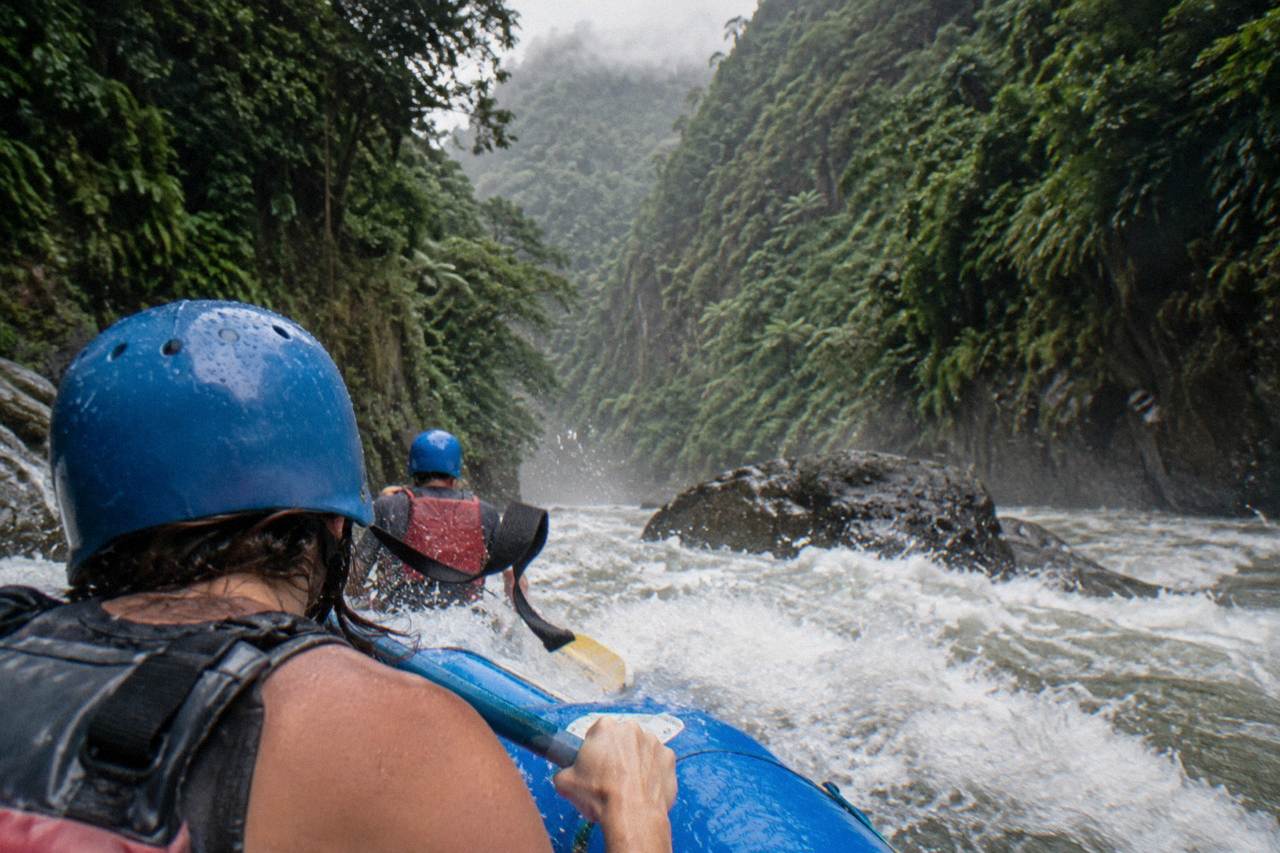
"How Difficult Is White Water Rafting On The Pacuare River?" is the question this page answers straight, because the honest answer decides whether you book at all. The short version: a standard commercial Pacuare day trip is a Class III to IV run, which in practice means sustained paddling, big waves, a guide calling commands, and a swim if you fall in, but no prior experience and no elite fitness. The difficulty is real but managed, and it moves with the season, the water level, and which trip you pick, from the most reviewed Turrialba day trip, Rafting Pacuare River One Day from Turrialba, 5.0 from 385 reviews, from $99 per person, up to the dedicated Class IV listing from Turrialba.
How Difficult Is White Water Rafting?
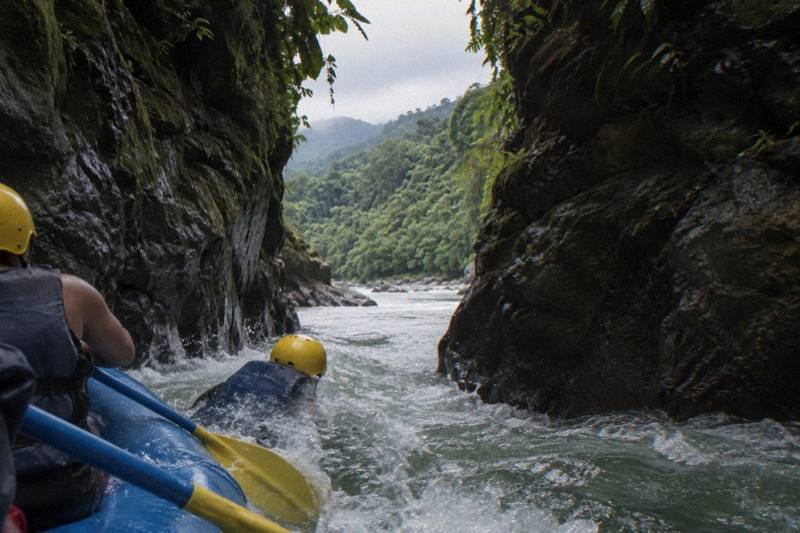
White water rafting is moderately difficult: harder than a float trip, easier than it looks in photos, and almost always doable for a healthy adult who can swim and follow instructions on a commercial Class III to IV run like the Pacuare. The difficulty has three separate parts, and conflating them is where most anxiety comes from. There is the paddling, which is technique-light but sustained; there is the fear factor, which peaks in the first rapid and fades fast; and there is the environment, cold-ish water, waves, and a canyon with no road access for much of the run. None of the three requires experience. All three require that you actually want to be there.
The reason first-timers manage the Pacuare at all is the guide system. One trained guide sits in the back of each raft calling commands, and the paying guests supply engine. You paddle forward, you paddle backward, you get down and hold on when told. Guides on Pacuare trips are trained in swift water rescue and carry safety kits for the full length of the trip, and life jackets and helmets are mandatory for the entire trip, including all calm sections. One operator's published itinerary schedules a 45-minute safety talk and paddle practice immediately before the roughly three-hour descent, so the commands are drilled before the first rapid, not improvised inside it.
Difficulty also depends on what you book. The roster spans a spread of asks: a Class II to IV day from San Jose, Puerto Viejo or La Fortuna at from $112 per person, a Class III to IV San Jose day trip with hotel pickup at from $125 per person, and the straight Class IV trip from Turrialba at from $125 per person. Same river family, meaningfully different days.
What Do The Rapid Classes Actually Mean?
Rapids are graded I to VI, where I is moving flat water you could float in an inner tube, III is the wave-train heart of commercial rafting, IV is powerful and technical and needs precise paddling, and V to VI are expert and expedition territory that no mainstream day trip sells. The scale measures a combination of wave size, drop, how constricted the channel is, and how hard it is to rescue someone if things go wrong. It is descriptive, not scientific: a rapid's class shifts with water level, which is why the same rapid can read as a big III in March and a IV in October.
Class I is calm current. Class II has small, obvious waves and wide channels, the level where a swimmer can comfortably float to the raft. Class III has moderate irregular waves, narrow passages that still leave room for maneuver, and usually requires real paddling. Class IV has powerful, predictable waves in a tighter channel, with precise boat handling needed and a real consequence to missing a line, which is why the guide's commands get more frequent and the safety kayaker earns their seat. Class V is long, violent and dangerous, recommended only for trained crews; Class VI is considered unrunnable. Costa Rica's rafting safety norm, INTE G60-1:2019, encodes exactly this ladder into minimum ages: under 5 no class, 5 to 7 Class I and II, 8 to 11 Class I to III, 12 to 17 Class I to IV, and 18 and over Class I to V, with Class VI never.
| Class | What it feels like in the raft | Who it suits |
|---|---|---|
| I | Drifting current, paddle optional | Anyone, any age |
| II | Small waves, splashes, easy lines | Families, cautious first-timers |
| III | Regular waves, real paddling, maneuvering | Most fit first-timers |
| IV | Big waves, tight lines, fast commands | Confident paddlers, guided only |
| V | Long violent rapids, expert rescue | Trained rafters, not sold as day trips |
| VI | Effectively unrunnable | Nobody commercially |
The Pacuare's commercial run sits at Class III to IV. Exploradores Outdoors grades its Pacuare run as Class 4 at high water and Class 3+ at low water, which is as honest a one-line summary of seasonal difficulty as exists. Operators also describe how the class moves: in the wetter months many Class III rapids become Class IV, and in the dry stretch Class IV rapids often drop toward Class III, so the river you get depends heavily on when you go. If you want the full class-scale picture across Costa Rica's rivers, see our guide to Costa Rica rapid classes explained.
How Hard Is The Pacuare Compared To Other Costa Rica Rivers?
The Pacuare is Costa Rica's flagship long jungle-canyon Class III to IV run, while the other well-known rivers such as the Balsa near La Fortuna and the Savegre on the Pacific side run gentler Class II to III trips aimed at families. That does not make the Pacuare an expert river. It makes it the ceiling of what a guided first-timer can sensibly book, and the floor of what an experienced rafter would still enjoy, which is a rare trick.
The comparisons are consistent across operator and tourism sources. The Balsa River in the Arenal area runs typically Class II to III with minimum ages around 6 to 8, roughly two hours on the water. The Savegre near Manuel Antonio is a scenic Class II to III family run. The Sarapiqui offers Class III to IV sections with shorter, punchier rapids plus calmer wildlife stretches. The Reventazon's lower sections are Class II to III, while its Pascua section is Class IV to V for experienced rafters only. The Pacuare's calling card is not just class but commitment: standard commercial trips run roughly 18 miles through a gorge section with waterfalls dropping from the walls and no road access along most of the run. One fresh planning source describes day trips covering 26 to 30 km with around 38 rapids, figures that vary by operator and water level. The Huacas waterfall alone drops 150 feet directly into the river channel.
For a reader worried the Pacuare is too much, the honest framing is this: if you are comfortable with waves, swimming, and following shouted instructions for a few hours, the standard day trip is well within reach. If you want a gentler entry, a Class II to III river is the better first date, but you would be booking it on another site, since every rafting listing this roster carries is on the Pacuare.
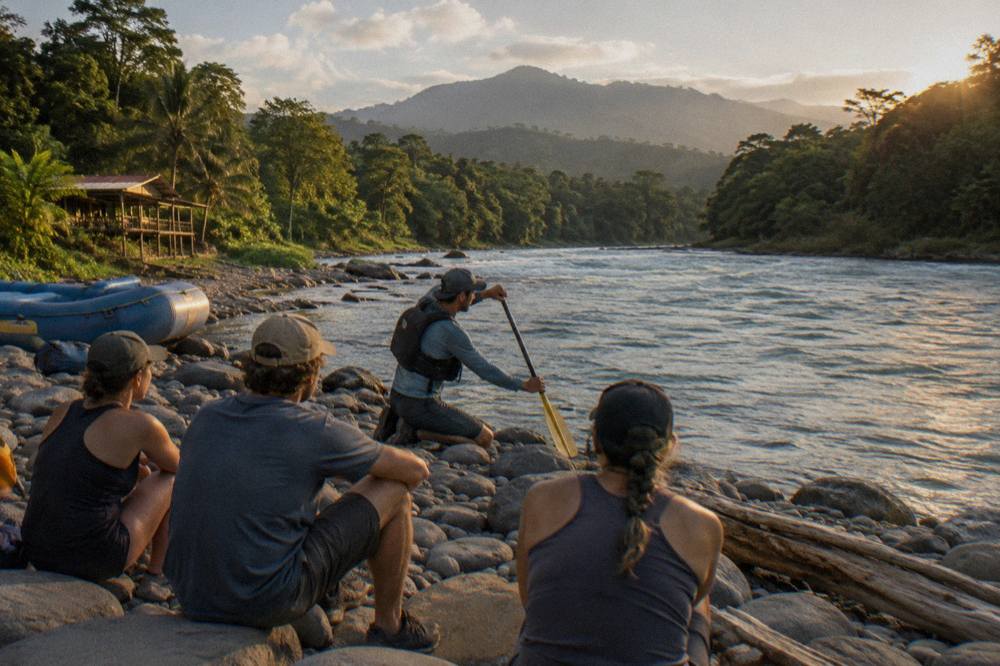
The one Pacuare listing that leans into the harder end deliberately is Pacuare River Rafting Class IV from Turrialba, operator Turrialtours, from $125 per person, 8 hours, lunch included, capped at up to 18 guests, minimum age on the listing. It has too few reviews for a star claim, so judge it on its format: a smaller group and a Class IV label, for paddlers who already know they want the sharper version. Compare the options side by side in our Pacuare trips comparison. Ticos River Adventures' private four-hour Turrialba run, 4.9 from 204 reviews, from $125 per person, is the shorter alternative.
Do You Need Experience Or Strength To Do It?
No prior rafting experience is needed on any Pacuare commercial trip, and strength matters less than people fear: the paddle work is endurance-lite, the raft is powered by the whole crew together, and the requirements that actually gate participation are reasonable health, and a minimum age that the law sets at 12 for Class III to IV water. The strength myth is worth dismantling directly. A raft is not a rowboat you haul alone; every adult paddles the same stroke at the same time, and the guide steers.
Fitness is a fairer question. You should be able to do a brisk walk without strain, get down onto the raft floor and back up quickly, and pull yourself toward the raft if you swim. Listings flag health limits such as heart or back problems, and the listing is where those answers live: some operators list weight or chest-size limits for the life jacket, and one operator's listing outside this roster requires participants to weigh 45 to 90 kg and stand at least 1.35 m tall. None of that is published on every listing, so the rule is simple, check the listing for the trip you want rather than assuming a norm.
Age is the clearest gate. Under the national norm, Class III to IV water is legally open from age 12, and the roster listings that state a minimum age say 12. Some operators raise their own floor to 14 during the wetter June to November stretch when the water runs higher, so a family with a 12-year-old should confirm the age rule for their exact month before booking. We cover the full ladder, including the kid-friendly rules, in Pacuare age limits and fitness explained.
The last "requirement" is temperament. People who enjoy the Pacuare share one trait: they can be uncomfortable for ninety seconds, soaked, loud, upside-down-adjacent, and still function. People who hate it are usually people who needed a guarantee of calm. The river offers none.
What Does A Pacuare Day Physically Ask Of You?
A one-day Pacuare trip asks for a 4:30 to 6 a.m. wake-up, up to about three hours of active paddling with breaks between rapids and a long evening drive home, all inside a total day that runs from 4 to 12 hours depending on your departure city. The total duration on the roster is the listing's whole day, not time on the water: the Turrialba day trips list 4 to 8 hour days, while the San Jose departures list 9 to 12 hours because of the transfer each way, with San Jose to Turrialba commonly reported at about 1h20 to 1h40.
The shape of the day, as operators describe it, is consistent. Pickup or meeting in the early morning, breakfast at a base or exploration center, a safety talk and paddle practice that one operator schedules at 45 minutes, then the descent in chunks: paddle hard for a rapid, then float and recover in the calm stretches between, then a riverside lunch, then the biggest gorge rapids, then showers, changing facilities and the drive back. The recovery gaps are the reason beginners survive Class IV water at all. The river gives you rest whether you ask or not.
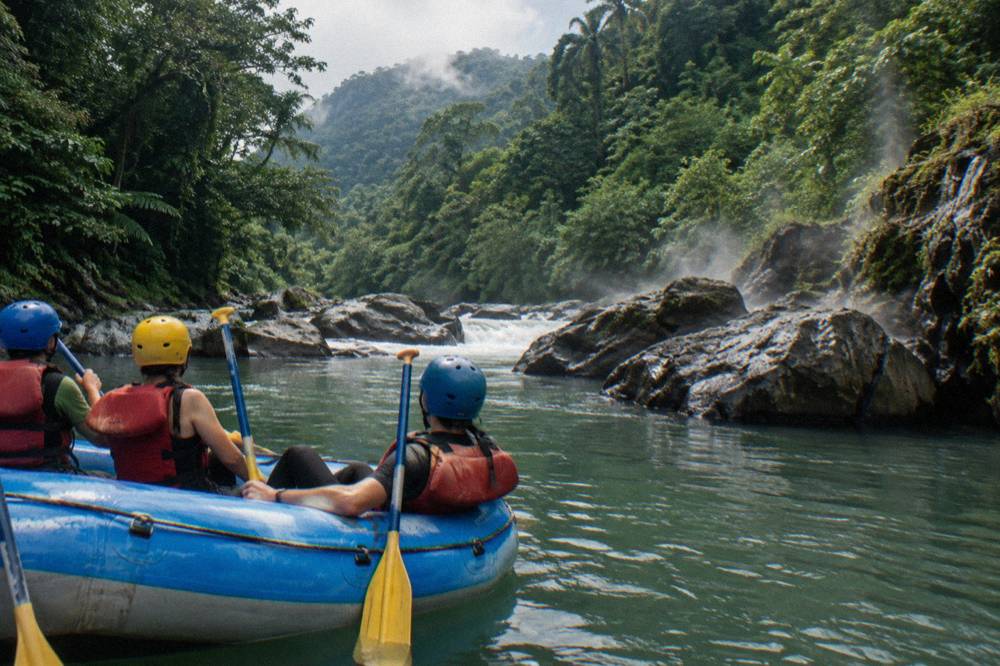
Falling in is part of the difficulty question, so here it is plainly. Swims happen, they are usually brief, your life jacket floats you, and the crew or a safety kayaker collects you. The right response is taught in the safety talk: feet up, feet first, on your back, hold your paddle if you can, let the current take you to the raft or the kayak. What you wear changes how a swim feels, and the difference between secure sandals and flip-flops is the difference between a story and a lost shoe; our what to wear rafting guide covers the full kit, including why operators ban flip-flops outright.
One roster example shows how light the entry point can be. The San Jose Caribe Arenal Pacuare River 1-Day Rafting Adventure is labeled Class II to IV, from $112 per person, with breakfast and lunch and pickup from San Jose, Puerto Viejo or La Fortuna, which makes it one of the gentler-labeled ways onto the same river system. At the other end, 1 Day Pacuare River Rafting with Transportation and Lunch, from $128 per person, lists a 4 hours 30 minutes total day with up to 120 guests, a big-group format.
Does The Season Change How Hard It Feels?
Yes, materially: the Pacuare is runnable all year, but water is commonly described as highest and fastest October to December and lowest March to April, and the same run can shift by up to half a rapid class between those extremes, which is why operators steer first-timers and families toward the February to April window. The river is rain-fed, and the Caribbean slope receives rain through much of the year, unlike the Pacific side's cleaner dry season. ERA5 modelled rainfall averages for the Turrialba area run from about 181 mm in March to about 477 mm in November, and the two wettest months at the Siquirres end of the catchment are November and July. The practical translation: wetter months mean bigger, faster, colder-looking water and more frequent Class IV behavior; the February to April stretch means enough water for exciting rapids without swollen conditions.
Operators act on this openly. One raises the minimum age from 12 to 14 between June and November because of higher water, while keeping 12 from December to May. Another grades the whole run as Class 4 at high water and Class 3+ at low water. A traveler report from May described the river as very beginner friendly at lower water levels. None of this makes a month "safe" or "guaranteed": operators cancel or reroute in genuinely high water or flooding, and the river level on your day is whatever the weather decides. If timing is flexible, our best time to raft the Pacuare guide works through the whole calendar.
| Season window | Typical water | What it means for difficulty |
|---|---|---|
| February to April | Lowest, most predictable | Operators' preferred window for first-timers and families |
| May to August | Rising, variable | Bigger waves, some rapids step up a class |
| September to November | High, fast | Maximum power; some operators raise minimum age to 14 |
| December to January | Dropping from the peak | Still pushy early, settling toward dry-season levels |
What Makes Rafting Feel Harder Than It Is?
Most of the perceived difficulty of a Class III to IV trip is manufactured before the put-in: poor sleep, an empty stomach, the wrong shoes, a hangover, and pre-reading accident stories, while the genuine on-river difficulty spikes come from ignoring the guide and gripping the paddle wrong. The preparation errors are boring and fixable. Sleep, eat the provided breakfast, wear secure footwear, use the sunscreen, and leave the phone in the locker, because valuables brought on the raft are the participant's responsibility and operators sell photos separately for a reason.
The behavioral errors matter more. One classic first-timer mistake is stopping paddling when scared, which is exactly when the raft most needs speed to punch a wave. The second is leaning out of the boat to look at the rapid instead of leaning in and bracing. The third is treating the guide's commands as optional background noise; the commands are the whole job. A 45-minute safety talk exists to install these reflexes before the water tests them.
Group format also shapes how hard a day feels. The roster runs from up to 10 guests on The Authentic Pacuare River Costa Rica Rafting Tour at from $195 per person, up to 40 guests on the most reviewed Turrialba day trip, and up to 200 on the Full Day Pacuare River Rafting Experience at from $124 per person. Small groups get more attention per paddler; large groups get more momentum and more noise. Neither is harder in class terms, but they feel different, and the listing states the cap so you can choose your flavor.
For readers who want the practical packing list, the mistakes above are exactly why it exists: what to bring on a Pacuare trip is the checklist version of this section.
Which Pacuare Trip Should A Hesitant Beginner Book?
A hesitant beginner should book a Class III to IV shared day trip with hotel pickup and a strong review pool, most simply From San José: Pacuare River Class 3 & 4 Rafting Day Trip, 4.7 from 291 reviews, from $125 per person, or, from Turrialba, the most reviewed listing on the roster, Rafting Pacuare River One Day from Turrialba, 5.0 from 385 reviews, from $99 per person. Both are the standard commercial format: a guide, a safety talk, gear, a shared raft. The choice between them is mostly geography, San Jose hotel pickup versus a Turrialba base, and price.
The Turrialba option deserves its own paragraph because it is the roster's most reviewed listing and its cheapest firm price. Operated by Adrenalina Rafting Turrialba, it runs 6 hours, includes lunch, a typical Costa Rican lunch at the end of the trip, plus helmets, life vests, paddles and private transportation, with free cancellation listed. Local operators in Turrialba commonly start around 8 a.m., skipping the pre-dawn San Jose transfer entirely, which removes the single most exhausting part of a rafting day for many people.
The San Jose option suits anyone staying in the capital. From San José: Pacuare River Class 3 & 4 Rafting Day Trip includes hotel pickup from San Jose hotels, breakfast and lunch, rafting equipment and a guide, 9 hours total, with free cancellation listed. If you are leaving straight for the Caribbean coast afterward, the La Fortuna and Puerto Viejo departure listings let you raft one way and get dropped the other, and our rafting from Puerto Viejo guide explains how those shuttle legs work.
Confidence, not ability, is usually the real blocker, and there is a legitimate halfway answer for readers who want the canyon without the Class IV commitment in the same week they fly home. Run a Class II to III river elsewhere in the country first, then book the Pacuare on your next trip.
Before you go, three picks that match three confidence levels, the dedicated Class IV challenge, the classic San Jose Class III to IV day, and the four-hour Ticos River Adventures run from Turrialba with pickup included:
If you are still working through the fear rather than the logistics, Pacuare Costa Rica Rafting exists for exactly this decision: honest difficulty information first, bookings second. The national tourism board's own rafting overview is also worth a read for how the rivers compare, and the full safety norm, INTE G60-1:2019, is published online if you want the regulation behind the age ladder.
Common Questions About White Water Rafting Difficulty
How Difficult Is White Water Rafting?
Moderately difficult and very doable. A commercial Class III to IV trip like the Pacuare requires no experience, only the ability to swim, follow a guide's commands, and paddle in bursts for a few hours.
Can A Beginner Do Class 4 Rapids?
Yes, on a guided commercial trip. Class IV water is powerful and needs precise paddling, but the guide reads the river and calls every stroke. One operator describes the Pacuare as Class 3+ at low water and Class 4 at high water, and the minimum age by law for Class III to IV is 12.
How Fit Do You Need To Be To Raft The Pacuare?
Ordinary healthy-adult fitness is enough. You should manage a brisk walk, move quickly down into the raft and back up, and pull yourself toward the raft after a swim. Check the listing for any weight or size limits, since some operators publish them and others do not.
What If I Fall Out Of The Raft?
You float. The life jacket holds you up, the safety talk teaches the feet-up, feet-first position, and a safety kayaker or the raft itself collects you. Swims are usually brief and are treated as a normal part of the day, not an emergency.
Is The Pacuare Harder Than Other Costa Rica Rivers?
It is the flagship long jungle-canyon run. The Balsa and Savegre run Class II to III family trips, Sarapiqui offers Class III to IV in shorter bursts, and the Pacuare combines Class III to IV with a long roadless gorge.
Does The Time Of Year Change The Difficulty?
Yes. Water is commonly described as highest and fastest October to December and lowest March to April, shifting the same rapids by up to half a class. Operators steer first-timers and families toward February to April, and some raise the minimum age to 14 in the wetter June to November stretch.