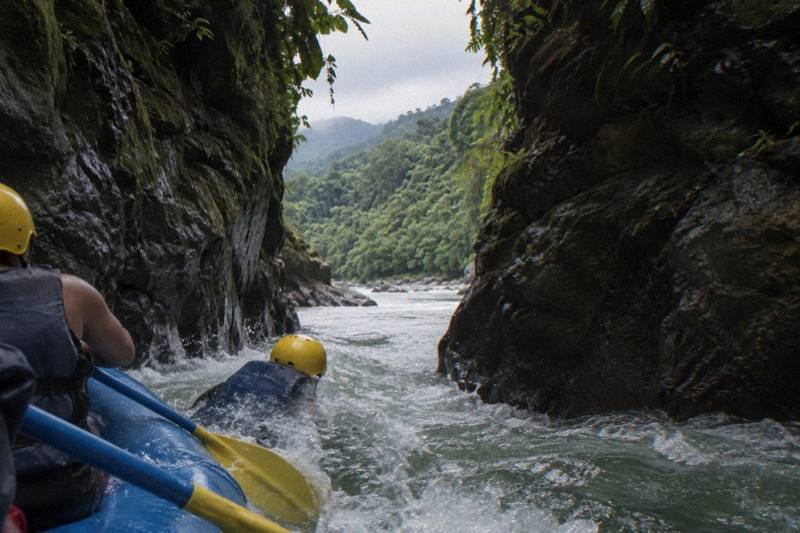
What Class Rapids Are In Costa Rica?
A river by river breakdown of rapid classes in Costa Rica, from family friendly Class II runs to the Class III-IV Pacuare gorge, with age rules and season effects.
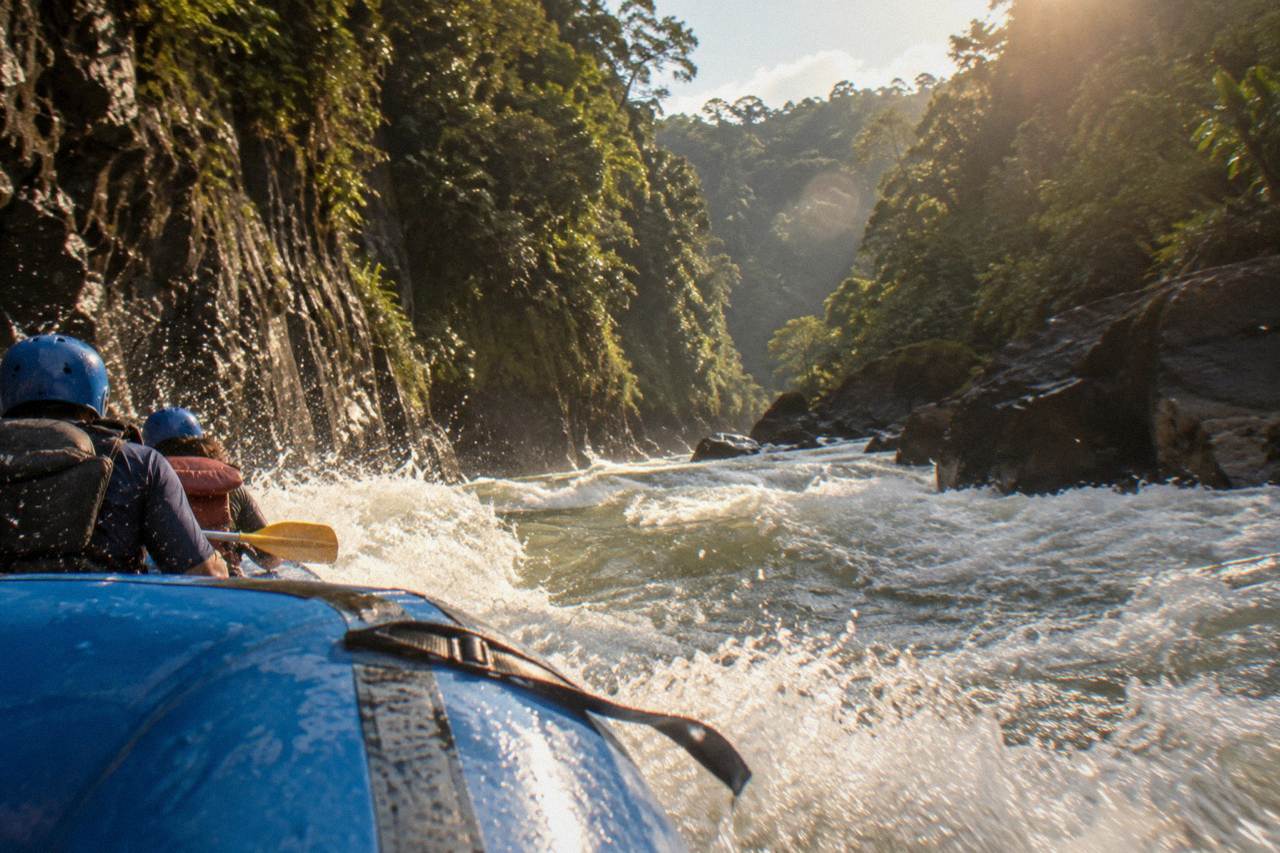
Costa Rica's commercial rafting rivers run from gentle Class II water suitable for young families to Class V sections reserved for experienced paddlers, and the answer to which class you will meet depends almost entirely on which river and which section you book. The Pacuare, the river this site is built around, is a Class III-IV run: the standard commercial day trip mixes pool-drop Class III rapids with bigger Class IV drops in the Huacas gorge. One roster listing, the Pacuare River Rafting Class IV trip from Turrialba, names Class IV as its headline class. Every other major river in the country carries its own range, and this article maps all of them. If you're bringing younger paddlers along, the guide to kids and big rapids spells out the age minimums before you book.
The class label matters more in Costa Rica than in most rafting countries, because it is tied directly to a national age rule. The technical norm INTE G60-1:2019 sets minimum ages by rapid class, so the class printed on a listing decides who can legally board the raft. Get the class right and the rest of the trip, transport, meals and group size, falls into place.
Costa Rica's raftable rivers span Class II through Class V, with Class VI never run commercially anywhere, and the flagship runs are Pacuare III-IV, Sarapiqui III-IV, Reventazon II-III on its lower sections and IV-V on the Pascua section, Balsa II-III, Savegre II-III, and Naranjo III-IV.
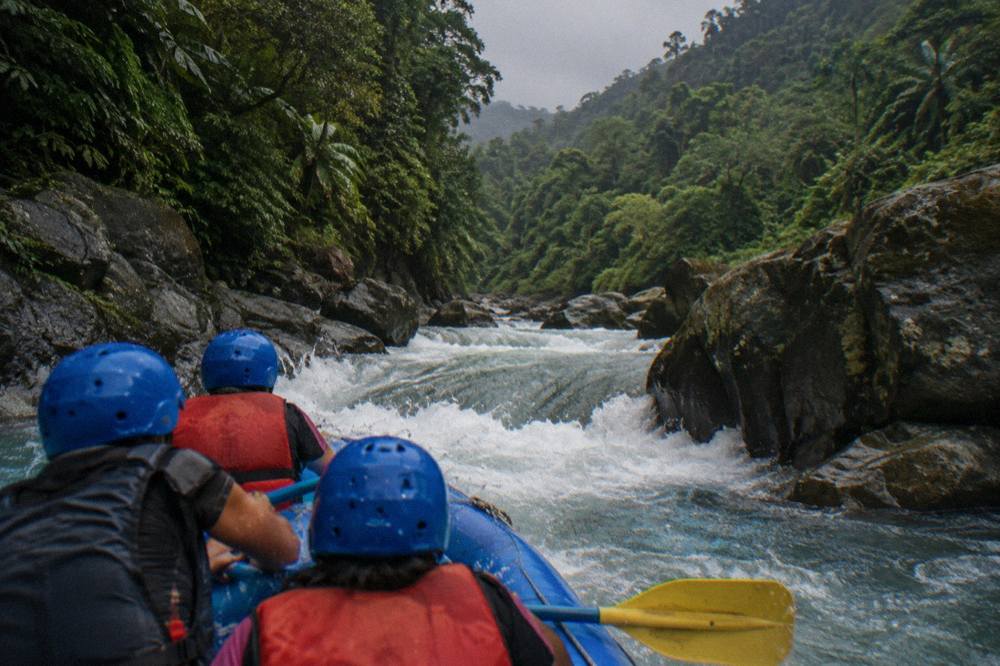
That spread is unusually wide for a country of Costa Rica's size, and it comes from geography rather than marketing. The country splits into three rafting regions. The Caribbean slope holds the Pacuare, the Reventazon and the Sarapiqui. The northern lowlands around Arenal hold the Balsa, a shorter, softer run. The Pacific side near Manuel Antonio and Quepos holds the Savegre and the Naranjo, with the Naranjo running only June to November.
Within a single river, the class also changes section by section. The Reventazon is the clearest example: its lower and Tucurrique sections are Class II-III water suited to beginners and children from age six by operator policy, while the Pascua section downstream is Class IV-V water for experienced rafters only, per the national tourism board's rafting listing. Same river, same day, completely different trips depending on which section a listing names. That is why this article reads class labels section by section rather than river by river alone, and why a listing that says only "Costa Rica white water rafting" without a class deserves a second look before you book it.
For readers whose goal is the classic Costa Rica rafting day, the Pacuare's Class III-IV label is the one to anchor on, and the two trips below are Class III-IV day trips from Turrialba.
The cheaper of those two is the most reviewed listing on the whole roster, Rafting Pacuare River One Day from Turrialba, from $99 per person with a 5.0 rating from 385 reviews. It is the benchmark against which the other Class III-IV days sit, and we return to it below.
How The International Class I To VI Scale Works?
The international scale ranks river difficulty from Class I, moving flat water with ripples, up to Class VI, which is considered unrunnable and never attempted commercially. In between, Class II is straightforward rafting with wide, clear channels, Class III adds irregular waves and requires maneuvering, Class IV demands precise paddle commands in powerful water, and Class V is long, violent and for experts only.
The scale is descriptive rather than scientific, and it carries two caveats worth knowing before you read any listing. First, class shifts with water level. A rapid graded Class III at low water can act like a Class IV when the river rises after rain, and the reverse happens in the dry months. One Costa Rica rafting guide puts a rough number on it: green season conditions push rapid intensity up by about half a class. That is why operators describe a range, "Class III-IV" rather than one number, and why the same rapid can honestly appear under two different labels in two different months.
Second, the class describes the hardest rapid on the run, not the average. A Class III-IV trip may spend most of its river time on lively but forgiving Class III water. Reading "Class IV" on a listing does not mean forty minutes of continuous violent water; it means the trip contains at least one rapid of that grade.
For planning purposes the buckets work like this. Families with children under 12 should be looking at Class II-III runs, of which the Balsa and the Savegre are the standard examples. Confident first timers and teenagers from age 12 fit the Class III-IV runs, which is exactly the Pacuare bracket. Class IV-V water, such as the Reventazon's Pascua section, is for people with prior rafting experience, and no commercial listing on this roster sells it.
Which Rivers Carry Which Classes In Each Region?
The Caribbean slope carries the biggest water: the Pacuare runs Class III-IV, the Sarapiqui holds Class III-IV with calmer wildlife stretches, and the Reventazon splits into Class II-III lower sections and a Class IV-V Pascua section. Near Arenal, the Balsa River runs Class II-III, while the Pacific side offers Savegre at Class II-III and Naranjo at Class III-IV, with the Pacuare runnable year-round and the Naranjo limited to June through November.
| River | Region | Typical commercial class | Character |
|---|---|---|---|
| Pacuare | Caribbean slope | Class III-IV | Long jungle gorge run, waterfall-lined walls, the country's flagship day trip |
| Reventazon | Caribbean slope | Class II-III lower and Tucurrique; Class IV-V Pascua | Two very different products on one river; the Pascua section is expert only |
| Sarapiqui | Northern lowlands | Class III-IV | Shorter, punchier rapids plus calm wildlife-watching stretches |
| Balsa | Arenal / La Fortuna | Class II-III | Family friendly, minimum ages of 6 to 8, about 10 km on the water |
| Savegre | Pacific side | Class II-III | Scenic and gentle, suited to families |
| Naranjo | Pacific side | Class III-IV | Operates June to November only, on Pacific-slope rain |
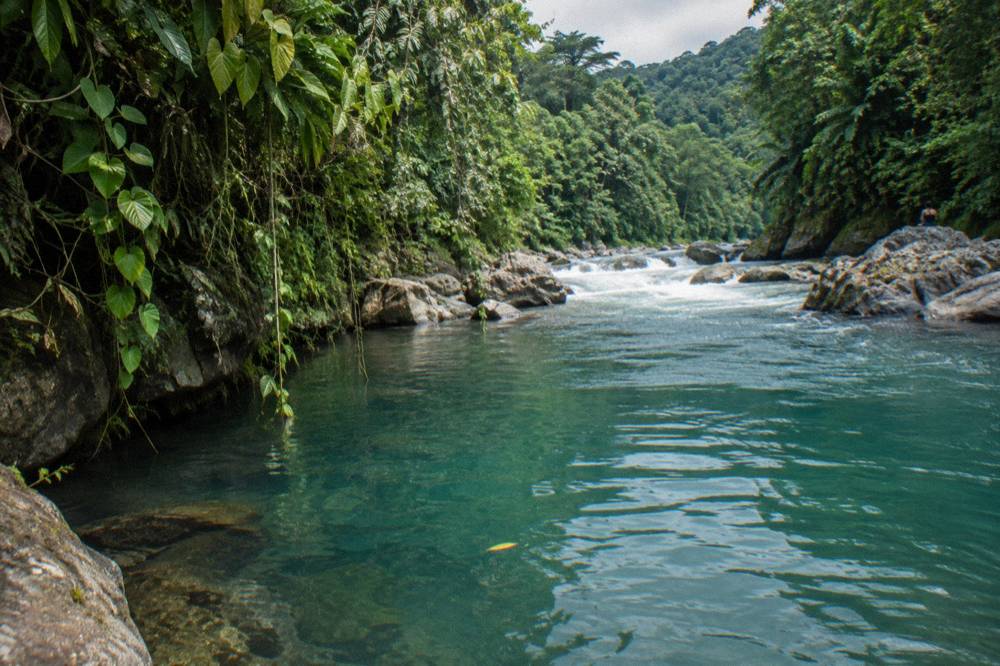
Two asymmetries in that table drive most booking decisions. The first is seasonality. The Caribbean slope gets rain through much of the year, which keeps the Pacuare and its neighbors runnable in every month, with the highest water October to December and the lowest March to April. The Pacific side is more seasonal: the Naranjo runs only June to November, when Pacific-slope rain fills its channel. If your trip dates fall in the Costa Rican dry season and you are staying on the Pacific side, the Pacuare's year-round flow and the long drive east are usually worth it, and the drive itself from San Jose to Turrialba is commonly reported at about 1h20 to 1h40.
The second asymmetry is age access, which the next section unpacks, because the Caribbean Class III-IV rivers open from age 12 under the national norm while the Pacific and northern Class II-III rivers open younger. A family with a nine year old is effectively choosing between the Balsa, the Savegre and the Reventazon's lower section, whatever the calendar says. A family with teenagers can take on the Pacuare gorge.
What Class Is The Pacuare River Really?
The Pacuare's commercial run is Class III-IV. The Lower Pacuare, the stretch day trips use, drops about 370 m over roughly 37 km from Finca La Cruz to Siquirres, with named Class IV rapids including Upper and Lower Huacas and Cimarrones inside the Huacas River Gorge. One operator grades the same water Class 3+ at low flow and Class 4 at high flow.
That "same water, two grades" point deserves a full stop, because it is the single most useful thing a Pacuare buyer can know. The river has no automated flow gauge; operators read a painted rock marker downstream of one lodge, and the class of the day follows the level. One operator describes the run as Class 4 when the water is up and Class 3+ when it drops, and one Turrialba operator shifts its minimum age from 12 to 14 between June and November to match. Nothing about the canyon changes; the water inside it does.
The Huacas gorge is where the class concentrates. The Huacas waterfall drops around 150 feet directly into the river channel, and day-trip listings name rapids like Huacas, Pele el Ojo and Cimarrones on the Class III-IV gorge section, with a riverside picnic lunch between drops. Wildlife along the same stretch, commonly reported by operators and guests, includes toucans, sloths and monkeys in the canyon's rainforest walls, though no sighting can be promised on any given day.
The roster reflects the class split in its product names. The Pacuare River Rafting Class IV from Turrialba listing, an 8-hour product from $125 per person for up to 18 guests, names Class IV outright, and it is the pick for paddlers who want the biggest water the commercial river offers; read more about it on the Class IV Pacuare tour page. The From San José: Pacuare River Class 3 & 4 Rafting Day Trip states the full range in its title, from $125 per person, rated 4.7 from 291 reviews. The most reviewed listing of all, Rafting Pacuare River One Day from Turrialba, runs the same river from $99 per person with a 5.0 rating across 385 reviews; its card does not state a class, so confirm the day's grade on the live listing. Our broader Pacuare trips compared guide lays all 21 listings side by side, and the one day Pacuare trip guide walks the day hour by hour.
Departure point also shapes the class experience in one quiet way: multi-day trips start higher up the watershed, where the first day's water is gentler, and the biggest Class III-IV volume arrives on the final day through the gorge. The Exploradores Outdoors 2-day listing, for instance, describes 13 km and 14 Class III rapids on day one to a riverside lodge, then 23 km and about 30 rapids on day two into Siquirres, an operator claim worth reading on its own listing. Class builds, and the biggest water comes when you have a day of paddle practice behind you.
How Does Rapid Class Set The Minimum Age?
Under INTE G60-1:2019, minimum age climbs with rapid class: under 5 no rafting, ages 5 to 7 Class I and II, ages 8 to 11 Class I to III, ages 12 to 17 Class I to IV, 18 and over Class I to V, with Class VI never run. A Class III-IV Pacuare trip is legal from age 12, a Class II-III Balsa trip from age 6 by operator policy, and operators may set higher minimums.
| Age | Classes legally permitted | What that means for booking |
|---|---|---|
| Under 5 | None | No commercial rafting under the national norm |
| 5 to 7 | Class I-II | Gentle float sections only |
| 8 to 11 | Class I-III | Balsa and Savegre type runs; the Pacuare is closed to this age band |
| 12 to 17 | Class I-IV | Pacuare day trips open here; some operators require 14 in wet months |
| 18 and over | Class I-V | Expert water such as the Reventazon Pascua section |
The full norm also requires operators to state the minimum age by rapid class, check weather and river conditions, and scout when flow rises, which is the regulatory backbone behind the age column above. In practice the roster listings that state an age say 12: the White Water Rafting Pacuare River From San José listing and the Pacuare River with Lunch From Puerto Viejo listing both carry a listing minimum age of 12, while many others leave the age to be confirmed on the booking page, so always check the listing. Since the Pacuare opens up to older kids and teens, our guide to the Pacuare's rapid levels and how they shift with the season explains which sections suit which paddlers.
The wet-month exception matters when your dates fall between June and November. Operators describe that window as higher, faster water on a rain-fed river, and at least one raises its Pacuare minimum from 12 to 14 for those months while holding 12 from December to May. A family booking a June trip with a twelve year old should therefore confirm the age policy on the specific listing rather than assuming the December rule. The deeper dive on this is our Pacuare age limits and fitness guide, and the season mechanics are in the best time to raft the Pacuare.
Does The Class Change With The Season?
Yes, and by a meaningful margin: operators and guides report that many Class III rapids behave as Class IV in the rainy season, while Class IV drops often mellow toward Class III in the dry season, roughly half a class of swing either way. Water is highest and fastest October to December and lowest March to April, with February to April the stretch operators prefer for first timers and families. The river remains runnable all year.
The pattern comes from the Caribbean slope's rainfall calendar. ERA5 modelled averages for the Turrialba area put November as the wettest month and March the driest, with a station cross-check agreeing that February to April is the driest stretch and October to December the wettest. Rain-fed means responsive: the Pacuare has no dam releasing a fixed flow, so the class of the day tracks the weather. Operators cancel or reroute when water runs too high, and the painted rock marker mentioned above is the informal gauge they read.
For class shoppers, that calendar translates into three practical buying windows. February to April gives the lowest, most predictable water, the friendliest version of the Class III-IV label, and the season operators recommend for families and first timers. May through August sits in the middle, with a traveler report describing May water as very beginner friendly. September to December is the big-water window: some experienced rafters prefer it precisely because the class of the water rises, while accepting a higher chance of afternoon thunderstorms.
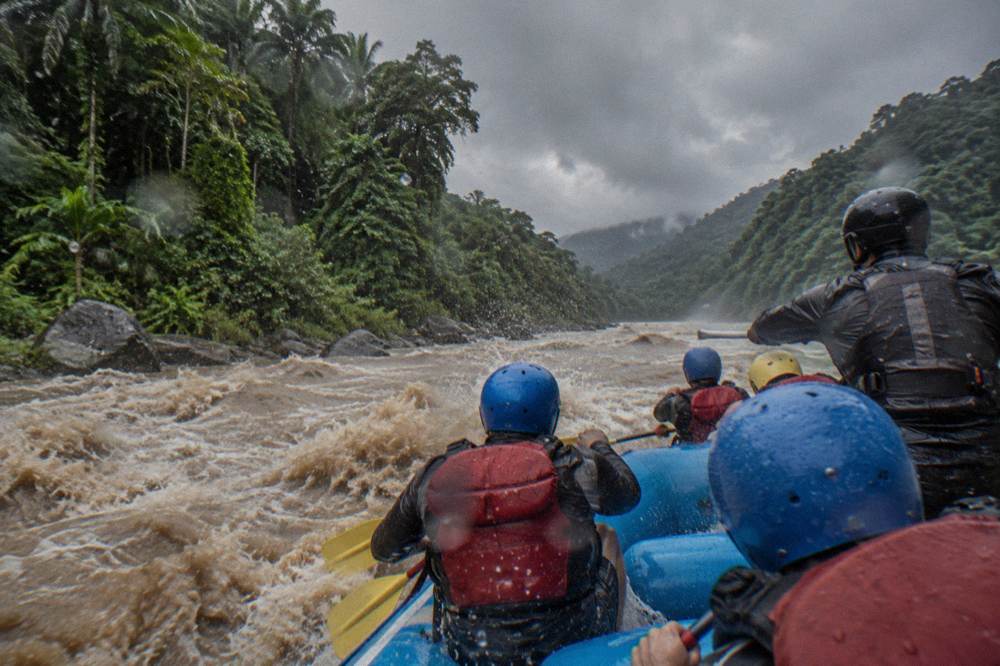
None of this changes the class printed on a listing. The Class III-IV label holds all year; what moves is how each named rapid reads on the day. That is why operators run a safety talk and paddle practice before the descent, about 45 minutes on one San Jose operator's published itinerary, regardless of season.
If your dates are flexible and the Class III-IV bracket is your target, the dedicated Class IV day from Turrialba in the band above is the harder-water way to book it, with lunch and private transportation included.
Which Class Should A First Timer Choose In Costa Rica?
Most first timers should pick a Class III-IV trip: commercial outfitters design these runs for mixed boats, guides call every command, safety kayakers are listed on some departures, and the biggest drops stay short. Opt for Class II-III if someone in your group is under 12, nervous about water, or prefers a wildlife float, and save Class IV for when you want the trip built around the biggest rapids allowed.
The honest framing is that Class III-IV is a beginner-accessible grade by design, not an expert product. The most reviewed Pacuare listing of all, with 385 reviews at 5.0, runs this same grade, and guides on Pacuare trips are trained in swift water rescue with life jackets and helmets mandatory for the entire trip, calm sections included. The dedicated Class IV listing from Turrialba narrows the same river to its hardest water for guests who want the day weighted toward drops rather than scenery, from $125 per person; check availability on the operator's live listing if that framing fits your group. On the other coast, the Puerto Viejo departure, White Water Rafting Pacuare River with Lunch, rated 4.8 from 62 reviews from $147 per person, brings the same Class III-IV day to Caribbean coast visitors, and the La Fortuna shuttle version, rated 5 from 20 reviews from $150 per person, lets Arenal travelers raft the Pacuare and finish in San Jose or Puerto Viejo. If you're still weighing whether that grade suits your group, our plain-English guide to how hard Pacuare rafting really is explains what each rapid class actually asks of a first timer.
Group size and gear are worth checking against the class, too. Roster group caps range from 10 guests on a small San Jose trip to 200 on the largest, and one San Jose listing specifies up to 20 guests with breakfast and lunch included; tighter boats generally mean more attention in the drops. Gear, helmet, life jacket and paddle, is provided by operators, and footwear is on you: tennis shoes or secure sandals that can get wet, never flip-flops. Weight limits and medical policies vary by operator, so check the listing for those before booking rather than assuming a standard.
One last caution for beginners comparing across rivers: do not compare class labels across countries or across difficulty cultures blindly. A Class III on the cold, continuous rivers of the northern hemisphere can read differently from a Class III pool-drop rapid in a warm jungle river, where water temperature on the Pacuare is typically around 21 C or higher and no wetsuit is needed. The label is constant; the experience inside the label is local.
For everything else on this river, Pacuare Costa Rica Rafting holds the full comparison, from two day lodge trips to the gear lists in what to bring on a Pacuare trip.
Common Questions About Class Rapids In Costa Rica
What Class Rapids Are In Costa Rica?
Class II through Class V. The main commercial runs are the Pacuare at Class III-IV, the Sarapiqui at Class III-IV, the Reventazon at Class II-III with a Class IV-V Pascua section, the Balsa at Class II-III, the Savegre at Class II-III and the Naranjo at Class III-IV. Class I water exists but is rarely sold as a rafting product, and Class VI is never run.
What Class Is The Pacuare River?
The commercial Lower Pacuare run is Class III-IV, with named Class IV rapids including Upper and Lower Huacas and Cimarrones in the Huacas gorge. One operator grades the same water Class 3+ at low flow and Class 4 at high flow, so the effective class shifts about half a step with the season.
Can Beginners Run Class IV Rapids In Costa Rica?
Yes, on a commercial Class III-IV trip, which is built for mixed experience levels: guides call every command, and some listings include a safety kayaker. A dedicated Class IV listing, like the Pacuare River Rafting Class IV trip from Turrialba, suits paddlers who want the day weighted toward the biggest drops. Prior experience matters more on Class IV-V water such as the Reventazon's Pascua section.
What Is The Minimum Age For Class III-IV Rafting In Costa Rica?
Age 12 under the national norm INTE G60-1:2019, which permits ages 12 to 17 on Class I to IV water. Some operators raise their Pacuare minimum to 14 between June and November when water runs higher, so check the specific listing for your travel month.
Does Rapid Class Change With The Season In Costa Rica?
It does. Rainy season water pushes many Class III rapids toward Class IV behavior, and dry season drops mellow in the other direction, roughly half a class of swing. Water is highest October to December and lowest March to April, with February to April the stretch operators prefer for first timers and families. The rivers stay runnable all year, and operators cancel or reroute when water runs too high.
Which Costa Rica Rafting River Is Best For Young Kids?
Class II-III rivers, which the national norm opens to ages 8 to 11. The Balsa near Arenal and the Savegre on the Pacific side are the standard family runs, with operator minimum ages of 6 to 8 reported on the Balsa. The Pacuare's Class III-IV label keeps it at age 12 and up.