One-Day Pacuare River Rafting Trip: What The Day Looks Like
Most one-day Pacuare trips follow the same shape: an early pickup, breakfast at a river center, a safety talk, a paddle through the Class III-IV gorge, a riverside lunch and a long drive back. Here is how the day actually unfolds, and which listing fits each departure town.
Short answer
A one-day Pacuare River rafting tour runs from 4 hours 30 minutes to 12 hours depending on departure town. Turrialba departures run from $99 to $140 per person, San Jose from $112 to $195, Puerto Viejo from $147 and La Fortuna from $150. Nearly every roster listing includes lunch.
The one-day Pacuare run is the trip most travelers book, and it is the format almost every operator on this river sells. The day compresses a rain-fed Caribbean-slope river, a gorge with waterfalls on its walls, and a logistics chain that can start in four different towns into a single outing. The most reviewed listing on this roster is Rafting Pacuare River One Day from Turrialba with Adrenalina Rafting, 5.0 from 385 reviews and from $99 per person, and its 6 hour total length is typical of a Turrialba departure. San Jose versions stretch to 9 to 12 hours because of the drive. This page walks through the whole day in order, then matches each departure town to the listings that actually serve it.
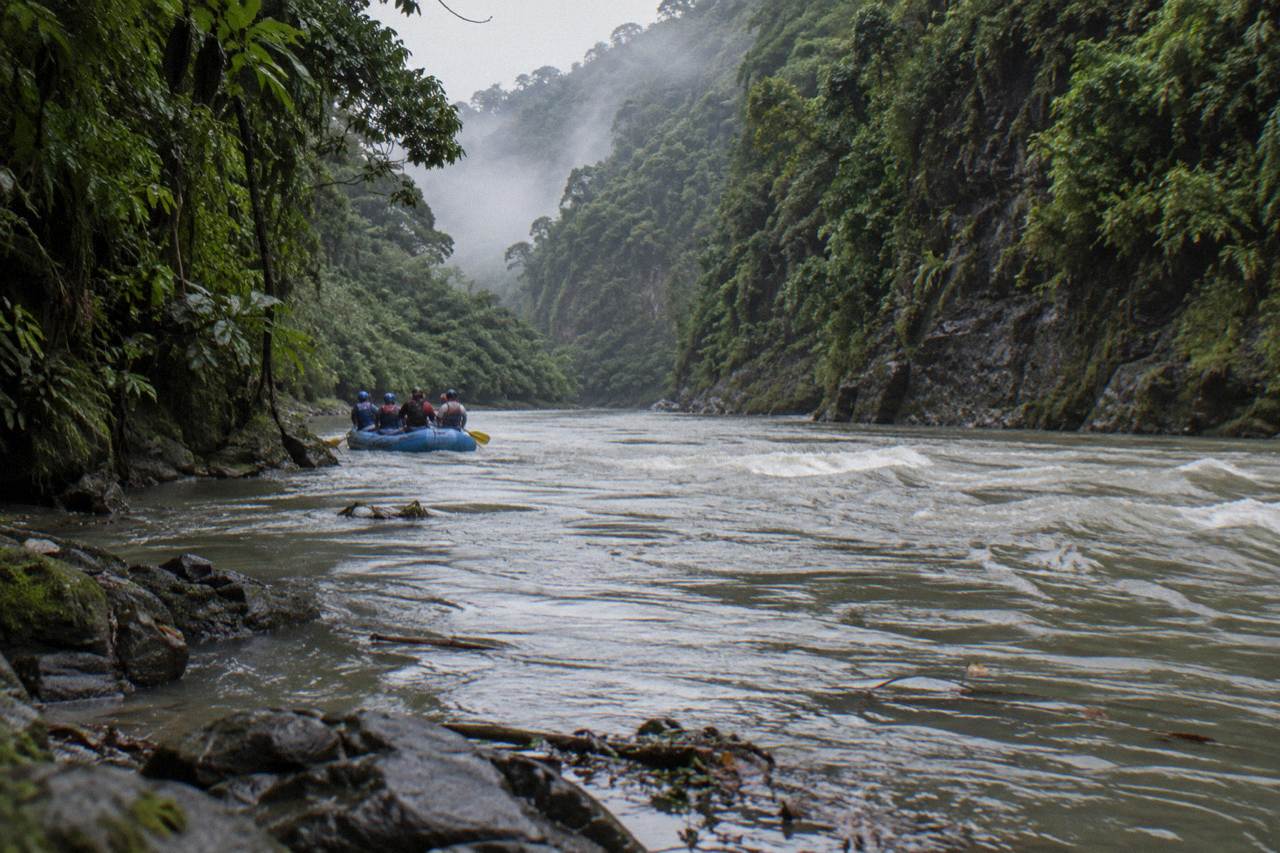
A note on honesty before the hour-by-hour: the Pacuare is rain-fed and no commercial operator promises conditions. Rapid class on the day, water level and even whether a section runs can change, and operators cancel or reroute in high water. Everything below is what the listings and operators describe, not a guarantee of what any single day delivers.
What Does A One-Day Pacuare Rafting Tour Actually Include?
Nearly every one-day Pacuare listing on this roster includes a meal, most name a guide or rafting equipment, and all but one list free cancellation. What varies is the transport, the total duration and the price: from $99 to $140 per person out of Turrialba, $112 to $195 out of San Jose, $147 from Puerto Viejo and $150 from La Fortuna. Duration runs from 4 hours 30 minutes to 12 hours.
The core product is the same river regardless of where you start. Operators report that standard commercial day trips run the Lower Pacuare, the Class III and IV stretch that Wikipedia's river page describes as about 37 km from the Finca La Cruz area down to Siquirres, dropping roughly 370 m. Some operators run a shorter slice of that; exact put-ins and take-outs vary by operator and are not published as fixed facts on most listings. What you are buying is a shared raft, a certified guide, helmet, life jacket and paddle, and a feed at some point in the day.
Meals differ by departure. Every San Jose listing on the roster includes breakfast and lunch, because the drive is long enough that you eat before the river. The Turrialba day trips generally list lunch only, which makes sense when the total outing is 4 to 8 hours. The Puerto Viejo and La Fortuna listings include both meals. If you have dietary needs, check the listing before booking rather than assuming.
What is not included is fairly consistent across the roster: gratuities, souvenir photos (sold separately on several listings), alcoholic drinks and personal waterproof gear. One San Jose listing sells its photo package at a stated US$32.00 per person; on others the photo price is not stated. Bring cash or a card for tips and photos if you want either.
What Time Does The Day Start And How Does Pickup Work?
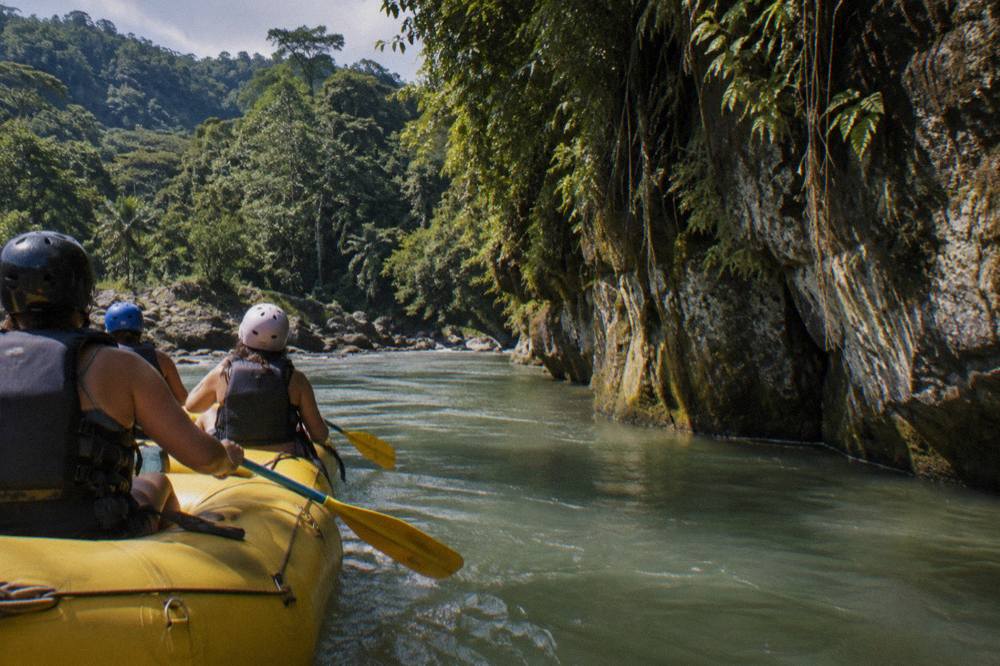
San Jose departures start earliest: operators commonly report hotel pickups between roughly 5:40 and 6:30 a.m., with return around 5:30 p.m. Turrialba departures start around 8:00 a.m. and finish the whole outing in 4 to 8 hours. Only listings whose roster line says hotel pickup listed actually include pickup; on others you meet the operator at its stated base.
Pickup is the single biggest variable in how the day feels, and it is decided by your departure town. Out of San Jose, the published pattern across operators is a hotel pickup in the 6:00 to 6:30 a.m. window, a drive east toward the Caribbean slope, breakfast at a river operations center, and a return to the city around 5:30 p.m. That is why San Jose listings on this roster show 9 to 12 hour total durations. Out of La Fortuna, operators commonly report pickups around 5:20 to 5:40 a.m.; out of Puerto Viejo and Cahuita, around 6:00 to 6:30 a.m.
Turrialba is different in kind. Because the town sits roughly 62 km from San Jose, about 1h20 to 1h40 by road, a Turrialba departure skips the capital commute entirely. Operators there start around 8:00 a.m. per one operator's published schedule, and the roster's Turrialba listings show 4 to 8 hour totals. Rafting Pacuare River One Day from Turrialba with Adrenalina Rafting, 5.0 from 385 reviews, from $99 per person, is the most reviewed example. The listing does not state pickup, so check the listing for transport if you are staying in town without a car.
Do not assume pickup is included just because a listing departs your town. The roster is explicit: White Water Rafting Pacuare River From San José (4.7 from 250 reviews, from $125) and From San José: Pacuare River Class 3 & 4 Rafting Day Trip (4.7 from 291 reviews, from $125) both list hotel pickup, as does Pacuare River Whitewater Rafting from San Jose (4.6 from 70 reviews, from $119). Confirm the pickup point on the booking page for whichever trip you choose. Once your pickup details are confirmed, the next question on most minds is safety, and a straightforward look at whitewater rafting fatality rates addresses exactly that.
| Departure town | Typical roster duration | Typical start, per operators | Pickup on the roster |
|---|---|---|---|
| San Jose | 9 to 12 hours | Hotel pickup roughly 5:40 to 6:30 a.m. | Varies by listing: some include it, some meet at a base |
| Turrialba | 4 to 8 hours | Around 8:00 a.m., per one operator's schedule | Varies: two listings include it, one excludes it, check the listing |
| Puerto Viejo | 7 hours 30 minutes | Operators report roughly 6:00 to 6:30 a.m. | Hotel pickup listed |
| La Fortuna | 10 hours | Operators report roughly 5:20 to 5:40 a.m. | Hotel pickup listed |
If you are still choosing where to base yourself, the Pacuare rafting from San Jose guide breaks that city's eight listings one by one.
What Happens At The Safety Briefing Before You Get On The Pacuare?
Expect 30 to 45 minutes on land before anyone touches water: gear fitting, paddle commands, what to do if you swim, and a rescue plan. One operator, Exploradores Outdoors, publishes a 45 minute safety talk and paddle practice slot in its day itinerary, and guides on Pacuare trips are reported to be trained in swift water rescue.
The briefing is the part of the day travelers most often under-rate, and it is where the professional operation shows. The published Exploradores Outdoors itinerary allocates 9:30 to 10:15 a.m. to safety talk and paddle practice before the descent, immediately after breakfast at its Siquirres-area center. That operator also grades its run as Class 4 at high water and Class 3+ at low water, which is why the briefing is not a formality: the commands matter more when the river is up.
Helmet and life jacket are mandatory for the entire trip, including calm sections, per operator safety pages. You will be sized for both, and some operators list chest-size or weight limits for jacket fit, so check the listing if that could apply to anyone in your group. One operator's listing requires participants to weigh 45 to 90 kg and stand at least 1.35 m tall; that is one listing's rule, not a river-wide one. Costa Rica's national rafting norm, INTE G60-1:2019, also requires operators to check weather and river conditions and to scout when flow rises, which is the regulatory backbone under the briefing. You can read the norm directly at the INAVirtual technical rafting standard.
Age and ability rules also surface at the briefing. Legally, a Class III-IV run is open from age 12 under the national norm's age table, and the roster's San Jose listings that state a minimum age say 12. Some operators raise their own minimum to 14 during the wet months when water runs higher, so a family with a 12 or 13 year old should read the listing's terms carefully. Our Pacuare rafting age limits and fitness guide covers the full table.
One practical note: leave valuables locked at your hotel or in the operator's vehicle. Some listings and operators note that cameras and phones brought on the raft are the participant's responsibility, and photo services are sold separately. If photos matter to you, that is the cleaner route; see the Pacuare rafting photos and camera rules guide for how operators handle it.
What Is The Gorge Run Like Between Breakfast And Lunch?
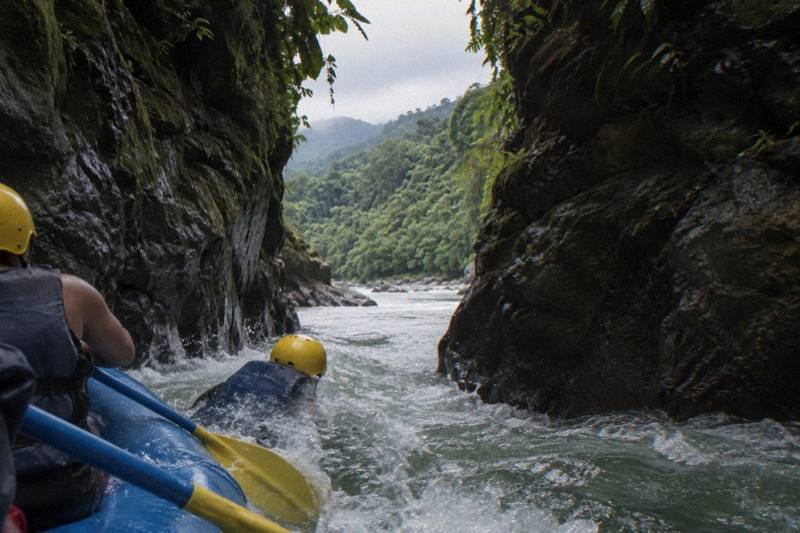
The commercial run is the Lower Pacuare gorge: continuous Class III and IV rapids between green canyon walls, with waterfalls reported dropping directly from the rock, and no road access along most of the stretch. Operators name rapids like Huacas, Cimarrones and Doble Drop on their itineraries, and guests commonly report wildlife in the corridor, never promised.
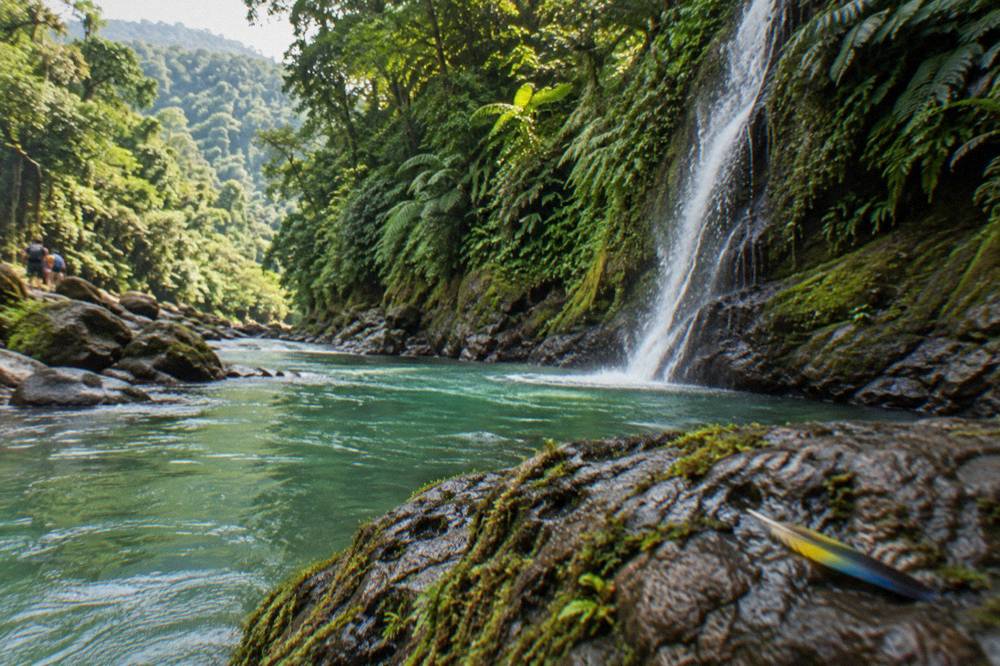
This is the reason the river has a reputation. The gorge section is what distinguishes the Pacuare from shorter, tamer runs elsewhere in Costa Rica: operators describe waterfalls streaming off the canyon walls, including the Huacas waterfall, which drops about 150 feet directly into the river channel. There is no road along most of the run, so from the time you launch until the take-out, access is by river. That isolation is the product.
The rapids themselves include named features that Wikipedia's river entry lists as Upper and Lower Huacas (Class IV), Cimarrones (Class IV) and Doble Drop (Class III). Operators fold these names into their itineraries, and guests report the gorge as the day's high point. What no operator can promise is the class on the day: in rainy season many Class III rapids push toward Class IV, and in dry season some Class IV features ease to Class III, roughly half a class of difference by one published estimate.
Wildlife in the corridor is commonly reported by operators and guests: sloths, toucans and herons come up in operator copy. None of it is promised, and no honest listing claims a sighting rate. Treat anything you see as a bonus layered on top of the paddling.
How hard it feels depends on water and on you. One traveler described the river as very beginner friendly in May at lower water; the same run in October to December, when the river is at its highest per Costa Rica Experts' destination page, is a different proposition. If you are deciding between months, the best time to raft the Pacuare guide works through the seasonal water levels in detail, and the Costa Rica Experts Pacuare page is the source for the high and low water months.
What Do You Eat On A One-Day Pacuare Trip?
San Jose, Puerto Viejo and La Fortuna listings include breakfast and lunch; the Turrialba day trips list lunch only. Lunch is typically a riverside or post-raft Costa Rican meal: the Adrenalina listing promises a typical Costa Rican lunch at the end of the trip, and operators commonly schedule a riverside picnic mid-run or a buffet at the take-out center.
The meal pattern tracks the drive. If your day starts before 6 a.m. in San Jose, La Fortuna or Puerto Viejo, the operator feeds you breakfast at or near its river center, which on the published Exploradores itinerary runs 8:15 to 9:00 a.m. before the safety talk. On San Jose listings the roster confirms breakfast and lunch are included across the board. One Puerto Viejo listing, White Water Rafting Pacuare River with Lunch From Puerto Viejo (4.8 from 62 reviews, from $147), specifically lists a freshly prepared riverside Costa Rican lunch plus a traditional breakfast and lockers at the center.
Out of Turrialba the day is shorter, so lunch replaces breakfast as the included meal. The Explornatura listing (5.0 from 196 reviews, from $120) lists lunch with transfer from Turrialba; the Ticos River Adventures listing (4.9 from 204 reviews, from $125) is a private trip whose listing shows lunch as both included and excluded; the Pacuare River Rafting listing through the same operator (4.9 from 27 reviews, from $119) includes a deli-style lunch, beverages, gear, certified guides, a safety kayak and an insurance policy. Read the inclusions block, not the headline, when comparing these.
Do not plan on alcohol at lunch. The Adrenalina listing states plainly that alcoholic beverages are not permitted on the trip for safety reasons, and several other listings exclude alcohol or sell it separately. Dietary restrictions are worth raising at booking; none of the roster listings publishes a menu beyond what its inclusions state, and only some, such as White Water Rafting Pacuare River From San José, name vegetarian or gluten-free options, so ask before assuming.
How Does The Day End And What Does The Return Transfer Look Like?
Most day trips take out in the Siquirres area, where operators run centers with showers, changing facilities and a final meal before the drive back. San Jose and La Fortuna travelers get back around 5:00 to 5:30 p.m. depending on traffic; Turrialba travelers are back by early afternoon, which is the quiet advantage of that departure.
The take-out is logistics, but it is good logistics. The published Exploradores itinerary describes the post-raft sequence at the Siquirres-area centers: shower, change, lunch, and a departure before 2:30 p.m. on the published schedule. The roster's Puerto Viejo listing names changing facilities and lockers among its inclusions, and the pattern is consistent across operators. Bring a dry change of clothes and a towel; you will want both within minutes of stepping off the raft.
The return drive is where the departure-town choice pays off or costs you. From the Siquirres side, San Jose is about an hour and a half to an hour forty by road per commonly reported figures, so a 2:30 p.m. departure lands you back near 5:30 p.m., which matches the returns operators publish. Puerto Viejo de Talamanca is about 3h30 to 4h25 from San Jose by road, so Caribbean departures run their own shuttle logic rather than backtracking through the capital; that is why the Puerto Viejo listing is 7 hours 30 minutes total while San Jose versions run 9 to 12.
The La Fortuna listing solves this elegantly. La Fortuna: Pacuare Rafting with SJO or Puerto Viejo Shuttle (5 from 20 reviews, from $150) runs a 10 hour day that doubles as a transfer: you raft, then ride to San Jose airport, Puerto Viejo or back to La Fortuna. That makes it a genuine option if you are moving between Arenal and the Caribbean coast and want the river on the day you travel. Ruta 230 rehabilitation work between Turrialba, Alvarado and Oreamuno began in September 2025 per the transport ministry, so road conditions in that corridor can add time; leave slack in any same-day flight plan.
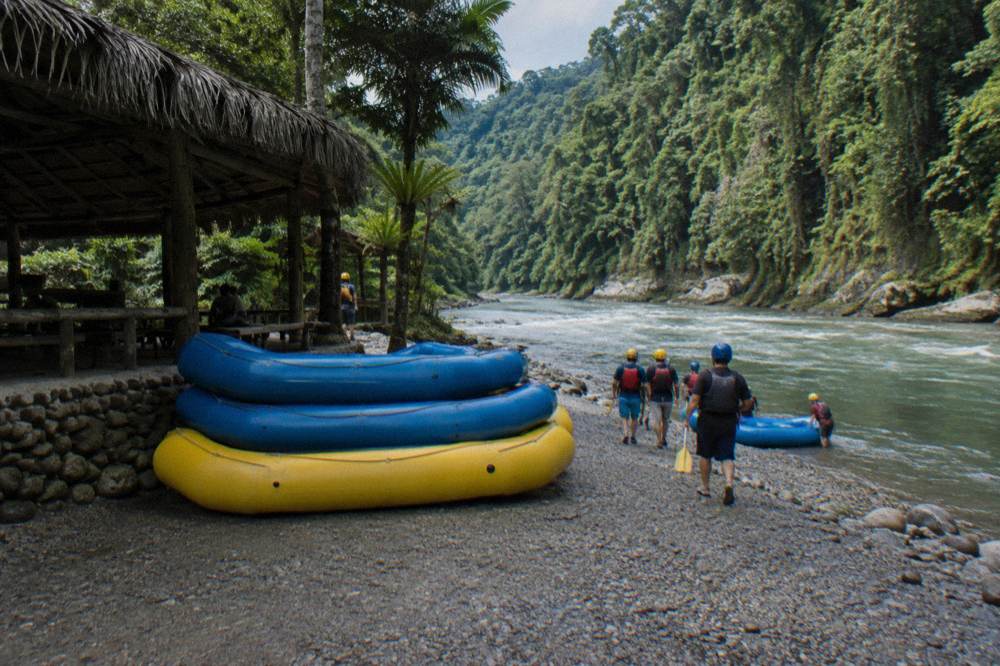
Which One-Day Pacuare Listing Fits Your Departure Town And Budget?
Turrialba gives the lowest price and shortest day: from $99 to $140 per person across six listings, durations from 4 to 8 hours. San Jose runs $112 to $195 across eight listings with the widest inclusion spread. Puerto Viejo has one listing from $147, La Fortuna one from $150, and the two-day lodge trips start at $269 if the day feels too compressed.
The pattern is clean: the closer you sleep to the river, the less you pay and the shorter the day. Turrialba is the value cluster. Adrenalina Rafting's Rafting Pacuare River One Day from Turrialba is the most reviewed listing on the entire roster, 5.0 from 385 reviews, from $99 per person, with a 6 hour total, up to 40 guests, lunch and gear included. Explornatura's version, 5.0 from 196 reviews at from $120, includes transfer from Turrialba and caps at 24 guests. Travesias Naturales' Rafting Pacuare Costa Rica, 4.9 from 46 reviews at from $140, caps at 40 guests; its duration is on the listing. Turrialtours runs the one explicitly Class IV-branded day, Pacuare River Rafting Class IV from Turrialba, from $125 with up to 18 guests and 4 reviews so far.

San Jose is the volume cluster: eight listings. The two strongest review pools are From San José: Pacuare River Class 3 & 4 Rafting Day Trip, 4.7 from 291 reviews at from $125, with hotel transport included, and White Water Rafting Pacuare River From San José, 4.7 from 250 reviews at from $125, also with hotel pickup from selected hotels, minimum age 12 and up to 20 guests. Budget-sensitive travelers will notice San José Caribe Arenal Pacuare River 1-Day Rafting Adventure at from $112, though it has only 2 reviews. The Authentic Pacuare River Costa Rica Rafting Tour is the small-group premium end at from $195 with up to 10 guests and 5 reviews.
| Listing | Departs | Price | Reviews | Duration | Pickup |
|---|---|---|---|---|---|
| Rafting Pacuare River One Day from Turrialba | Turrialba | from $99 | 5.0 from 385 | 6 hours | Check the listing |
| Rafting Pacuare River from Turrialba | Turrialba | from $120 | 5.0 from 196 | 6 hours | Hotel pickup listed |
| From San José: Pacuare River Class 3 & 4 Rafting Day Trip | San Jose | from $125 | 4.7 from 291 | 9 hours | Hotel pickup listed |
| White Water Rafting Pacuare River From San José | San Jose | from $125 | 4.7 from 250 | 10 hours | Hotel pickup listed |
| White Water Rafting Pacuare River with Lunch From Puerto Viejo | Puerto Viejo | from $147 | 4.8 from 62 | 7 hours 30 minutes | Hotel pickup listed |
| La Fortuna: Pacuare Rafting with SJO or Puerto Viejo Shuttle | La Fortuna | from $150 | 5 from 20 | 10 hours | Hotel pickup listed |
Every listing in that table shows free cancellation on its roster line, so the booking risk on any of them is low. If one day on the river is not enough, the lodge trips are the upgrade path: five multi-day listings from $269 to $505 per person, including the 2-day Pacuare with hiking from $269 departing San Jose, Puerto Viejo or La Fortuna, covered in full in the two-day Pacuare overnight rafting trip guide.
What Should You Wear And Bring For A One-Day Pacuare Day?
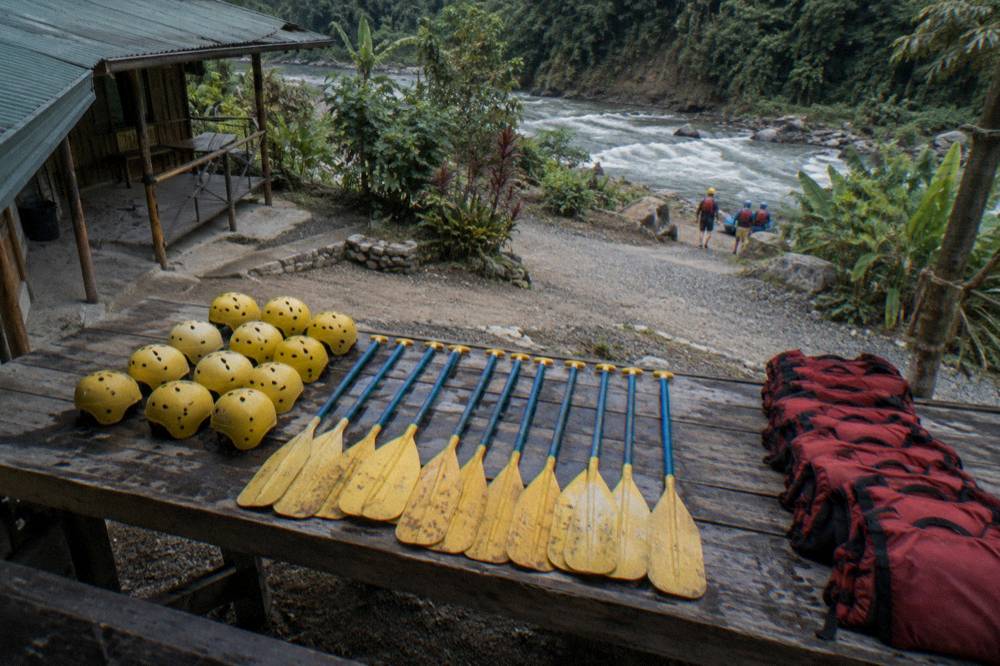
Wear a swimsuit or quick-dry clothes under the wetsuit-free outfit, secure water shoes or tennis shoes (never flip-flops), and bring sunscreen, a towel and a full change of clothes for after the take-out. Operators provide the helmet, life jacket and paddle; you provide everything that touches your skin.
Water temperature is on your side: the Pacuare typically runs about 21 C (70 F) and higher, with operator measurements from 21.2 C at high water to 26.2 C at low water, so no wetsuit is needed. The footwear rule is consistent across operator planning pages: shoes that stay on, that can get wet and muddy, with flip-flops explicitly called out as wrong. Crocs get their own treatment in our what not to wear when white water rafting article, and the short answer is that unstrapped foam is not river footwear.
The packing list is short because the operator carries the technical gear. What to bring: swimwear, secure footwear, sunscreen, a towel, a change of clothes, and cash or card for tips and photos. What stays behind: anything you would mourn, including phones, unless you accept the risk the listing assigns to you. Some roster listings note that valuables on the raft are the participant's own responsibility and that souvenir photos are sold separately, which is the operator's polite way of saying leave the good camera in the vehicle. The full checklist lives in the what to bring for Pacuare rafting guide, and the clothing logic in what to wear rafting in Costa Rica.
| Item | Why | On which side of the raft bag |
|---|---|---|
| Swimsuit or quick-dry clothes | Water sits around 21 C and up; no wetsuit needed | Wear it |
| Secure sandals, river shoes or tennis shoes | Flip-flops are the standard refusal at the briefing | Wear it |
| Helmet, life jacket, paddle | Mandatory for the whole trip, including calm sections | Operator provides |
| Sunscreen | Gorge sun is real even between canyon walls | Bring it |
| Towel and change of clothes | Showers and changing rooms at the take-out center | Leave in the vehicle |
| Cash or card | Gratuities and souvenir photos are excluded on most listings | Bring it |
Can You Do The Pacuare As A Beginner On A One-Day Trip?
Yes, within conditions. The commercial Lower Pacuare run is sold to first-timers, several operators prefer February to April for first timers and families precisely because water is lower and more predictable, and one traveler called a May trip very beginner friendly. The honest caveats: class on the day shifts with water, and higher water months push features harder.
Beginner suitability on this river is a season question more than a skill question. Operators consistently describe February to April as the window they prefer for first timers: enough water for real rapids, without the swollen conditions that raise difficulty. Water is highest and fastest October to December and lowest March to April, and one published estimate puts green-season intensity about half a class above dry season, meaning a Class III feature that eases in March can bite in July. None of that stops beginners from booking in any month; it changes which month a nervous first-timer should pick.
The regulatory floor also matters for families. Under the national norm, Class III-IV is legally open from age 12, and the roster's San Jose listings that state a minimum age say 12, but some operators raise their own minimum to 14 from June to November when water runs higher. That is an operator decision layered on the law, and it is exactly the kind of detail to check on the live listing for your travel month rather than assuming from a blog. The full age and season interaction is laid out in Pacuare rafting with kids and teens.
Physical demands are moderate and honest to describe: paddling in a crew, following commands, and the possibility of swimming in moving water if the raft flips. Guides are reported to be trained in swift water rescue, and one Turrialba operator, Ticos River Adventures, includes dedicated safety kayak support on its trips, which is a real structural safety margin worth knowing when comparing listings. No operator or writer can hand you a "safe" verdict; what you can verify on a listing is gear inclusions, guide certifications, safety kayaks, group caps and the cancellation window. For the broader statistical picture, read is Pacuare River rafting safe.
For travelers pairing the river with the rest of the region, the town you launch from has more than put-ins: the things to do in Turrialba guide covers the volcano park's guided hikes, the Guayabo archaeological site and the coffee country around the launch town, and the first-time Costa Rica adventure planning guide slots the one-day Pacuare into a full itinerary. That is the fuller version of what Pacuare Costa Rica Rafting covers across this site.
Common Questions About A One-Day Pacuare Rafting Trip
How Long Is A One-day Pacuare Rafting Tour?
Between 4 hours 30 minutes and 12 hours in total depending on the listing and departure town. Turrialba listings run 4 to 8 hours, San Jose listings 9 to 12 hours, the Puerto Viejo listing 7 hours 30 minutes and the La Fortuna listing 10 hours. Those totals include transfers, meals and the safety briefing, not just the river.
How Much Does A One-day Pacuare Trip Cost?
From $99 per person for the most reviewed Turrialba departure to $195 for the small-group San Jose listing. Turrialba runs $99 to $140, San Jose $112 to $195, Puerto Viejo from $147 and La Fortuna from $150. Two-day lodge trips start at $269 per person.
Is Breakfast And Lunch Included?
Every San Jose, Puerto Viejo and La Fortuna listing on the roster includes breakfast and lunch. Turrialba day trips generally include lunch only, and one private Turrialba listing shows lunch as both included and excluded, so check the inclusions block on the specific listing before you book.
What Time Does Pickup Happen?
Operators commonly report San Jose hotel pickups around 5:40 to 6:30 a.m., La Fortuna around 5:20 to 5:40 a.m. and Puerto Viejo around 6:00 to 6:30 a.m., with returns near 5:00 to 5:30 p.m. Turrialba departures start around 8:00 a.m. per one operator's schedule. Pickup inclusion varies by listing: some include hotel pickup, others meet you at a base.
Can Beginners Do The One-day Pacuare Run?
Yes, the commercial run is sold to first-timers, and operators prefer February to April for first timers and families because water is lower and more predictable. Class on the day shifts with water level, so conditions, not skill, are the real variable. Some operators raise the minimum age to 14 in the wet months.
What Should I Wear On The Raft?
A swimsuit or quick-dry clothes, secure sandals, river shoes or tennis shoes, and no flip-flops. Operators provide the helmet, life jacket and paddle. Water typically sits around 21 C and higher, so no wetsuit is needed. Bring sunscreen, a towel and a change of clothes for the take-out showers.