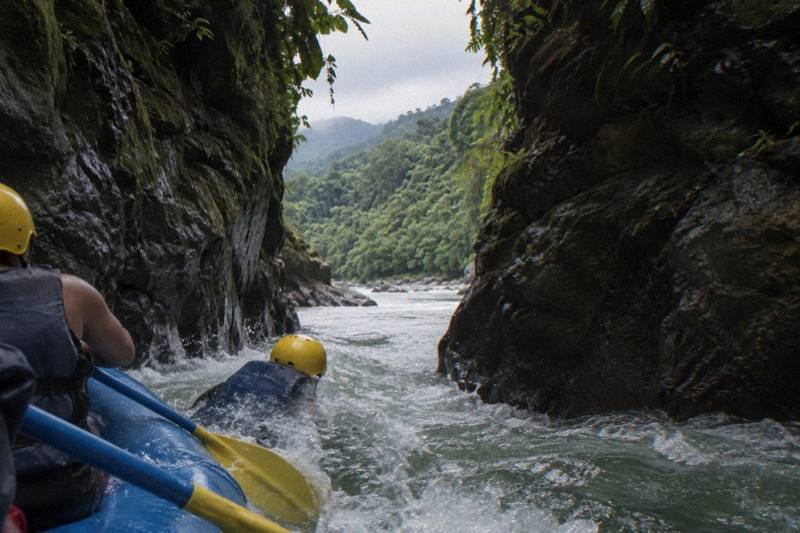
Best Time To Raft The Pacuare River: Seasons And Water Levels
The Pacuare runs all year, but the river you get in March is not the river you get in November. Here is how the seasons change the water, the rapids and the trip you should book.
Short answer
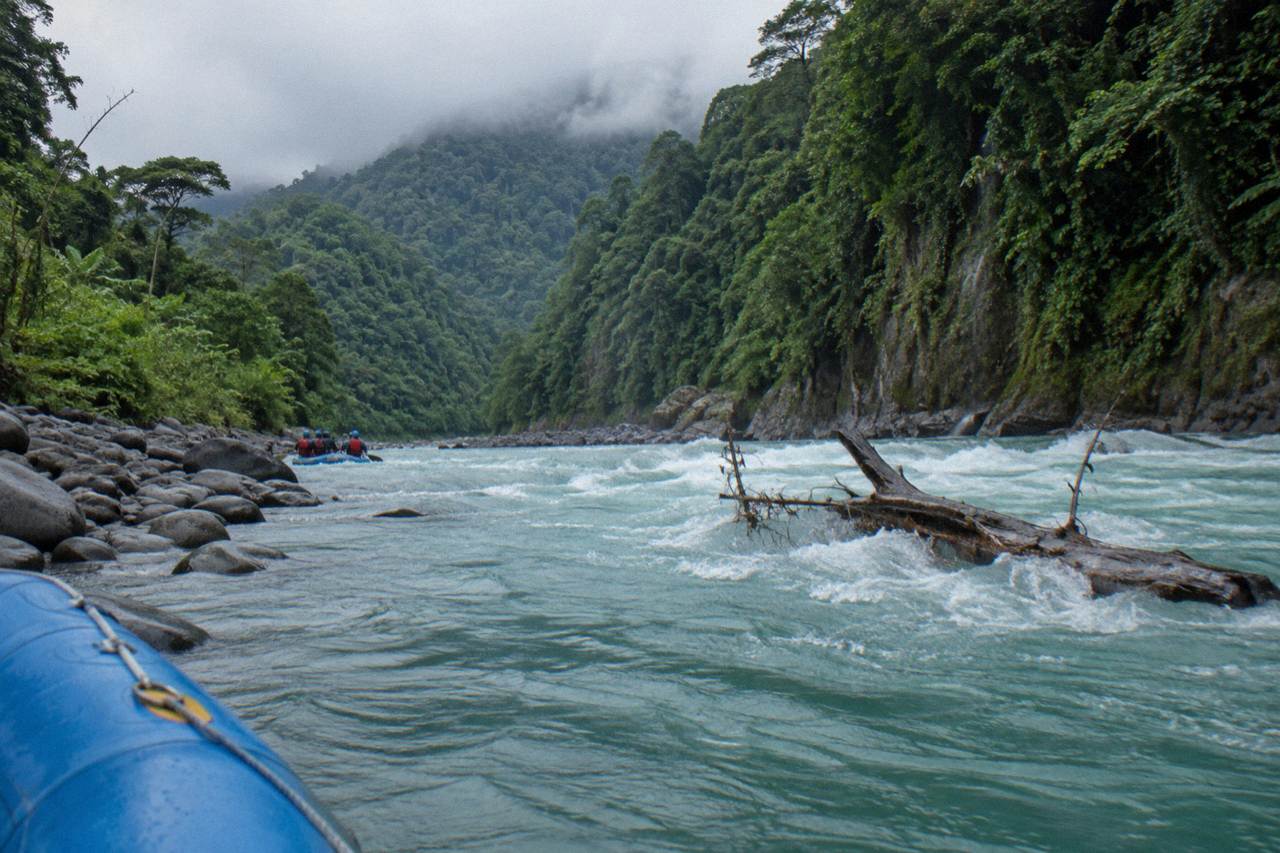
The Pacuare is runnable all year. Operators describe February to April as the sweet spot, with lower, more predictable water suited to first timers and families, while October to December brings the highest, fastest water and bigger rapids. Some operators raise the minimum age from 12 to 14 in the wetter months, so the season can decide who can go.
The Pacuare has no dam, no release schedule and no automated flow gauge. It is a rain-fed river rising in the Cordillera de Talamanca, so the water you paddle depends entirely on what the sky has been doing in the weeks before your trip. Operators describe higher, faster water in the wetter months and lower, gentler water from February to April, and the same commercial run can feel like two different rivers depending on when you go.
That makes the timing question a real one, not a footnote. The season changes the character of the rapids, the age limits some operators apply, the likelihood of afternoon rain, and to some degree which trip makes sense: a one day run out of Turrialba, a San Jose departure with a long transfer, or a two day lodge overnight. This guide walks through the year on the river, month by month, using rainfall modelled for the Turrialba area and the season descriptions operators themselves publish.
What Is The Best Time Of Year To Raft The Pacuare River?
For most travelers the answer is February to April: operators themselves describe this window as the sweet spot, with enough water for exciting rapids without the swollen conditions of late autumn. The river is runnable all year, so there is no closed season, but water is highest and fastest from October to December and lowest from March to April. First timers and families are steered toward the drier months.
The reason is simple physics. The Pacuare drains a wet Caribbean slope watershed, and its level tracks recent rain. In the drier stretch of February to April, operators report that some rapids that run Class IV at high water soften toward Class III, the water is warmer, and the runs are more predictable. One published account describes the river as very beginner friendly in May with lower water levels, and several operators repeat the same pattern: dry season means readable, forgiving rapids. To see how those shifting ratings break down section by section, read our guide to the Pacuare's rafting difficulty rating.
Experienced rafters often flip that advice. September and October bring bigger water, and some seasoned paddlers prefer those months precisely because the gorge gets pushy and powerful. The tradeoff is a higher chance of afternoon thunderstorms and, in very high water, the possibility that an operator cancels or reroutes a departure. That is a real operational fact, not a scare story: operators on rain-fed rivers cancel or reroute in high water or flooding, and a good operator will tell you so plainly.
If your dates are flexible, the practical move is to pick the month first and the tour second. A traveler who wants maximum scenery with manageable rapids books February to April. A traveler who wants big water and accepts the weather risk books late in the year. And a traveler locked into a July trip should not panic: the river runs and the gorge is beautiful. For the shape of the full day, the one day Pacuare trip planner breaks down what the schedule looks like.
How Do Water Levels Change Month To Month On The Pacuare?
Water is highest and fastest from October to December, and lowest from March to April, with everything in between grading gradually from one state to the other. There is no month when the river does not run. What changes is the class feel: in rainy season many Class III rapids behave like Class IV, and in dry season Class IV rapids often drop to Class III.
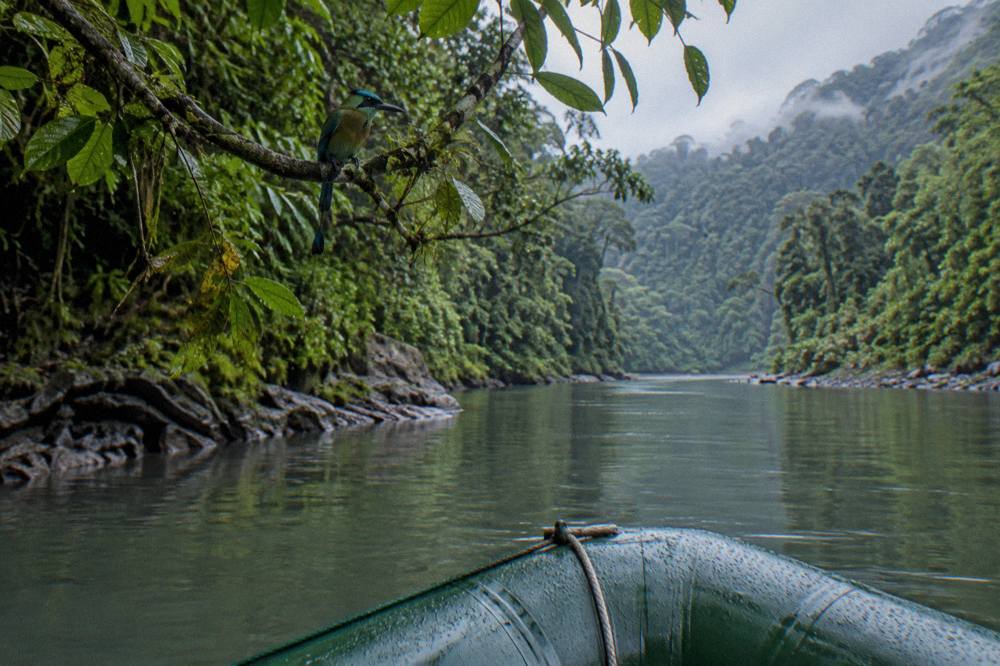
One operator, Costa Rica Experts, publishes the pattern plainly: highest and fastest water October to December, lowest March to April, runnable all year. Another framing comes from rafting writers who track the same river: green season increases rapid intensity by about half a class on average. That half a class matters. The standard commercial run is Class III to IV at normal levels, so a half class bump in October means a genuinely big water day, while a half class drop in March means the same rapids read softer.
These are ERA5 modelled monthly averages for the Turrialba grid point, not station records, so treat them as a shape rather than a promise: the wettest modelled months are November and October, and the driest are March, February and April.

Here is the month by month detail, using the same modelled averages for the Turrialba area. Read it as the shape of the year: a dry floor in late winter, a first wet bump in May, a plateau through mid year, and the big climb from October onward.
| Month | Modelled rainfall near Turrialba | What it means for the river |
|---|---|---|
| January | 305 mm | Wet start to the year, water still elevated |
| February | 198 mm | Dropping fast, the dry window opens |
| March | 181 mm | Driest month, lowest water of the year |
| April | 187 mm | Still low, the sweet spot continues |
| May | 303 mm | First green season jump, water rising |
| June | 309 mm | Green season established |
| July | 379 mm | Mid year peak before a brief dip |
| August | 323 mm | Sustained high water |
| September | 280 mm | Slight dip, big water months begin |
| October | 412 mm | High water, experienced rafter territory |
| November | 477 mm | Wettest modelled month, peak flow |
| December | 360 mm | High water easing back down |
Here is the same pattern as a quick seasonal reference, pairing each stretch of the year with what operators say the river does and who it suits.
| Months | Water level | Rapid character | Best suited to |
|---|---|---|---|
| Feb to Apr | Lowest of the year | Class IV sections often soften to Class III | First timers, families, photographers |
| May to Aug | Rising through the green season | Roughly half a class up on dry season | Confident beginners and up |
| Sep to Oct | High water | Class III rapids can behave like Class IV | Experienced rafters wanting big water |
| Oct to Dec | Highest and fastest | Full Class IV feel in the gorge | Paddlers comfortable with big water |
Two trip types that fit this decision well are the most reviewed day trip on the roster, Rafting Pacuare River One Day from Turrialba (5.0 from 385 reviews, from $99 per person), and Pacuare River run by Ticos River Adventures (4.9 from 204 reviews, from $125 per person). Both depart Turrialba, which shortens the transfer and makes an early start less painful when the rain is falling on the coast road.
Is Green Season Rafting On The Pacuare Too Difficult For Beginners?
Most beginners who go in the green season still have a good trip, but the honest answer is that the rapids run harder and the weather is wetter. Operators describe May to November as higher, faster water, and many steer first timers and families toward February to April instead. If your dates only allow green season, choose an operator with a strong safety setup.
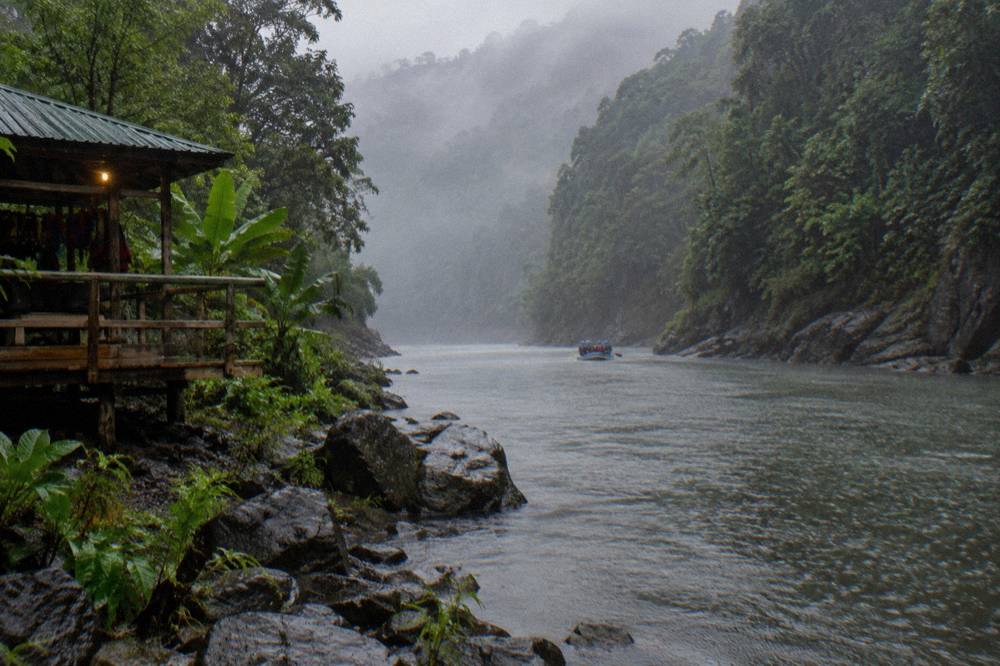
The green season is not a monsoon. On the Caribbean slope, rain falls through much of the year anyway, and the difference between a March day and a July day is more about intensity and frequency than a binary switch. What green season reliably means for the Pacuare is higher water in the gorge, faster current between rapids, and less recovery pool when something goes sideways. A beginner who is a confident swimmer and reasonably fit will usually manage. A nervous swimmer may prefer the dry months.
The safety picture helps. Roster listings describe certified guides, and the Ticos River Adventures Pacuare River Rafting day trip from Turrialba (4.9 from 27 reviews, from $119 per person) lists a dedicated safety kayak, certified guides and an insurance policy among its inclusions, which is exactly the kind of setup a green season beginner should look for. Guidance on the river is also regulated: Costa Rica's national rafting norm sets minimum ages by rapid class and requires operators to check weather and river conditions and to scout when flow rises. You can read the practical version of that in is Pacuare River rafting safe.
A green season trip also rewards a little flexibility in your itinerary. If you are in Costa Rica for ten days rather than five, leave a spare day either side of your rafting date so the operator can move your departure if the river spikes. Ask about the cancellation and rebooking policy on the booking page before you pay: most day trips on this roster list free cancellation, but three of the multi day lodge trips set their own window of three to six days before departure.
When Is The Pacuare At Its Highest And Its Lowest?
Highest and fastest: October to December. Lowest: March to April. Those are the two anchors of the year, and every other month sits somewhere between them. The river is runnable in all twelve months, so neither extreme closes the run, but they change its character substantially.
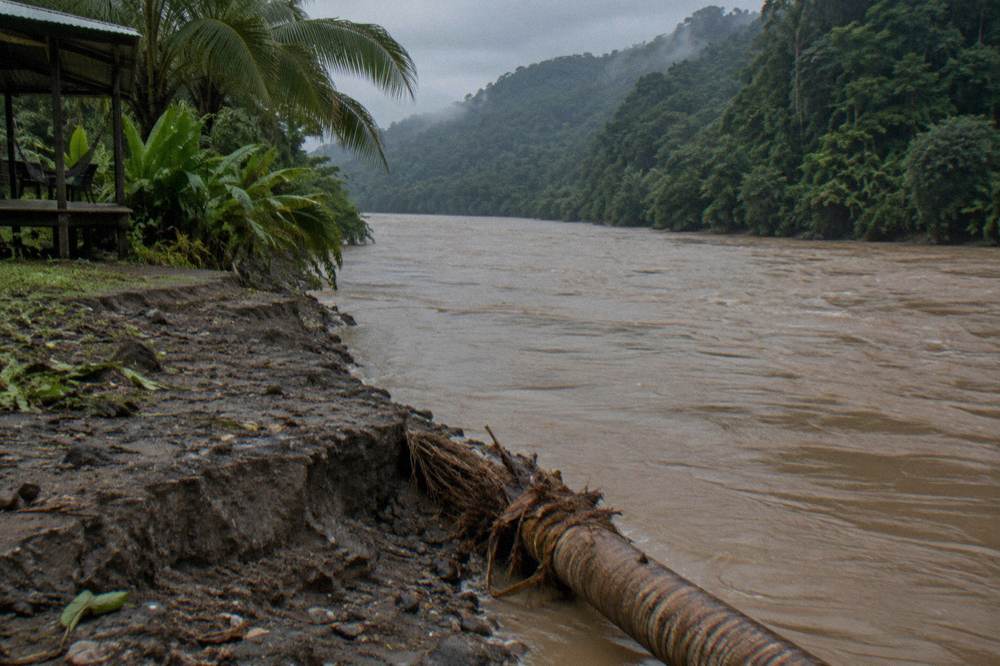
At the October to December peak, the water temperature is still mild: an operator that measures it reports typically 21 C (70 F) and higher, with readings from 21.2 C at high water to over 26 C at low water, and no wetsuit needed. The cold is never the problem on the Pacuare. The volume is. One operator grades the same run Class 4 at high water and Class 3 plus at low water, which is the cleanest one sentence summary of the seasonal swing you will find anywhere. More of these guides are collected on Pacuare Costa Rica Rafting.
At the March to April floor, the rapids tighten rather than disappear. Lower water exposes rocks that high water buries, so the line through a rapid gets more technical even though the consequence of a miss gets smaller. Guides who run the river weekly know these lines cold, which is one reason the dry months are recommended for first descents of a different kind: your first time in a raft.
For a sense of the rainfall behind both states, the modelled averages for the Turrialba area run from about 181 mm in March up to about 477 mm in November, an annual total of roughly 3,714 mm. The Siquirres grid point, down toward the take out end of the watershed, is wetter still, about 4,014 mm a year. Those are modelled numbers, not station records, and a station cross-check agrees on the shape: February to April driest, October to December wettest, with the two datasets differing only on which single month tops the chart.
Does The Season Change Age Limits And Who Can Go?
Yes, and this is the detail families miss. The national norm allows ages 12 to 17 on Class I to IV water, so 12 is the legal floor for a Pacuare run, but some operators raise their own minimum from 12 to 14 during the higher water months of roughly June to November. Always check the listing for the age in force on your date.
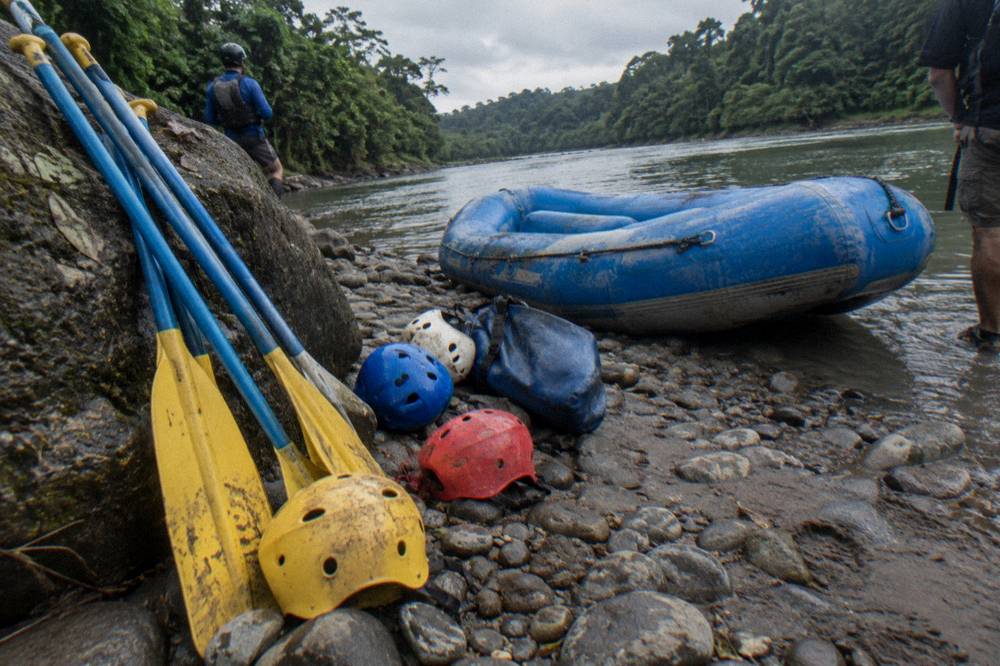
The national technical norm for rafting in Costa Rica, INTE G60-1:2019, sets minimum ages by rapid class: under 5 no class at all, 5 to 7 Class I and II, 8 to 11 Class I to III, 12 to 17 Class I to IV, and 18 and over Class I to V. On the roster, the listings that state a minimum age say 12, including White Water Rafting Pacuare River From San José (4.7 from 250 reviews, from $125 per person) and the Puerto Viejo departure. Many Turrialba listings leave the age to the listing page, so read it before booking for a 12 or 13 year old. If the age thresholds have you wondering how risky this sport actually is, the look at whitewater rafting fatality rates and guided trip safety puts the danger in perspective.
The seasonal wrinkle is real. One Turrialba based operator raises its Pacuare minimum age to 14 from June to November because the water runs higher, and keeps it at 12 from December to May. Another maintains 12 year round. So a family with a 13 year old can be fine in March and turned away in August, purely because of the calendar. The full breakdown, including fitness and what the age rules mean trip by trip, is in Pacuare rafting age limits and fitness.
Weight and size limits, where they exist, are set per operator, and some listings mention chest size limits for life jackets. None of that is seasonal, but it belongs on the same pre booking checklist: ages, weights, and whether the water state on the day might change the plan. If your group spans a wide age range, the family focused advice in Pacuare rafting with kids and teens covers how to pick a departure everyone can legally join.
Which Month Should You Book For Each Kind Of Trip?
Book February to April for a first rafting trip, a family trip or a photography focused day. Book May to August for a balance of good water and thinner crowds. Book September to October only if your group wants big water, and book November to December knowing the river is at its most powerful and the weather at its least reliable.
Different products on the roster suit different seasons for practical reasons too. The San Jose day departures are long days, commonly 9 to 12 hours door to door, and a wet season transfer adds fatigue to a big water day. The Turrialba departures are shorter total days, 4 to 8 hours on the roster, which makes them a better fit when the weather is moody. The two day lodge trips are their own category: you are sleeping in the gorge, so the season shapes the whole experience, not just the paddle.
| Your situation | Best months | Roster trips that fit |
|---|---|---|
| First time rafter | Feb to Apr | Rafting Pacuare River One Day from Turrialba, from $99 |
| Family with teens | Feb to May | From San José: Pacuare River Class 3 & 4 Rafting Day Trip, from $125 |
| Short day, staying in Turrialba | Any month | Pacuare River Rafting, 4 hours, from $119 |
| Big water seeker | Sep to Oct | Pacuare River Rafting Class IV from Turrialba, from $125 |
| Riverside overnight | Feb to Apr for calmer water | San José Caribe Arenal Pacuare Hiking and Rafting 2-Day Trip, from $269 |
The Class IV specific listing from Turrialba (from $125 per person, up to 18 guests) is worth flagging for the big water months, since it names the class outright. For the lodge trips, the two day Pacuare overnight guide covers what changes when you spend a night on the river, and remember some of those listings set their own cancellation windows of three to six days before departure, which matters more when late year weather is in play. If you're still weighing how demanding the rapids might feel, our plain guide to rafting difficulty explains what those rapid classes really mean for a first-timer.
What Should Date-Flexible Travelers Know Before Booking?
Pick the month, then pick the trip, then book early enough to get the departure you want. Most day trips on this roster list free cancellation, which means a date flexible traveler can lock a February or March day in advance and adjust later if plans shift. The one caution is some multi day trips, whose cancellation windows run three to six days before departure.
Date flexibility is genuinely valuable on this river, more than on most bookable activities. Because the Pacuare is rain-fed, a single heavy storm two days before your trip can raise the level enough that the operator reroutes or reschedules, and a flexible traveler simply takes the next departure. Travelers locked to one date should build a buffer day and check the weather outlook with the operator a day or two ahead.
Pricing on the roster does not swing by season in any way the listings show: the same from prices are listed year round, from the $99 Turrialba day trip up to the $505 three day expedition. For a fuller picture of what each trip type costs and includes, see how much Pacuare River rafting costs. To figure out which window balances water flow, rapid class, and crowd levels, read our guide to the best month for white water rafting in Costa Rica.
One last planning note that pairs well with the season question: what to carry on the raft. Valuables are the participant's responsibility, and operators commonly offer paid photo packages instead, so the wetter the month, the more this matters. The details are in Pacuare rafting photos and GoPro rules.
Season choice is the single biggest lever a Pacuare traveler controls. The river gives you the rapids; the calendar decides how big they are.
Common Questions About The Best Time To Raft The Pacuare River
What Is The Best Time Of Year To Raft The Pacuare River?
February to April, for most travelers. Operators describe this window as the sweet spot: enough water for exciting Class III to IV rapids without the swollen conditions of late autumn. First timers and families are steered toward these months, and some operators reserve their age 12 minimum for the December to May stretch.
Can You Raft The Pacuare In Rainy Season?
Yes. The river is runnable all year, and green season trips run with higher, faster water. Expect many Class III rapids to behave like Class IV, a higher chance of afternoon rain, and occasional operator cancellations or reroutes when the river spikes. Confident beginners usually manage; nervous swimmers should wait for the dry months.
Which Months Have The Highest Water On The Pacuare?
October to December. Modelled rainfall near Turrialba peaks in November at about 477 mm for the month, and operators report the highest, fastest water across those three months. September and October attract experienced rafters who want exactly that.
Do Age Limits Change With The Season On The Pacuare?
They can. The national norm sets 12 as the minimum for Class IV water, but at least one operator raises its own minimum to 14 from June to November because the water runs higher. Check the listing for the age in force on your travel date before booking for a 12 or 13 year old.
Is The Pacuare Colder In The Wet Months?
No. Water temperature is typically 21 C (70 F) and higher year round, with operator measurements of 21.2 C at high water and up to the mid 20s at low water. No wetsuit is needed in any season; the seasonal difference is volume, not temperature.