Is Pacuare River Rafting Safe: Guides, Gear And Real Risks
Straight answers on Pacuare rafting safety: what the guides are trained to do, what gear you must wear, what happens when someone swims, and what no operator can promise.
Short answer
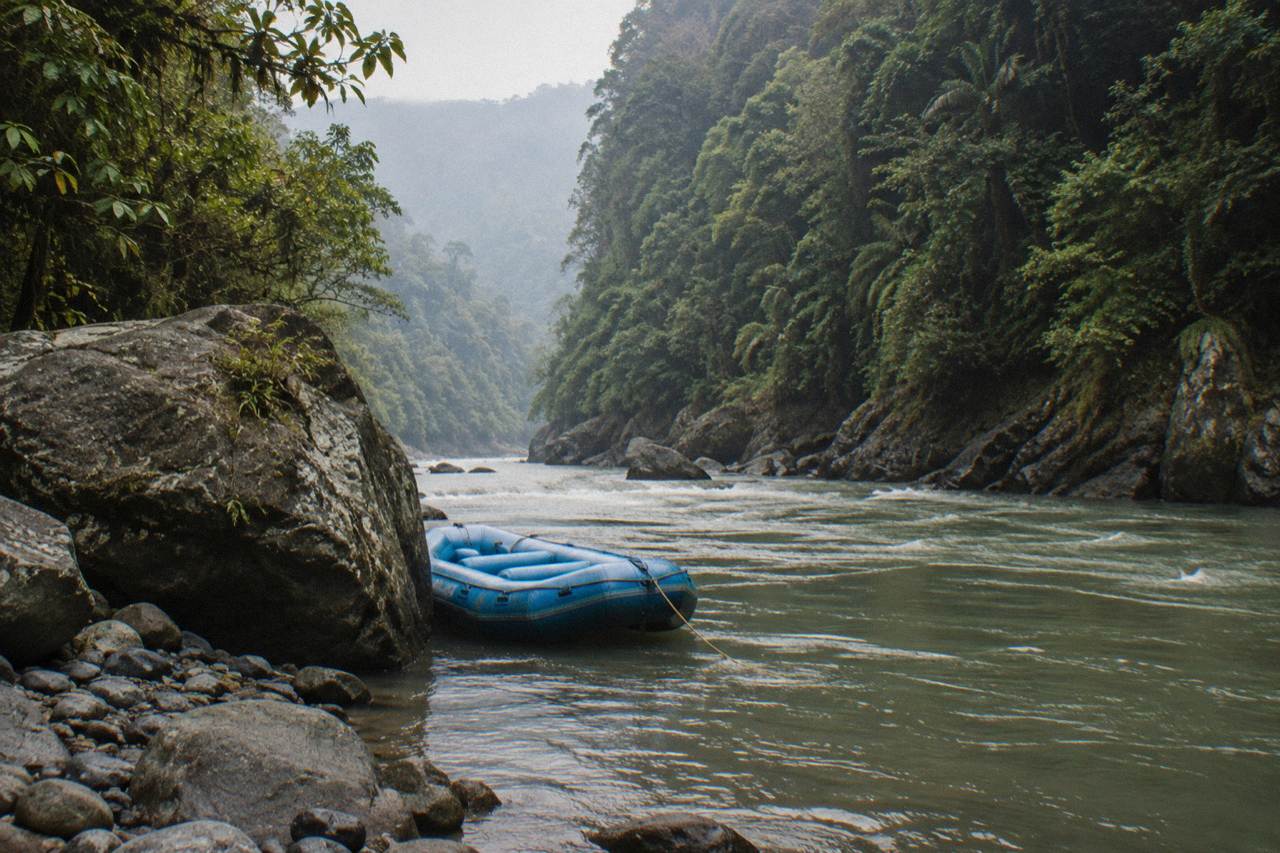
Pacuare trips run with certified guides, mandatory helmets and life jackets, safety kayaks on some departures, and a national technical norm that sets minimum ages by rapid class. No official rafting-specific incident statistic for Costa Rica was found, so read each listing's own safety details, book a guided trip, and follow the briefing.
Rivers do not sign waivers, and the Pacuare does not either. The honest answer to whether this run is safe is that a commercial Pacuare trip is a guided, equipped, regulated activity on a rain-fed river whose difficulty moves with the water, and that the risks sit firmly in the hands of three things: the operator you choose, the gear you are required to wear, and how closely you follow the briefing. This page lays out the listings and the published safety practices, including the parts no brochure prints.
Costa Rica regulates commercial rafting through a national technical norm, INTE G60-1:2019, which sets minimum ages by rapid class, requires operators to check weather and river conditions, and requires scouting when flow rises. You can read the norm itself in the official INTE document. On top of that sits the practical layer: guides trained in swift water rescue, mandatory helmets and personal flotation devices, safety kayakers on several roster trips, and a briefing that teaches you what to do before you need to do it. The most reviewed Turrialba day trip, Rafting Pacuare River One Day from Turrialba, 5.0 from 385 reviews from $99 per person, states in its own inclusions that helmets, life vests and paddles are provided. That is the baseline, not a bonus.
Is Pacuare River Rafting Safe?
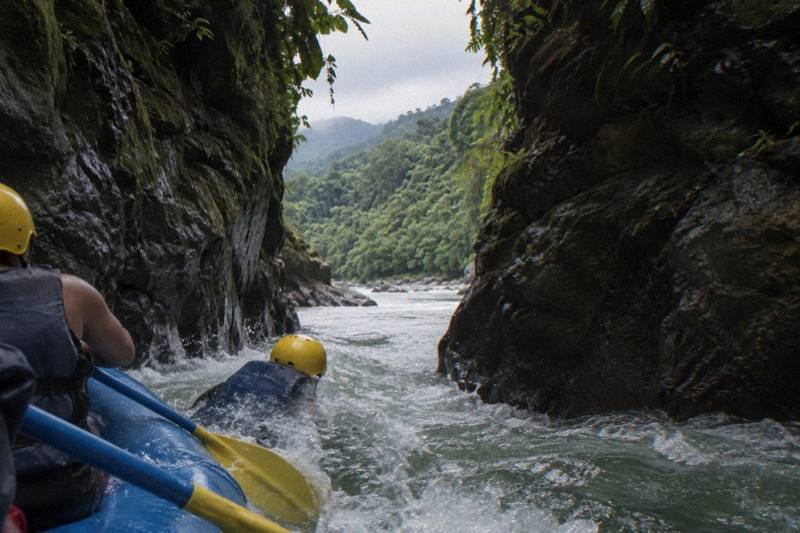
Pacuare commercial trips run under a national rafting norm, with certified guides, mandatory helmets and life jackets, and, on some departures, a dedicated safety kayak. No official rafting-specific fatality or injury statistic for Costa Rica could be found to publish, so this page frames risk by what operators must do and what you can verify on a listing, rather than by a number that does not exist. The Pacuare's Lower section, the stretch most day trips run, is generally described as Class III-IV, and one operator, Exploradores Outdoors, grades its run Class 4 at high water and Class 3+ at low water. That spread is the whole story of Pacuare safety in one sentence: the river you get depends on the month and the rain. For a wider sense of how risky this sport really is, the honest guide to whitewater rafting fatality rates covers what is known, what is not, and how a guided trip on a similar river is actually run.
What "safe" means on a river like this is conditional. Operators describe higher, faster water in the wetter months and lower, gentler water from February to April, and they prefer February to April for first timers and families. Some raise their minimum age from 12 to 14 between June and November precisely because the water runs bigger. Operators also cancel or reroute in high water or flooding; that is a feature of a well-run company, not a failure.
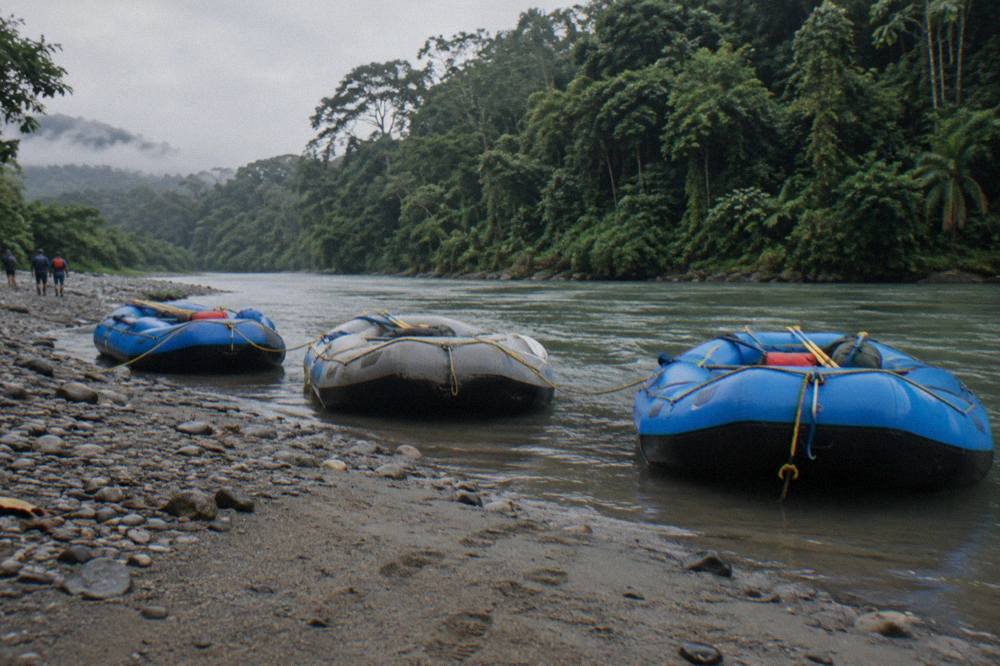
Many listings on this site name a professional guide in their inclusions, from the big San Jose departures like From San José: Pacuare River Class 3 & 4 Rafting Day Trip, 4.7 from 291 reviews, to small Turrialba operations like Pacuare River Rafting by Ticos River Adventures, 4.9 from 27 reviews, whose inclusions list a certified guide, gear, a safety kayak and an insurance policy. For a deeper look at the rapid classifications themselves, see the site's guide to Class III-IV rapids on the Pacuare.
What Actually Happens In A Pacuare Safety Briefing?
Before any raft touches the water, guides run a safety talk and paddle practice; one operator schedules 45 minutes for exactly this. You learn the forward and back paddle commands, how to hold the rope, how to float on your back with feet up and pointed downstream, and how a rescuer reaches you. Skipping it is not an option on a commercial trip. Guides on Pacuare trips are described as trained in swift water rescue and carrying safety kits for the full length of the run, per a Costa Rica rafting planning guide.
The briefing is also where the swimming is rehearsed. The swim position in moving water is on your back, feet at the surface, toes up, aimed downstream so you fend off rocks with your legs rather than your head. The point of all of it is repetition: you practice the motions on flat water so they exist in your body before any rapid needs them.
| Briefing element | What it covers | Why it matters on the Pacuare |
|---|---|---|
| Paddle commands | Forward, back, stop, right, left | Raft steering depends on the whole crew responding together |
| Swim position | Back float, feet up, pointed downstream | Protects your head from rocks in moving water |
| Rope and grip | Perimeter line, throw rope rescues | The fastest way back into a raft after a swim |
Timing varies by operator, not by law. The published Exploradores Outdoors day itinerary includes a safety talk and paddle practice block at its Siquirres Exploration Center before the descent. If a listing is thin on what its briefing covers, ask the operator directly before booking; the good ones answer that question happily.
Those three trips are the natural shortlist for a safety-conscious reader: the most reviewed Turrialba day trip, the high-volume San Jose Class III-IV departure with hotel pickup listed, and a private Ticos River Adventures run from Turrialba.
Are Pacuare Rafting Guides Certified For Rescues?
Guides on commercial Pacuare trips hold rafting certifications and swift water rescue training, and many listings on this site name professional or certified guides in their inclusions. Costa Rica's national norm also requires operators to check conditions and scout when flow rises, so the guide's judgment about the day's water is a regulated duty, not a personal style. Family-run Ticos River Adventures, over 30 years in operation, includes dedicated safety kayak support on its Pacuare trips, and its roster listing names certified guides, gear, a safety kayak and an insurance policy among the inclusions. For the wider picture beyond this one river, our breakdown of white water rafting safety in Costa Rica explains the national norm, mandatory gear, and how the seasons change conditions on the Pacuare.
The distinction that matters to a nervous reader is between a guide and a rescue-capable crew. A guide steers and commands. A rescue-capable crew adds a safety kayaker or a safety cataraft downstream of the rafts, positioned to reach a swimmer within seconds, plus a trip leader empowered to portage or cancel a rapid if the water looks wrong that day. The Full Day Pacuare River Rafting Experience from San Jose lists a safety kayaker in its inclusions directly, alongside a river guide and 5 hours of rafting within a 1-day listing.
Ask two questions before you book any Pacuare trip: whether a safety kayaker accompanies the run, and what the operator does when the river is unusually high. Operators cancel or reroute in high water or flooding; a company that answers that question with specifics is telling you something worth hearing. For how water levels move through the year, the site's page on the best time to raft the Pacuare River breaks down the seasons.
What Safety Gear Is Mandatory On The Pacuare?
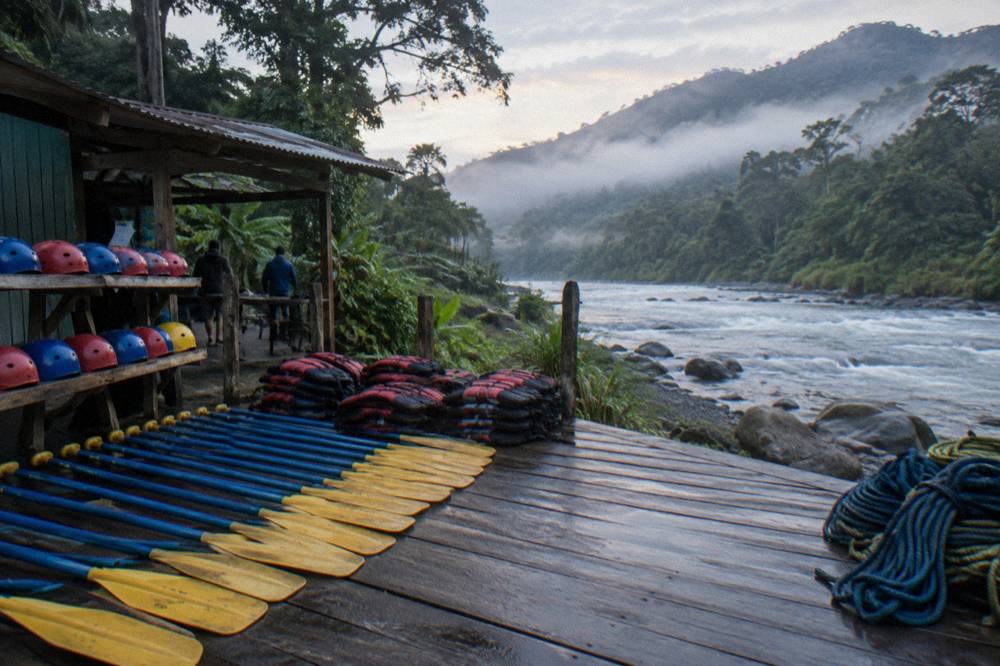
A helmet and a life jacket, properly fastened, are mandatory for the entire trip including all calm sections, and the paddle comes with them. Operators provide the full kit; most roster day listings name rafting equipment in their inclusions, so bringing your own gear is neither expected nor necessary. Footwear rules are the one place guests get it wrong: tennis shoes or secure sandals and river shoes that can get wet and muddy are the norm, and flip-flops are not acceptable on a whitewater run.
The gear list is short because the river provides the rest of the difficulty. What you wear matters more than what you carry: swimwear or quick-dry clothes, a towel and a change of clothes for after, sunscreen, and nothing loose that a current can pull. Water temperature on the Pacuare is typically around 21 C, warm enough that no wetsuit is needed, per operator measurements. Valuables such as cameras and phones brought on the raft are the participant's responsibility, and several operators sell photo packages instead.
| Item | Provided by operator | You bring | Notes |
|---|---|---|---|
| Helmet | Yes, listed inclusions | Nothing | Worn the whole trip, calm sections included |
| Life jacket (PFD) | Yes, listed inclusions | Nothing | Some operators list weight or chest-size limits; check the listing |
| Paddle | Yes, listed inclusions | Nothing | Commands rehearsed in the briefing |
| Footwear | No | Tennis shoes or secure sandals | No flip-flops |
| Clothes | No | Swimwear or quick-dry | Towel and a dry change for after |
| Photos | Optional purchase | Dry bag if you bring a camera | Phones on the raft are at your own risk |
The 1 day Pacuare River Rafting with Transportation and Lunch listing from Tropical Rivers spells its kit out plainly: rafting equipment, vest, helmet, rowing guides and raft. The La Fortuna shuttle trip by Calypso Adventures, 5 from 20 reviews, lists certified guide and equipment with no ambiguity. When a listing is vague, that vagueness is information; email before paying.
What Happens If You Fall Out Of The Raft?
You float on your back, feet up and pointed downstream, hold your paddle if you safely can, and let the raft or the safety kayaker come to you. The swim drill is rehearsed in the briefing before the first rapid. Falling out is a normal, planned-for event on a Class III-IV river, not an emergency by itself.
The mechanics are worth knowing in advance because panic is the actual hazard. Feet up matters: a swimmer who stands in moving current risks a foot entrapment against the riverbed, which is why every briefing drills floating instead of walking. Pointing downstream lets your legs, not your skull, meet the rocks. The perimeter line around the raft gives you a grip if you surface alongside it, and the guide will haul you over the tube by your jacket shoulders. A throw rope from shore or a kayaker's kayak bow is the backup layer.
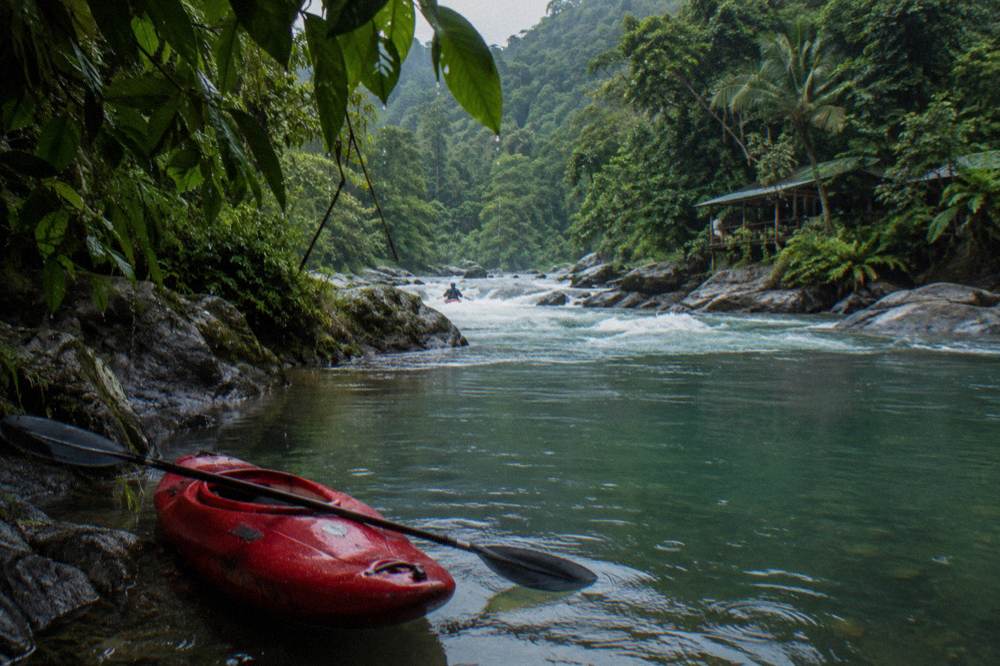
What you should not do is equally simple. Do not stand in current. Do not let go of the raft to chase a floating water bottle. Do not swim against the current toward a bank that is moving past you; angle with it instead. One roster listing, Pacuare River Rafting from Turrialba by Ticos River Adventures, 4.9 from 27 reviews from $119 per person, lists a safety kayak and insurance policy among its inclusions, which is exactly the layer that makes a fast recovery routine.
After that swim-drill discussion, that Ticos listing is the one to keep in view: Turrialba operation, Class III-IV stated, deli lunch and beverages included, and the safety kayak named on the listing itself.
What Are The Age And Fitness Rules On The Pacuare?
The national norm INTE G60-1:2019 sets legal minimum ages by rapid class: 12 to 17 years may run Class I to IV, 18 and over Class I to V, and under 12s are limited to gentler water. So a Class III-IV Pacuare trip is legally open from age 12, operators often set their own higher minimums, and some raise 12 to 14 in the wetter months. On this roster, the listings that state a minimum age say 12; the rest say check the listing.
| Age | Classes allowed under INTE G60-1:2019 | What it means on the Pacuare |
|---|---|---|
| Under 5 | No class | Too young for any commercial raft |
| 5 to 7 | Class I and II | Not the Pacuare run on this roster |
| 8 to 11 | Class I to III | Below the standard Class III-IV day trip |
| 12 to 17 | Class I to IV | Legal for the Pacuare; operator minimums apply, some raise to 14 in wet months |
| 18 and over | Class I to V | All commercial runs open |

Fitness is the quieter half of the question. Paddling a Class III-IV run is interval effort, short hard bursts between calmer stretches, not sustained endurance, but you need to be able to swim briefly, follow shouted commands, and haul yourself back over a raft tube with a guide's help. Medical policy and weight limits are set per operator: one operator requires participants to weigh 45 to 90 kg and stand at least 1.35 m tall, while others list chest-size limits for life jackets. Never assume; check the listing and answer the operator's medical questions honestly. For family planning, the site's guide to Pacuare rafting with kids and teens covers the practical details.
When Is The Pacuare River At Its Most Demanding?
Water is highest and fastest from October to December and lowest from March to April, and the river is runnable all year. In rainy season many Class III rapids behave like Class IV and Class IV rapids soften to Class III in the dry, and some operators raise the minimum age to 14 from June through November because the water runs higher. February to April is what operators prefer for first timers and families.
| Period | Water condition, operator descriptions | Who it suits |
|---|---|---|
| February to April | Lowest water, March and April the minimum | First timers, families, photographers |
| May to July | Rising water, faster rapids | Confident paddlers wanting bigger waves |
| August to September | High water, afternoon thunderstorms likelier | Experienced rafters chasing big water |
| October to December | Highest and fastest water | The most demanding window; operators may cancel or reroute |
Rainfall data backs the pattern rather than dictating the day. ERA5 modelled averages for the Turrialba grid point run from about 181 mm in March to about 477 mm in November, and a station cross-check agrees on the shape of the year: February to April driest, October to December wettest. The Caribbean slope gets rain through much of the year, unlike the Pacific side, so a "dry season" Pacuare trip is drier, not dry. There is no automated government flow gauge on this river; operators read conditions directly, and destination specialists describe the seasonal water pattern in similar terms.
The safety takeaway is seasonal honesty about yourself. A nervous beginner in late October is booking a different river than the same beginner in late March. If your dates are fixed in a wetter month, say so when you book and pick an operator that will tell you no. The White Water Rafting Pacuare River with Lunch From Puerto Viejo departure, 4.8 from 62 reviews from $147 per person, includes certified bilingual guides and full equipment for Caribbean-coast based travelers, and its listing states a minimum age of 12 and a group size up to 25 guests.
Which Pacuare Trip Should A Nervous Beginner Book?
Book Rafting Pacuare River One Day from Turrialba ($99 per person, 5.0 from 385 reviews) because departing from Turrialba means less driving while you paddle the same river, and it includes helmets, life vests, paddles and a typical Costa Rican lunch. If you want a stated class and hotel pickup, From San José: Pacuare River Class 3 & 4 Rafting Day Trip (4.7 from 291 reviews, $125 per person) names both.
The reasoning is straightforward. A shorter total duration, 6 hours for the Turrialba day versus 9 to 12 hours for San Jose round trips, means less time wondering and a shorter commitment if nerves build. A smaller stated group, up to 24 on Explornatura's Rafting Pacuare River from Turrialba, 5.0 from 196 reviews from $120 per person, means closer guide attention. And the dry-season window, February to April, stacks the odds toward gentler water on the same rapids.
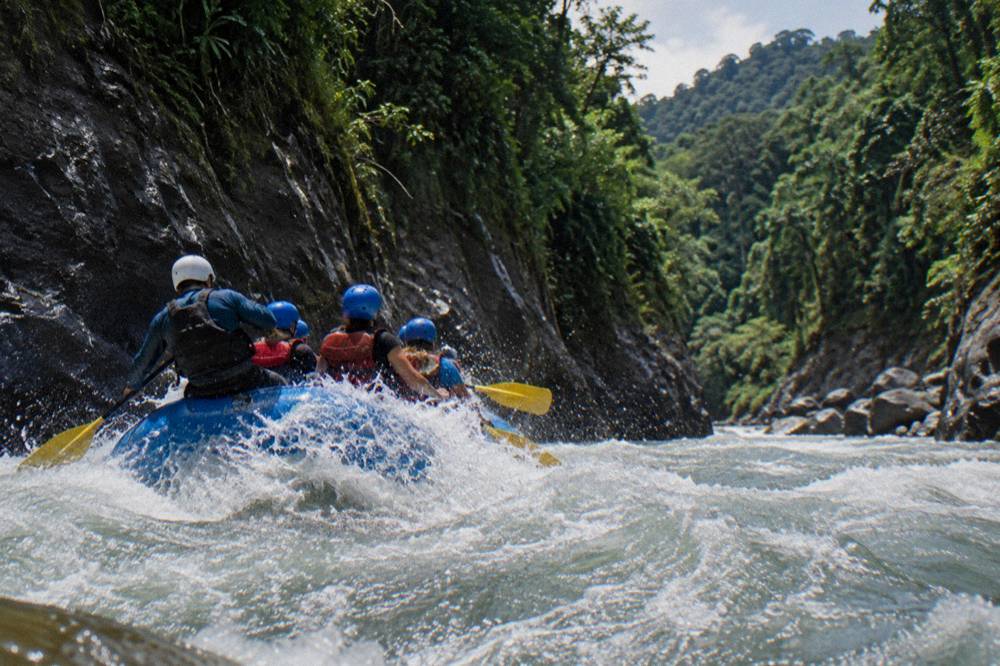
If one day feels like enough river but you want the canyon overnight, the Two-Day Rafting Tour on the Pacuare River with transportation included, from $370 per person, lists 5 hours of rafting, a safety kayaker, a river guide and all fees, with a night at Avesol Lodge. Its listing allows free cancellation up to 24 hours before, unlike the lodge trips that set windows of 3 to 6 days, which is worth knowing before you commit. The site's overview of the one-day Pacuare rafting trip walks through the full day hour by hour, and Pacuare Costa Rica Rafting hosts the complete trip picker if you want to compare every departure at once.
What Can You Verify On A Listing Before Booking?
Read five things on any Pacuare listing before paying: the stated rapid class, the minimum age, the group size, the named inclusions for guide and equipment, and the cancellation window. On this roster, listings that state an age say 12, group sizes run from 10 to 200 guests, free cancellation is listed on nearly all day trips, and some multi-day trips set their own windows of 3 to 6 days before departure.
| What to check | Where it lives on the listing | Why it changes your risk |
|---|---|---|
| Rapid class | Title or description (several say Class III-IV) | Sets the legal minimum age and the swim intensity |
| Minimum age | Listing details; some say 12, others say check | Wet-month minimums can rise to 14 |
| Group size | "Up to N guests" where stated | Smaller groups mean closer guide attention |
| Inclusions | Gear, guide, safety kayaker, meals, insurance | The safety layer is either named or it is not |
| Cancellation | Most day trips list free cancellation; some lodge trips 3 to 6 days | Protects you if conditions or plans change |
Ask the operator the questions the listing does not answer. Does a safety kayaker ride the run? What is your high-water protocol? What are your weight or chest limits for the jacket? Operators answer these all day, and the way they answer tells you as much as the answer. Then book the guided trip that fits your dates and your stomach, wear everything they hand you, and treat the briefing as the most useful 45 minutes of the day. One operator's published day plan, described at a Pacuare operator breakdown, schedules exactly that: a 45-minute safety talk and paddle practice immediately before the descent.
Common Questions About Pacuare Rafting Safety
Is Pacuare River Rafting Safe?
Commercial Pacuare trips run under a national technical norm with certified guides, mandatory helmets and life jackets, and safety kayakers on several departures. No official rafting-specific incident statistic for Costa Rica was found to publish. The honest framing is regulated, guided risk on a rain-fed river, managed by your choice of operator, gear discipline and season.
Has Anyone Died Rafting The Pacuare?
News reports exist of past rafting deaths on this river, but no official, rafting-specific Costa Rica fatality or injury statistic was found that this site is willing to publish as a figure. Named incidents from old news reports are not verified here against primary sources. What is verifiable is the safety layer: certified guides, mandatory gear, safety kayakers, briefing drills, and operator cancellations in high water.
Can Beginners Raft The Pacuare?
Yes, guided beginners run the Pacuare regularly, and a traveler review describes May water levels as very beginner friendly. Operators prefer February to April for first timers and families because water is lower and more predictable. Book a guided commercial trip, choose a Turrialba departure for a shorter day, and follow the briefing.
What Is The Minimum Age For Pacuare Rafting?
Under the national norm, ages 12 to 17 may run Class I to IV, so the Class III-IV Pacuare day trip is legally open from 12. Operators set their own minimums, sometimes higher, and some raise 12 to 14 between June and November. On this roster, listings that state an age say 12; others say check the listing.
What Happens If You Fall Out Of The Raft On The Pacuare?
You float on your back with feet up and pointed downstream, hold the raft line or wait for the safety kayaker, and get hauled back in. The drill is rehearsed in the pre-trip briefing on flat water. Do not stand in moving current, and angle with the flow rather than fighting it toward a bank.
Do I Need To Be Able To Swim To Raft The Pacuare?
You should be able to swim briefly and stay calm in moving water while wearing a life jacket, which keeps you afloat. Paddling is interval effort, not endurance. Weight and chest-size limits for the jacket are set per operator, so check the listing and answer the operator's medical questions honestly.