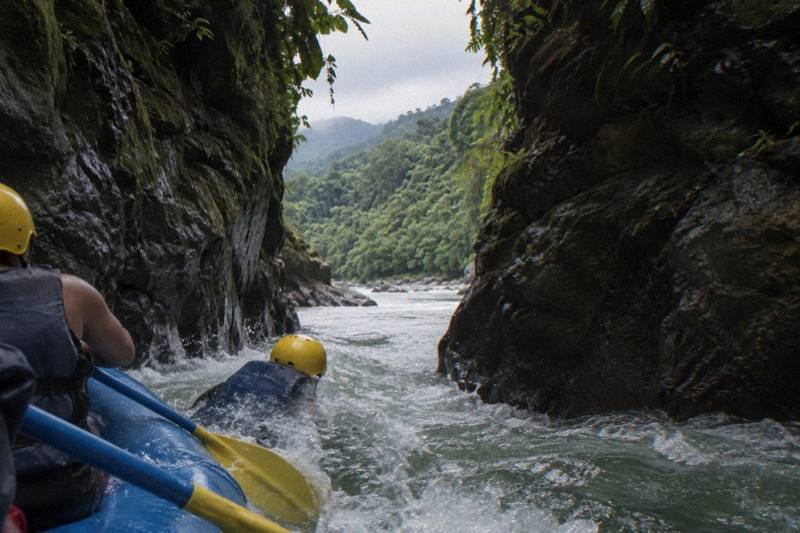
What Level Of Rafting Is The Pacuare River?
The Pacuare's commercial runs are rated Class III-IV, and that rating shifts with the season. Here is what the level means, which sections carry which class, and who it suits.
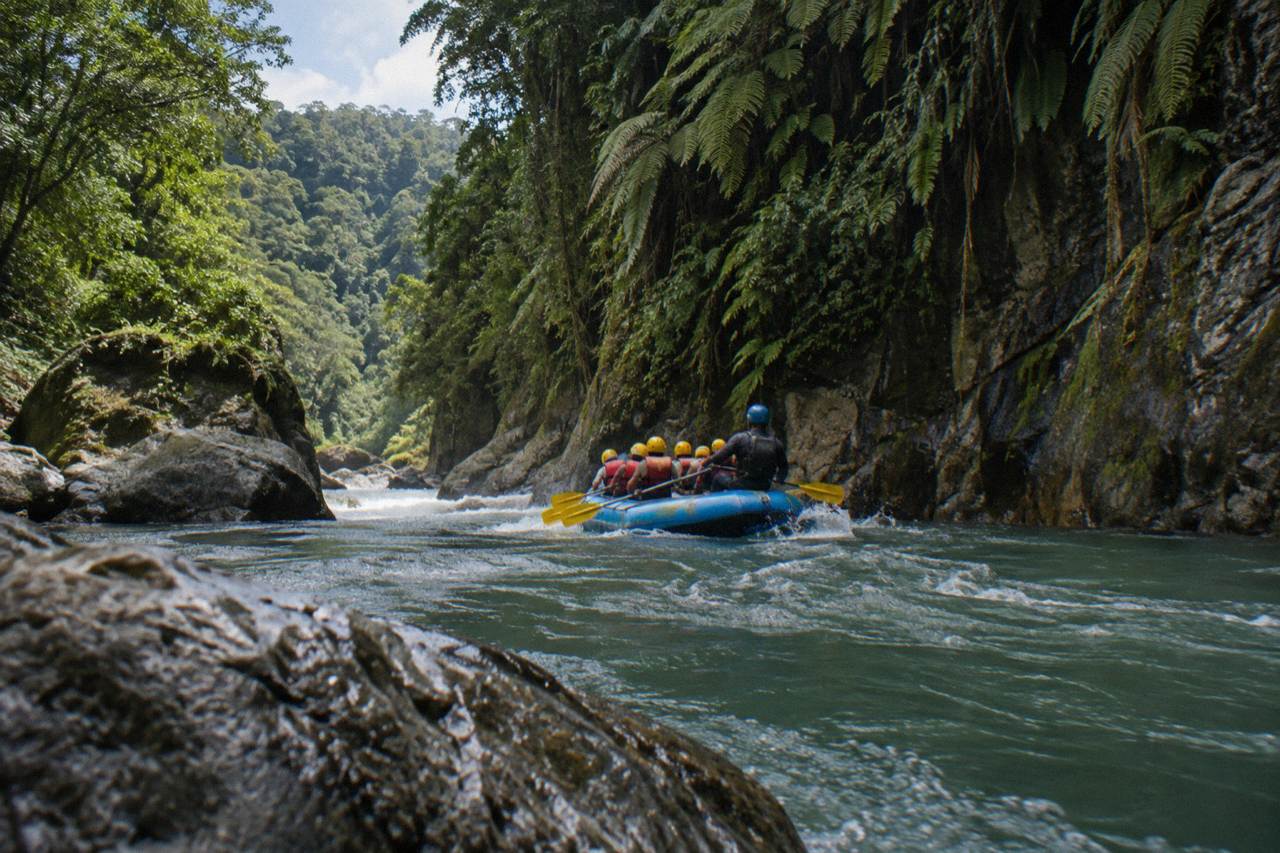
The Pacuare's commercial rafting runs are rated Class III-IV, with the famous gorge stretch holding the Class IV drops such as Huacas and Cimarrones. The same water reads differently by season: one operator calls its run Class 4 at high water and Class 3+ at low water. There is harder water upstream, but no commercial day trip on the roster sells it.
That single rating, Class III-IV, is the honest one-sentence answer, and it is the rating carried by the trips this site lists. The From San José: Pacuare River Class 3 & 4 Rafting Day Trip (4.7 from 291 reviews, from $125 per person) and the Pacuare River Rafting trip from Turrialba run by Ticos River Adventures (4.9 from 27 reviews, from $119 per person) both carry the Class III-IV label on their listings. So does the Class IV-specific Turrialba departure, the Pacuare River Rafting Class IV trip from Turrialba, priced from $125 per person for up to 18 guests. The most reviewed trip on the river, Rafting Pacuare River One Day from Turrialba (5.0 from 385 reviews, from $99 per person), does not state a class on its listing at all, which is common, and which is exactly why this question gets asked so often.
The International Scale of River Difficulty runs from Class I, which is moving flat water, to Class VI, which is attempt-at-your-own-risk and never run commercially. A Class III rapid is moderate: waves, drops and holes big enough to demand real paddling, with passages that a trained guide can read and hit cleanly. Class IV is advanced: steeper, more powerful, with consequences that require precise maneuvering, and rapids that commercial operators scout when the flow rises. The Pacuare's Lower section, the stretch every day trip on this site runs, sits right on that boundary, which is why it has a reputation as a serious river that still takes first-timers.
Two things make the answer more interesting than a single label. The first is that the rating moves. Rain-fed rivers rise and fall, and the Pacuare's grade shifts with them: guides describe rapids that read Class III in the dry weeks turning into genuine Class IV when the water comes up in the wet months of October to December. The second is that the river holds more than one level. Upstream of the commercial runs there is an Upper section rated Class IV and V with waterfalls, run mostly by expert creek kayakers, and it does not appear on any day-trip listing because no commercial operator sells it to rafters.
This article unpacks all of it: what Class III-IV feels like in a raft, how the season changes the number, which sections of the river hold which class, whether the level suits a beginner, and how the age rules in Costa Rica's rafting norm map onto the rating. Throughout, the trips referenced are the real, bookable products on this site, because the practical question behind "what level is the Pacuare" is always some version of "is this trip the right level for me".
If the level question is really a "which trip" question, that spread covers it.
What Does Class III-IV Mean On The Water?
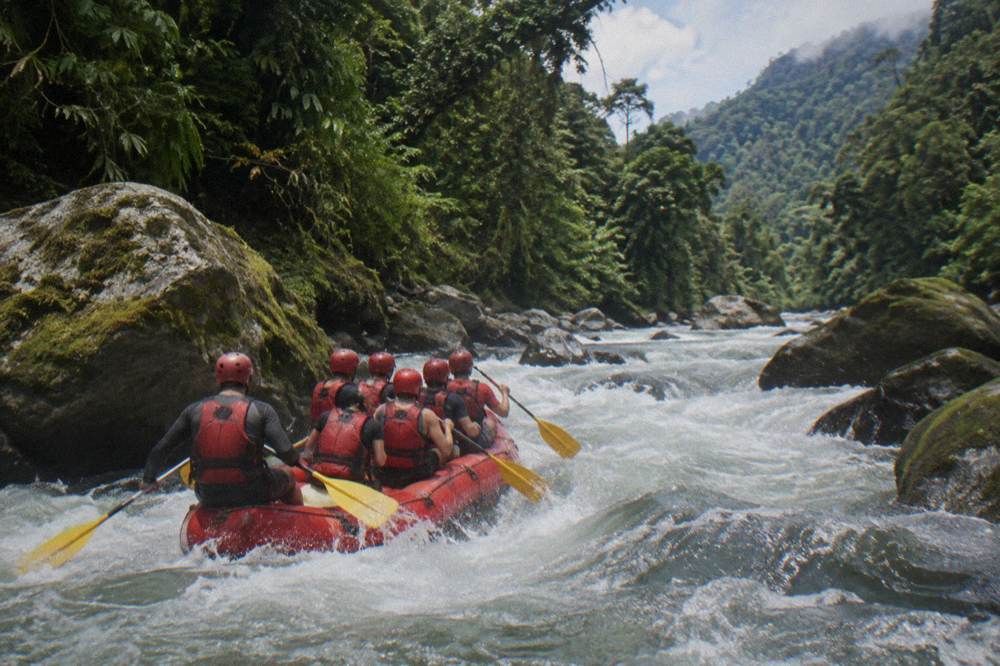
Class III-IV means you will paddle hard through continuous intermediate whitewater, take a few big drops, and swim is a real possibility, but the run stays under professional control the whole way. Guides read the rapids, call commands, and steer around the hazards. It is a step up from a scenic float and a step down from expert water.
The Lower Pacuare, the commercial stretch, runs about 37 km from the Finca La Cruz area down to Siquirres, dropping roughly 370 m along the way, and the famous rapids sit inside the Huacas River Gorge. Named drops include Upper and Lower Huacas at Class IV, Cimarrones at Class IV, and Doble Drop at Class III. The Huacas waterfall itself pours about 150 feet directly into the river channel, one of the features the gorge is known for. Waterfall walls, no road access for most of the run, and jungle on both banks are what make the stretch distinctive beyond its grade.
In the raft, the difference between the two classes is mostly rhythm. Class III rapids come at you as readable wave trains: punch the wave, follow the guide's commands, get splashed, laugh. Class IV demands more. The drops are steeper, the water is pushier, and the line, the exact path through the rocks, matters. A missed paddle stroke matters too. Swims happen on rivers of this level; that is what the life jacket, the helmet and the safety kayaker are for. On the Ticos River Adventures listing, the safety kayak is a listed inclusion, and on the Full Day Pacuare River Rafting Experience from San José (4.8 from 17 reviews, from $124 per person) a safety kayaker is listed too, along with 5 hours of rafting within the day.
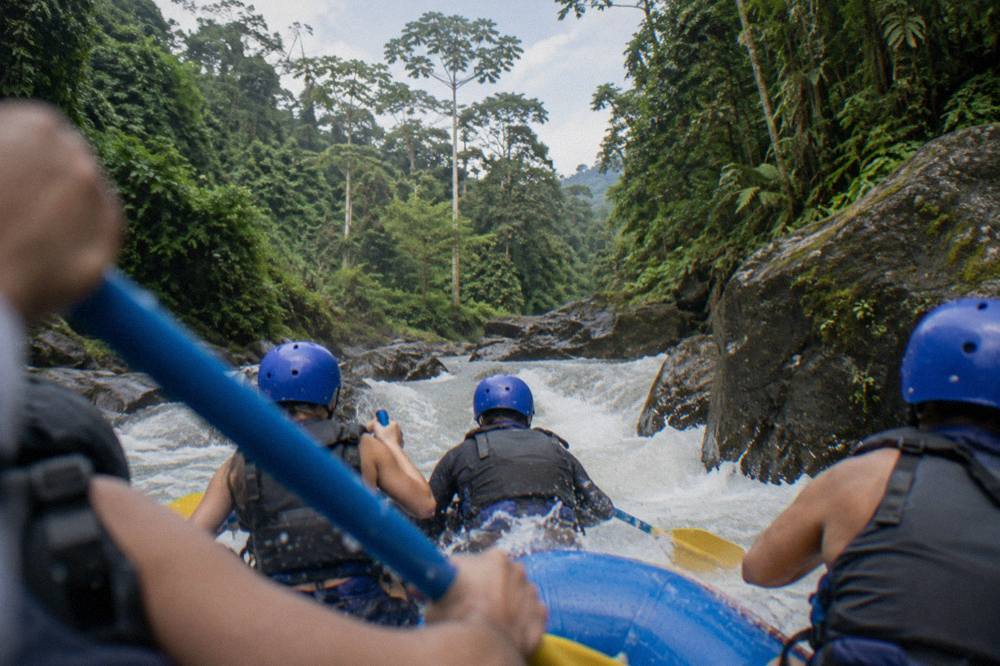
Guides treat the level seriously even when guests do not. One major operator schedules a 45-minute safety talk and paddle practice before the descent, and Pacuare guides are trained in swift water rescue with safety kits carried the full length of the trip. Life jackets and helmets stay on for the entire run, calm sections included, which is standard practice on this river. That professionalism is the reason a Class III-IV river can take first-timers down it without being a gamble.
For readers who want to go deeper on the fit question, the guide to Class III-IV Pacuare rapids breaks the gorge and its named drops rapid by rapid, and the beginner angle is covered in can a beginner do Class 4 rapids.
Is A Class III-IV Rating Safe For First Timers?
Yes, in the specific commercial sense: guided trips run first-time rafters down the Pacuare's Class III-IV stretch, and operators prefer February to April for beginners and families because the water is lower and more predictable. The rating describes the hardest rapid on the run, not the whole river, and guides match crews to conditions.
The key idea is that a section rating is a ceiling, not an average. A Class III-IV stretch contains long calm floats, easy Class II ripples, and then a handful of genuine Class IV drops. A first timer is not paddling Class IV continuously for hours; they are paddling intermediate water with a few concentrated moments. What the rating tells an operator is what the river can do at its worst point, and it tells a guest whether the worst point is within their appetite.
The season matters as much as the number. Water is highest and fastest from October to December and lowest from March to April, and the river is runnable all year. Operators describe May to November as higher, faster water, and some raise their minimum age in those months, from 12 up to 14, precisely because the same rapids get bigger. In the wet season many Class III rapids behave like Class IV; in the dry season Class IV rapids often mellow toward Class III. One operator grades its run flat out as Class 4 at high water and Class 3+ at low water, which is about as clear an admission as you will get that the label is a range, not a fact.
Rainfall tells the same story. ERA5 modelled averages for the Turrialba area show the driest stretch from February to April, with monthly means of about 181 to 198 mm in March and February, and the wettest from October to December, with November at about 477 mm. A station cross-check agrees on the pattern: February to April driest, October to December wettest. If the level question is secretly a "when should I go" question, the best time to raft the Pacuare guide works through it month by month.
One honest caveat belongs here. The Pacuare is rain-fed and has no automated flow gauge; a painted rock marker downstream of one lodge is used as a rough indicator, with red and higher meaning too high. Operators cancel or reroute in high water or flooding. Nobody can promise a level on a given date, and no operator on this site would. What you can count on is that the trip runs at the level the day delivers, guided accordingly.
Which Sections Of The Pacuare Hold Which Class?
The river splits into roughly sixteen sections, of which three are commonly run: the Upper Upper at about 26 km of Class II to IV, the Upper at about 10 miles of Class IV and V with waterfalls, and the Lower, the commercial heart, at Class III to IV over about 37 km into Siquirres. Everything sold on this site runs the Lower.
The Lower is where every day trip and every lodge itinerary lives. It drops about 370 m from the Finca La Cruz area to Siquirres, can be run in one day or spread across up to three, and holds the gorge and the named Class IV drops. Day trips typically put in near the Tres Equis or Finca La Cruz area and take out at Siquirres, though operators vary their exact access points, so treat put-in and take-out details as operator-specific, not river facts.
| Section | Class | Character | Commercially run? |
|---|---|---|---|
| Upper Upper | II to IV | About 26 km | Not on roster trips |
| Upper | IV to V | Waterfalls, expert creek water | No, kayakers only |
| Lower | III to IV | Gorge, about 37 km to Siquirres | Yes, all roster trips |
Multi-day trips start higher and touch more of the river. On the roster's two-day options, one operator's listing describes day one as 13 km with 14 Class III rapids to the overnight lodge, and day two as 23 km with about 30 rapids ending at Siquirres, after putting in 6.5 km upstream of the standard start. That is an operator's own claim about its own trip, but it shows how the level question changes shape on a lodge itinerary: two days of Class III-IV rather than one, with the harder water usually saved for the second morning.
The roster's multi-day options make the point in price and format. The San José Caribe Arenal Pacuare Hiking and Rafting 2-Day Trip runs from $269 per person with one night at Pacuare River Lodge and two days of Class III-IV rafting, meals included. The 2-Day Tour of the Pacuare River from Siquirres runs from $397 per person, and the 3 Day version extends to from $505 per person. River length overall is contested, about 108 to 133 km depending on the source, but every commercial kilometer sold on this river sits in that Lower corridor.
What Are The Age Rules For A Class III-IV Run?
Under Costa Rica's national rafting norm, Class III-IV water is open from age 12, and Class V only from 18. Some operators raise their Pacuare minimum to 14 in the wet months when the same rapids run bigger. Listing minimums on this site are 12 where stated, otherwise check the listing.
The norm, INTE G60-1:2019, sets the floor in a table every licensed operator works from: under 5 no class at all, ages 5 to 7 Class I and II, 8 to 11 up to Class III, 12 to 17 up to Class IV, and 18 and over Class I to V. It also requires operators to state minimum ages by class, check weather and river conditions, and scout when the flow rises. The practical read: a Class III-IV Pacuare trip is legally open to a 12-year-old, and no operator may legally take a 9-year-old on it no matter how confident the parents are.
Operators layer their own rules on top, usually higher in the wet season. One operator keeps the Pacuare minimum at 12 from December to May and raises it to 14 from June to November because the water runs higher. On the roster, the listings that state a minimum age say 12, including the White Water Rafting Pacuare River From San José trip (4.7 from 250 reviews, from $125 per person, breakfast and lunch included) and the Puerto Viejo departure of the same run. The rest say check the listing, which is also the correct answer for weight limits and chest sizes for life jackets. The full breakdown, including family planning, is in the Pacuare rafting age limits and fitness guide. If you're wondering where all that water is headed, the guide to the Pacuare's flow direction traces the river from the Talamanca mountains down to the Caribbean and explains what that means for your run.
How Does The Pacuare's Level Compare With Other Costa Rica Rivers?
The Pacuare is the flagship long jungle-canyon run at Class III-IV; the Reventazón's commercial sections run gentler at Class II-III, the Sarapiquí offers shorter Class III-IV, the Balsa is family Class II-III, and Pacific-side rivers like the Savegre and Naranjo split between scenic and seasonal. Higher water in the wet season pushes the Pacuare up by about half a class.
Comparison is where the level question gets practical. The Reventazón, the Pacuare's Caribbean-slope neighbor, runs one section at Class II-III with a minimum age of 6, which makes it the stepping-stone river for families with younger kids. The Sarapiquí in the northern lowlands offers Class III-IV in shorter, punchier form plus calmer wildlife stretches, with minimum ages often 12 to 15. The Balsa near La Fortuna is the classic family run at Class II-III. On the Pacific side, the Savegre is scenic Class II-III and the Naranjo is Class III-IV but only runs June to November.
| River | Typical commercial class | Character | Note |
|---|---|---|---|
| Pacuare | III-IV | Long jungle gorge, multi-day possible | Runnable all year |
| Reventazón | II-III (sections to V) | Pascua section Class IV-V for experts | Lower age minimums |
| Sarapiquí | III-IV | Shorter, punchier rapids | Wildlife stretches |
| Balsa | II-III | Family friendly, Arenal area | Minimum ages 6 to 8 |
| Savegre | II-III | Scenic Pacific run | Quieter water |
| Naranjo | III-IV | Seasonal Pacific run | June to November only |
None of those rivers have listings on this site, so this comparison is context, not a catalog. The point of it is calibration: if you have rafted the Balsa and found it fun but tame, the Pacuare is the genuine next step. If the Savegre was already at the top of your comfort range, book the Pacuare in February to April rather than November. The head-to-head detail lives in Pacuare vs Sarapiqui rafting and its sibling comparisons.
Water temperature is one comparison point that surprises people: the Pacuare runs about 21 C or warmer, so no wetsuit is needed, which is not true of class-equivalent rivers at higher latitudes. That warmth is part of why a Class III-IV rating here feels more approachable than the same rating on a cold alpine river.
Which Trip Should You Book For Your Level?
Book the most reviewed Turrialba day trip (from $99 per person) if you want the standard Class III-IV run at the lowest firm price; the Class 3 & 4 San José trip with hotel pickup if logistics come first; and the dedicated Class IV Turrialba trip if the committed end of the scale is the point. Lodge trips add a second day of the same water.
The honest framing is that all of these run the same river corridor; the choice is about departure point, group size, price and emphasis, not about materially different water. Here is how the roster's Class-rated options actually stack up.
| Trip | Class stated | Duration | Price from | Reviews |
|---|---|---|---|---|
| Pacuare River Rafting Class IV from Turrialba | Class IV | 8 hours | $125 per person | 4 reviews |
| From San José: Pacuare River Class 3 & 4 Day Trip | Class III-IV | 9 hours | $125 per person | 4.7 from 291 |
| Rafting Pacuare River One Day from Turrialba | Not stated | 6 hours | $99 per person | 5.0 from 385 |
| Pacuare River Rafting (Ticos, Turrialba) | Class III-IV | 4 hours | $119 per person | 4.9 from 27 |
| Day Trip to Pacuare River Rafting Class III-IV from San Jose | Class III-IV | 11 hours | $139 per person | 6 reviews |
Read the review counts with the ratings, as always. A 5.0 from 385 reviews and a 4.9 from 27 are both strong signals, but of very different sizes, and the small-pool listings print no star claim at all here for that reason. Price tells its own story: the Turrialba departures start lower because there is no long transfer, while the San José and Puerto Viejo trips build the drive into the day and the fare. The Puerto Viejo departure, White Water Rafting Pacuare River with Lunch From Puerto Viejo (4.8 from 62 reviews, from $147 per person), makes sense for Caribbean coast travelers who would otherwise never reach the river. Closer to the river, the Ticos River Adventures four-hour Turrialba run with pickup is 4.9 from 27 reviews, from $119 per person.
The Ticos River Adventures trip above is the compact Turrialba option: 4 hours total, Class III-IV stated on the listing, deli-style lunch, gear, certified guides, a safety kayak and insurance all listed as included, with pickup from Turrialba or nearby areas. It suits travelers staying in Turrialba who want the gorge without the full-day commitment.
For the committed end of the scale, the featured trip on this page is the Pacuare River Rafting Class IV trip from Turrialba, an 8-hour day from $125 per person with up to 18 guests, lunch and private transportation listed. You can check availability on the operator's live listing; free cancellation is listed.
What The Level Means For How You Prepare
A Class III-IV run asks for modest fitness, a willingness to paddle on command, and the right footwear; operators supply the helmet, life jacket and paddle. Secure shoes that can get wet are required, flip-flops are not, and valuables on the raft are your own responsibility.
You do not need to train for the Pacuare, but you should not book it as a spectator either. Paddling is part of the deal: the guide calls strokes, the crew delivers them, and the boat moves because everyone moves together. Most listings on this site do not state a weight limit or medical policy, so the honest instruction is to check the listing and flag any conditions to the operator when booking.
Gear is simpler than people expect. Operators provide the helmet, life jacket and paddle; one Turrialba listing spells out "helmts, life vests, paddles" as inclusions, another lists "gear for the activity" plus a safety kayak. What you bring is swimwear or quick-dry clothes, sunscreen, a towel, a change of clothes for after, and shoes that stay on your feet: tennis shoes or secure sandals, never flip-flops. Cameras and phones taken on the raft are your own responsibility, and several listings sell souvenir photos separately. The full packing logic, including what not to wear, is in what to bring on a Pacuare rafting trip.
The preparation angle that matters most at this level is timing, and that loops back to the rating itself. February to April for predictability, October to December for the biggest water of the year, and the wet months in between for a middle ground where the minimum age may be 14 rather than 12. Whatever you choose, this Pacuare Costa Rica Rafting site exists to answer exactly these questions with the listings that run the river.
The Puerto Viejo departure covers the Caribbean coast angle: a 7 hours 30 minutes day from $147 per person, breakfast and a freshly prepared riverside lunch included, lockers and changing facilities listed, and a stated minimum age of 12 matching the national norm for this class.
Common Questions About The Pacuare River's Level
What Level Of Rafting Is The Pacuare River?
The Pacuare's commercial runs are rated Class III-IV, with the gorge holding named Class IV drops such as Huacas and Cimarrones. The same water shifts with the season: one operator grades it Class 4 at high water and Class 3+ at low water. Expert Class IV-V water exists upstream but is not sold commercially.
Can A Beginner Raft The Pacuare?
Yes. Guided commercial trips take first-timers down the Class III-IV Lower section year round, and operators prefer February to April for beginners and families because the water is lower and more predictable. Expect to paddle actively and follow commands; it is not a float trip.
Does The Pacuare's Class Change With The Season?
It does. Water is highest and fastest from October to December and lowest from March to April, and the river is runnable all year. In wet months many Class III rapids behave like Class IV, and some operators raise the minimum age from 12 to 14 between June and November.
What Is The Minimum Age For The Pacuare's Class III-IV Water?
Under the Costa Rican national norm, Class III-IV water is open from age 12. Some operators set their own higher minimum of 14 in the wet months. On this site's roster, listings that state a minimum age say 12; for the rest, check the listing.
Are There Class V Rapids On The Pacuare?
The Upper section holds Class IV-V water with waterfalls, but it is run mostly by expert creek kayakers and no commercial day trip sells it. Everything bookable on this river runs the Lower section at Class III-IV.
Which Pacuare Trip Is Best For The Hardest Water?
The Pacuare River Rafting Class IV trip from Turrialba names the class in its title and runs an 8-hour day from $125 per person. All roster trips share the same Class III-IV corridor; timing your trip for October to December delivers the river at its most powerful.