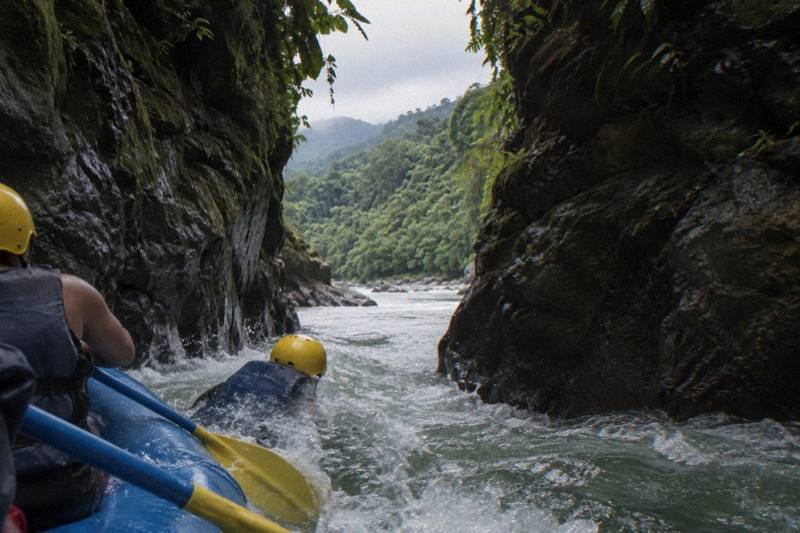
Can A Beginner Do Class 4 Rapids?
A straight answer for first-time rafters eyeing Class 4 water, with the guide practices, age rules and Pacuare listings that decide whether a beginner run works.
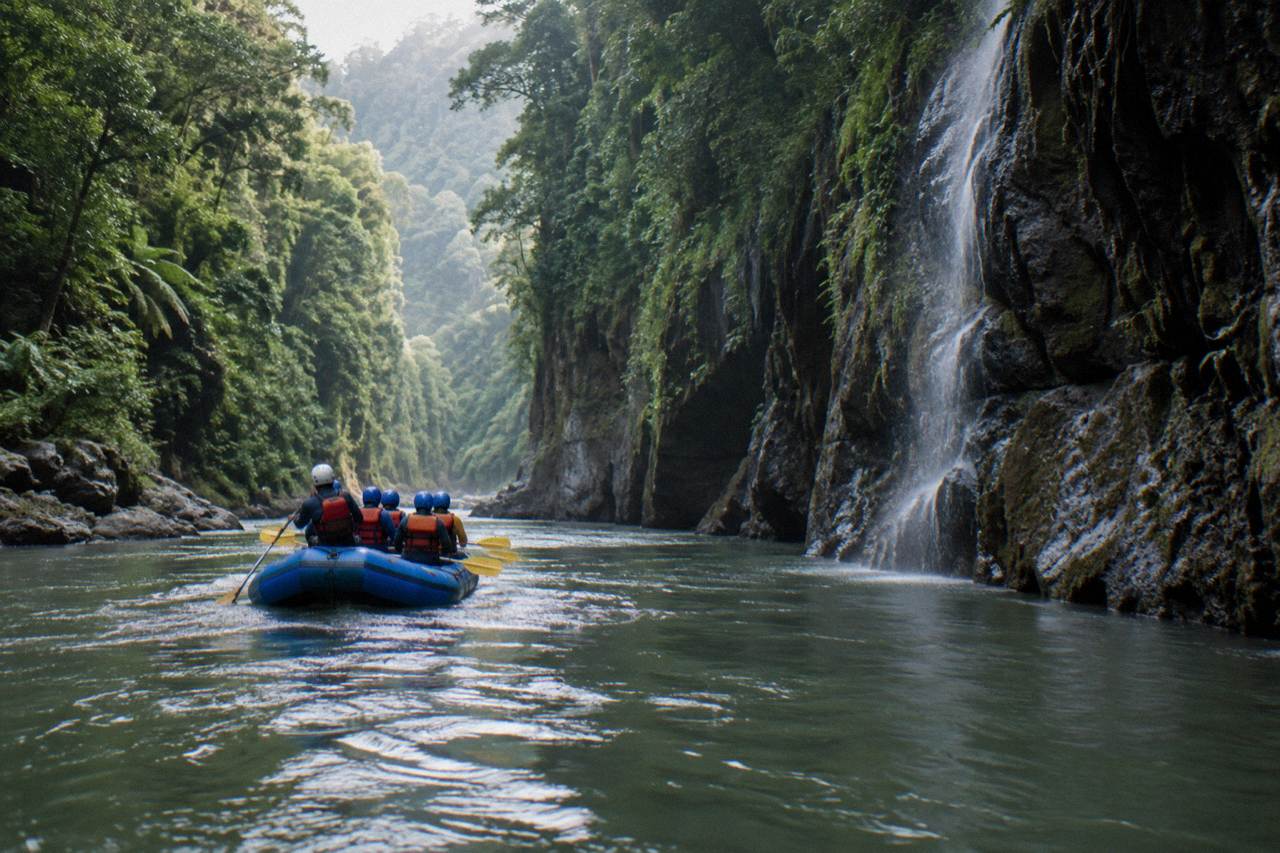
Yes, a beginner can run Class 4 rapids on a commercial guided trip, on the Pacuare's Class III to IV day runs, because the safety comes from the operator's system rather than the paddler's skill: trained guides, mandatory helmets and life jackets, safety kayakers on some listings, and a pre-descent safety brief. In drier months, some rapids even drop from Class 4 toward Class 3.
That answer surprises people because the International Scale of River Difficulty sounds intimidating on paper. Class 4 means powerful, turbulent water with predictable but constricted rapids, demanding precise maneuvering, and a risk of injury to swimmers that requires self-rescue skills in theory. Read alone, that reads like an expert-only ticket. In practice, the scale was written for private paddlers deciding whether to run a river themselves, not for a guided commercial raft with a professional guide calling every stroke and a support kayaker collecting anyone who swims.
The distinction matters most on rivers like the Pacuare, where the standard commercial run mixes Class 3 and Class 4 rapids in a jungle gorge with no road access for long stretches. On this site's roster, the Class III to IV day trip from San José run by Tui Destination Experiences holds a 4.7 rating from 291 reviews, from $125 per person, while the most reviewed Turrialba day trip, Rafting Pacuare River One Day from Turrialba by Adrenalina Rafting, holds 5.0 from 385 reviews at from $99 per person.
There are honest caveats, and this article works through all of them: what the class scale actually measures, how a guided raft changes the math, what the national rafting norm says about age on Class 4 water, how the season shifts a rapid's real difficulty, and which of the trips on this roster fit a beginner who wants to try. If the question behind your question is whether you personally should book, the honest answer is that most reasonably fit, confident-in-water adults can. Gear is the other half of the confidence question, and our straight answer on Crocs for rafting covers what operators actually require and which footwear stays on your feet through big water.
What Class 4 Actually Means On A Guided Raft
On the international scale, Class 4 water is powerful and turbulent, with predictable rapids that demand precise boat handling, and swimming in it is risky enough that the scale expects self-rescue ability. On a guided trip, none of those judgments is yours to make: the guide reads the line, calls the commands, and the operator carries rescue cover. The class number describes the water, not the paddler.
The scale runs from Class 1, moving water with small waves, to Class 6, considered unrunnable. Class 3 is moderate waves and irregular currents that a trained crew can handle. Class 4 steps up to intense, powerful rapids where the route matters and eddies, the calm pockets behind rocks, may be small. Class 5 goes further, with long, violent rapids and severe consequences. The scale's own fine print is what beginners miss: a rapid's class is a consensus rating, not a survey measurement, and operators routinely adjust it for the day's water. One Pacuare operator grades its run Class 4 at high water and Class 3+ at low water, the same rapids, one rating.
Two things follow from that. First, "can a beginner do Class 4" is really two questions: can a beginner sit in a guided raft through Class 4 water, which the commercial rafting industry is built around, and can a beginner handle Class 4 water themselves, which is a hard no, years of paddle sport sit between those. Second, the class on the sign is not the class you will paddle on a given Tuesday. Rain changes it, and the Pacuare is rain-fed, so the honest operator answer to "how hard is today" is genuinely "depends on the river."
Costa Rica puts a legal frame around who may be on which class at all. The national technical norm for rafting, INTE G60-1:2019, sets minimum ages by rapid class: under 5 no river, ages 5 to 7 Class I and II, ages 8 to 11 up to Class III, ages 12 to 17 up to Class IV, and 18 and over all classes including V. A Class 4 Pacuare run is therefore legally open from age 12, and the roster listings that state a minimum age say 12. Operators may and do set higher bars: some raise the minimum to 14 during the higher-water months of June to November. The full norm is available as INTE G60-1:2019, and it also requires operators to check weather and river conditions and to scout when flow rises.
How Guides Make Hard Rapids Beginner-Friendly
A commercial guide neutralizes most of what makes Class 4 hard for a private paddler: they read the line, time the strokes, place the raft, and carry rescue cover, so the beginner's job shrinks to paddling forward on command and bracing inside the boat. Briefings, gear rules and support boats are not extras, they are the system that lets mixed-ability boats run water that would be closed to those same people alone.
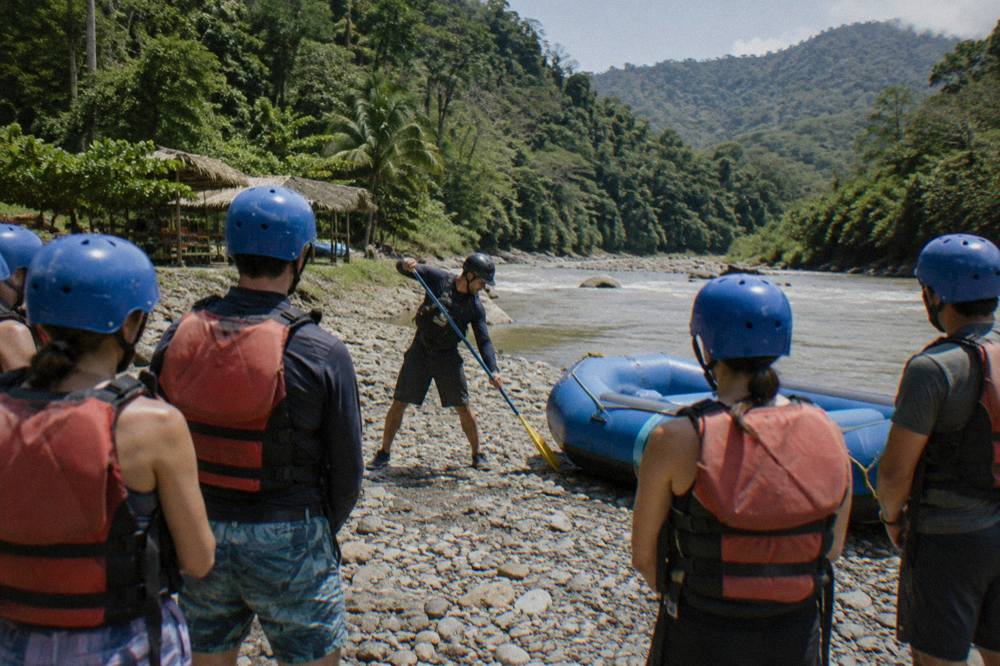
The mechanics are simple and worth spelling out, because knowing them shrinks the fear. A raft is stable, heavy and forgiving compared with a kayak; it punches through waves that would flip smaller craft. The guide sits at the stern with the steering power and calls every command out loud, paddle forward, back-paddle, get down. Guests supply engine, not judgment. Before the water, operators run a briefing and paddle practice; one Pacuare operator schedules a 45-minute safety talk immediately before its roughly three-hour descent. Guides on these trips are trained in swift-water rescue and carry safety kits the full length of the run, and a family-run Turrialba operator, Ticos River Adventures, includes a dedicated safety kayaker on its Pacuare trips, a second rescuer whose whole job is the swimmers, not the raft.
Gear is mandatory, not optional. Life jackets and helmets stay on for the entire trip, including the flat stretches between rapids, a rule stated plainly on operator planning pages for the Pacuare. Footwear matters too: secure sandals or river shoes that can get wet and muddy, never flip-flops, which is standard operator advice. What you wear and bring is covered in detail on our packing guide, what to bring on a Pacuare rafting trip.
The water itself cooperates more than beginners expect. Water temperature on the Pacuare is typically around 21 C and up, so no wetsuit is needed, per operator measurements taken across both high and low water. And the river's difficulty moves with the rain: in the wet second half of the year many Class 3 rapids strengthen toward Class 4, while in the dry months Class 4 rapids often ease to Class 3, a pattern multiple rafting references describe for Costa Rica's Caribbean slope.
The honest limit is swimming confidence. Nobody plans to fall in, but on Class 4 water the possibility is real, and the system assumes that if you do, you can float on your back, keep your feet up and downstream, and hold the paddle. If deep, moving water makes you panic rather than tense, say so before you book, because there is a real answer: run the trip in the drier months when the river runs gentler, a point covered in our best time to raft the Pacuare guide.
What The Pacuare Asks Of A First-Time Paddler
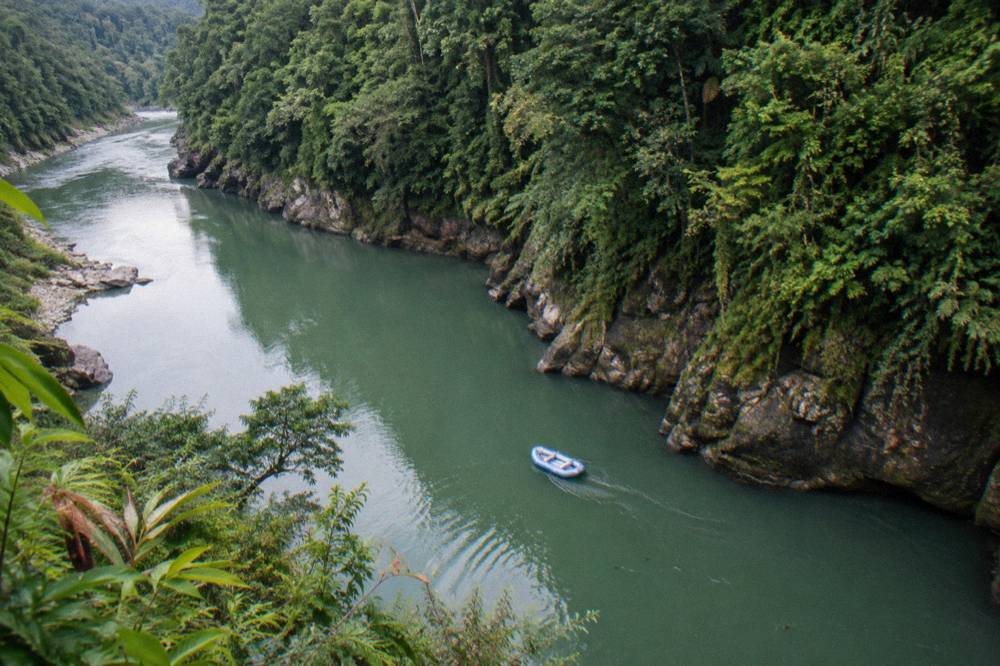
The Pacuare's standard commercial day mixes Class 3 and Class 4 rapids in a rainforest gorge with waterfalls on the walls and no road access along most of the run, which operators report as roughly 26 to 30 km and around 38 rapids. The river is runnable all year, but the beginner-friendly window is February to April, when operators report lower, more predictable water.
The gorge is what people remember and what makes the river's reputation. Operators commonly name rapids such as Huacas, Pele el Ojo and Cimarrones on the Class III to IV gorge section, with a riverside lunch mid-run. The Huacas gorge itself, where the 150-foot Huacas waterfall drops into the channel, is the signature stretch. None of this is promised: wildlife along the corridor is commonly reported by operators and guests but never guaranteed, and river level, weather and trip routing vary, with operators cancelling or rerouting in high water or flooding. More of these guides are collected on Pacuare Costa Rica Rafting.
What the trip asks of you physically is less than the class number suggests. You paddle in bursts of a minute or two, then float. You need to be able to walk on wet, uneven rocks at the put-in and carry your paddle. Reasonable fitness covers it; the roster's listings ask you to check individual listings for minimum ages and any restrictions rather than quoting a single standard. The drier months ask least of all: February to April combines enough water for real rapids with the swollen-condition risk at its lowest, which is exactly why operators steer first timers and families there.
Timing your day matters as much as timing your month. Day trips from San José typically involve early hotel pickups around 6:00 to 6:30 a.m. with returns near 5:30 p.m., per operator itineraries, while direct Turrialba departures run shorter days, often around six hours total, because the drive out to the city is cut. Drive times commonly reported are about 1h20 to 1h40 from San Jose to Turrialba. Those logistics shape which listing fits you, which is the next section's question.
Which Pacuare Trip Suits A Nervous Beginner
For a first-timer who wants the Class 4 answer tested gently, the roster's best fits are the Turrialba day trips, which cut the drive and the day length: Rafting Pacuare River One Day from Turrialba, 5.0 from 385 reviews, from $99 per person, is the most reviewed listing on the site. The dedicated Class IV day trip from Turrialba, from $125 per person, is the direct version of the question this article asks.
The table below compares the listings a beginner is most likely to weigh, using only figures from each listing itself.
| Listing | Departure | Duration | Rating | Price |
|---|---|---|---|---|
| Rafting Pacuare River One Day from Turrialba (Adrenalina Rafting) | Turrialba | 6 hours | 5.0 from 385 reviews | from $99 per person |
| Pacuare River Rafting (Ticos River Adventures) | Turrialba | 4 hours | 4.9 from 27 reviews | from $119 per person |
| Pacuare River Rafting Class IV from Turrialba (Turrialtours) | Turrialba | 8 hours | too few reviews for a rating (4 reviews) | from $125 per person |
| From San José: Pacuare River Class 3 & 4 Rafting Day Trip (Tui Destination Experiences) | San Jose hotels | 9 hours | 4.7 from 291 reviews | from $125 per person |
| Rafting Pacuare River from Turrialba (Explornatura) | Turrialba | 6 hours | 5.0 from 196 reviews | from $120 per person |
Read the columns for what they quietly tell you. The Turrialba departures are shorter days, four to eight hours against nine to twelve from San José, because you start closer to the river. The San José option in the table above, the Class 3 and 4 day trip with hotel pickup listed and breakfast and lunch included, trades a longer day for door-to-door transport. The most reviewed Turrialba trip includes helmets, life vests, paddles, a typical Costa Rican lunch at the end of the trip and private transportation.
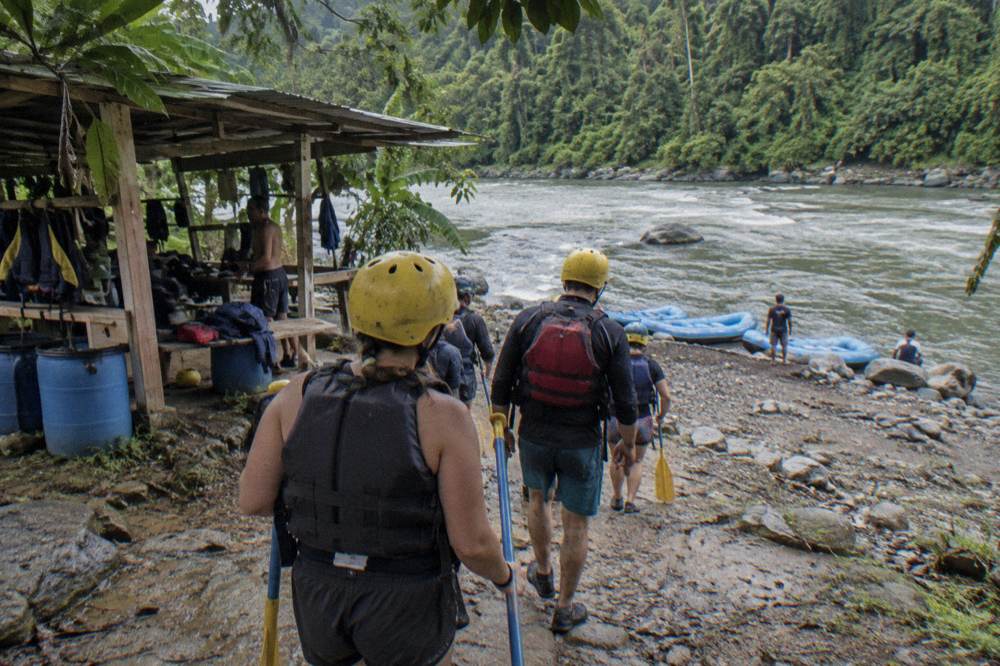
The listing this article is anchored on is the roster's only dedicated Class IV day trip: Pacuare River Rafting Class IV from Turrialba, run by Turrialtours, from $125 per person, 8 hours, up to 18 guests, with life jackets, helmets and paddles included plus lunch and private transportation. It has too few reviews for a rating claim, four at last count, so judge it on its structure rather than a star figure. A smaller guest cap of 18 and private transport fit the pattern of an operator running a tighter, more controlled boat, which is a reasonable shape for a first-timer who wants the Class 4 experience spelled out rather than diluted.
If even that feels like a step too far for trip one, the honest downgrade path exists inside the same river. The Pacuare River Rafting listing from Ticos River Adventures, 4.9 from 27 reviews, from $119 per person, 4 hours, includes a certified guide, a safety kayak, an insurance policy, gear and a deli-style lunch, with transport from Turrialba or nearby areas. Four hours is the shortest day on the roster, and the safety kayak is listed in the inclusions, not sold as an upgrade.
What Beginners Get Wrong About Rapid Classes
Three misconceptions do the damage: that the class number is fixed, that swimming ability is irrelevant, and that a harder class is a better story. In reality the class moves with water level, water confidence matters, and a Class 3 to 4 run in the right month delivers more than most first-timers can absorb anyway.
The first error is treating the scale like a trail rating. It is closer to a weather report. The same Pacuare gorge that runs Class 4 at high water runs Class 3+ when the level drops, and the wet-season bump in difficulty is roughly half a class on many rapids, per rafting references tracking the river. Seasonal planning, February to April for the gentlest water, October to December for the biggest, does more for a nervous beginner than any amount of courage. Our Costa Rica rainy season rafting and travel guide works through the calendar in detail.
The second error is assuming the raft protects you from the water entirely. It protects you from judgment, not from swimming. If you go in on a Class 4 rapid, the moments before the kayaker reaches you are yours, and floating calmly on your back with feet up is the skill that matters.
The third error is pride of itinerary, choosing the harder trip for the story. There is no prize. A first-timer on the standard Class III to IV day in March will get surfed through waves, dropped into gorges and dumped on by waterfalls off the canyon walls, and will remember all of it vividly. A first-timer pushed into high-water October water they spent the whole day fearing remembers the fear. Match the month to your nerve, not the badge to your feed, and check seasonal water-level guidance alongside the listing's own calendar.
One more quiet misconception: that beginners should avoid the Pacuare specifically because it is the serious river. The Pacuare's gorge is what makes it famous, but its commercial day trips are built for exactly this audience, and the review counts on this site's own roster run to hundreds of reviews. The deeper comparison of how the river grades against its neighbors is in Pacuare vs Sarapiqui rafting if you want options, though this site's listings all run the Pacuare.
Common Questions About Class 4 Rapids For Beginners
Can A Beginner Do Class 4 Rapids?
Yes, on a commercial guided trip. Mixed boats with first-time paddlers run Class 4 water on the Pacuare routinely, supported by trained guides, mandatory helmets and life jackets, safety kayakers on some listings, and a full briefing before the descent. The system, not the beginner's skill, carries the difficulty. Be honest about swimming confidence, pick the drier months of February to April if you are nervous, and check the listing's stated minimum age.
What Is The Minimum Age For Class 4 Rapids In Costa Rica?
Under the national norm INTE G60-1:2019, ages 12 to 17 may raft up to Class IV, and 18 and over all classes. Individual listings on this roster that state a minimum age say 12, and some Pacuare operators raise it to 14 during the higher-water months of June to November. Always check the specific listing before booking for a teenager.
Do You Need Prior Rafting Experience For The Pacuare?
No. The standard commercial day trips are built for beginners, and operators brief and drill every crew before the water, one schedules a 45-minute safety talk and paddle practice. You need reasonable fitness and enough water confidence to float calmly if you swim. No listing on this roster requires previous rafting experience.
Does Rapid Difficulty Change With The Season?
Yes, and by a meaningful margin. The Pacuare is rain-fed: operators describe higher, faster water October to December and lower, gentler water from February to April, with some rapids shifting roughly half a class between seasons. One operator grades the same run Class 4 at high water and Class 3+ at low water. February to April is the window operators steer first-timers and families toward.
What Happens If You Fall Out Of The Raft On Class 4 Water?
You float on your back, feet up and pointed downstream, hold your paddle if you can, and wait for the guide or safety kayaker, who trains specifically for this. Guides on Pacuare trips are trained in swift-water rescue and carry safety kits for the full length of the run, and several listings include a dedicated safety kayaker in the inclusions.
Which Listing Should A Nervous Beginner Book First?
The most reviewed Turrialba day trip, Rafting Pacuare River One Day from Turrialba, 5.0 from 385 reviews and from $99 per person, is the roster's most proven beginner option, with a six-hour day and lunch included. If you want the shortest possible day, the four-hour Pacuare River Rafting listing from Ticos River Adventures includes a safety kayak in its inclusions. Both leave from Turrialba, which cuts the travel to the river.