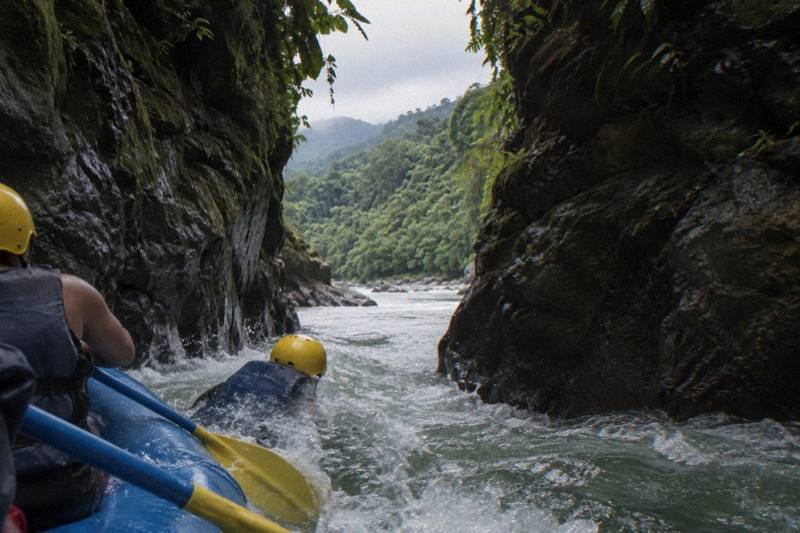
What To Bring On A Pacuare Rafting Trip: Packing List
The operator supplies the helmet, the life jacket and the paddle. Everything else you carry yourself, and on a rain-fed river in a rainforest gorge the difference between a good day and a miserable one is usually a short list of items packed correctly.
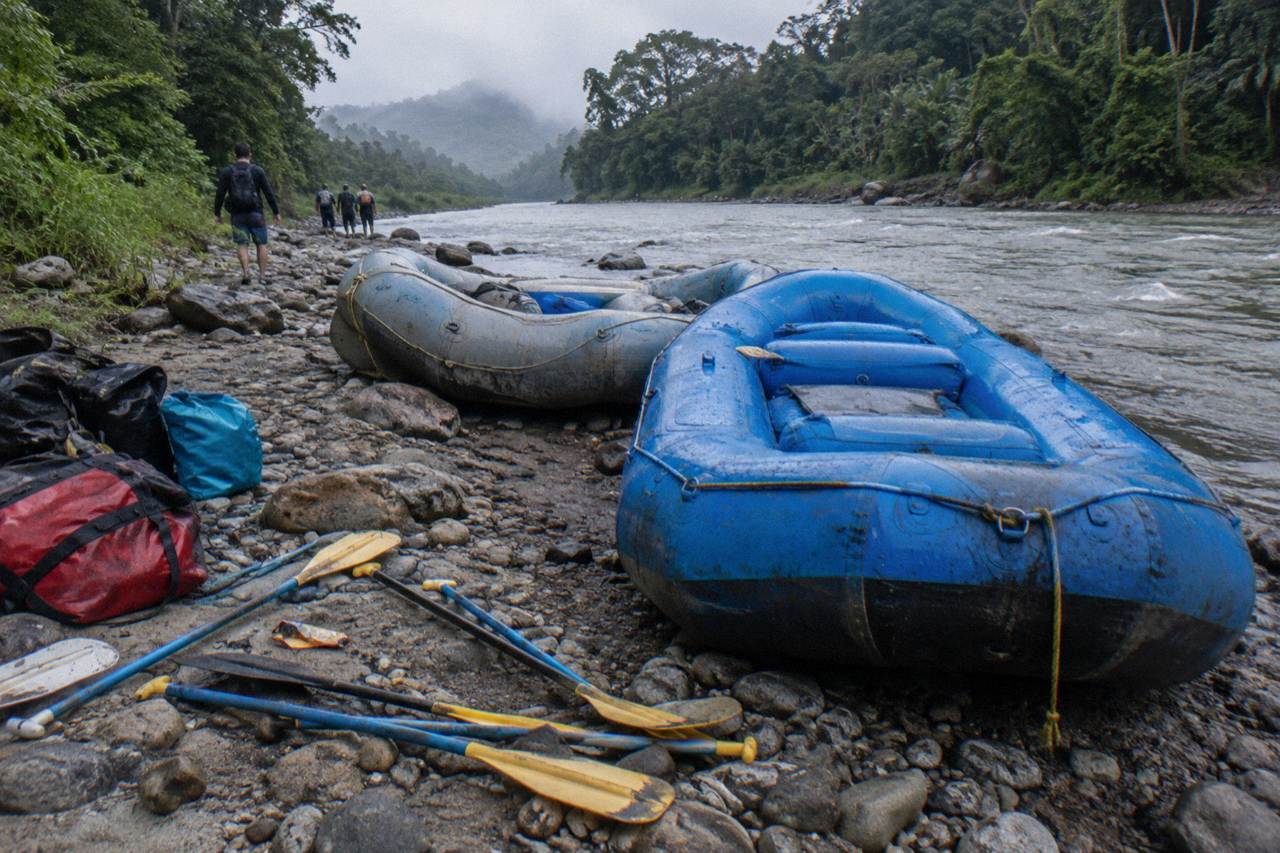
Short answer
Bring quick-dry clothes to wear on the water, secure shoes that will not fall off, sunscreen and insect repellent, a towel and dry change of clothes for after, a small amount of cash for tips and optional photos, and any medication the operator should know about. Helmets, life jackets and paddles are supplied by the operators.
The Pacuare runs through a gorge with no road access along most of the commercial run, which has one practical consequence for packing: whatever you bring on the raft comes down the river with you, wet, and whatever you leave behind stays at the operator's base. Operators commonly provide showers, changing facilities and lunch at the end of the run before the return drive, so the packing problem splits neatly in two. There is the small pile of things that goes on the water, and the bigger pile that waits in the van or a locker.
This guide walks through both piles, section by section: what to wear on the river, what belongs in a dry bag, how to handle cameras and phones on a raft, and how much cash to carry for tips and photos. Each answer is anchored to what the Pacuare listings actually include, so you do not pack gear the operator already supplies. If you want the wider picture of the day itself, the one day Pacuare rafting trip guide covers timing, meals and pickup logistics.
What Does The Operator Already Provide On A Pacuare Trip?
Operators supply the rafting equipment itself, helmet, life jacket and paddle, and several operators add a safety kayaker who runs the rapids alongside the rafts. The Rafting Pacuare River One Day from Turrialba listing, 5.0 from 385 reviews, from $99 per person, provides helmets, life vests and paddles plus a typical Costa Rican lunch. You do not need to bring any of that.
The details vary a little by listing, and the differences matter. The Ticos River Adventures Pacuare River Rafting trip from Turrialba, 4.9 from 27 reviews, from $119 per person, lists gear for the activity, certified guides, a safety kayak, a deli-style lunch, beverages, transport from Turrialba and an insurance policy in its inclusions, with photos and videos as the paid extra. The Full Day Pacuare River Rafting Experience from San Jose, 4.8 from 17 reviews, from $124 per person, goes further: private transportation, breakfast, lunch, a river guide, rafting equipment and a safety kayaker are all listed, along with fees and taxes.
What no listing in the roster includes is personal gear: your shoes, your clothes, your sunscreen, your towel. At least one lists lockers for personal belongings and changing facilities; the White Water Rafting Pacuare River with Lunch From Puerto Viejo trip, 4.8 from 62 reviews, from $147 per person, names both explicitly in its inclusions. Where a listing does not mention lockers, plan on leaving valuables in the vehicle or at the meeting point, and check the listing for what the operator's base offers.
| Listing | Departure | Equipment listed as included | Meals listed | Rating and reviews |
|---|---|---|---|---|
| Rafting Pacuare River One Day from Turrialba | Turrialba | Helmets, life vests, paddles | Lunch | 5.0 from 385 reviews |
| Pacuare River Rafting (Ticos) | Turrialba | Gear, certified guides, safety kayak, insurance | Lunch, beverages | 4.9 from 27 reviews |
| Full Day Pacuare River Rafting Experience | San Jose | Rafting equipment, river guide, safety kayaker | Breakfast, lunch | 4.8 from 17 reviews |
| White Water Rafting Pacuare River From San José | San Jose | Professional equipment | Breakfast, lunch | 4.7 from 250 reviews |
| White Water Rafting Pacuare River with Lunch From Puerto Viejo | Puerto Viejo | Paddle and complete equipment, lockers | Breakfast, lunch | 4.8 from 62 reviews |
Guides on Pacuare trips are trained in swift water rescue and carry safety kits for the full length of the trip, and life jackets and helmets are worn for the entire run, including the calm stretches. That is the operator's side of the bargain. The rest of this guide is yours.
What Should You Wear On The Water On The Pacuare?
Wear a swimsuit or quick-dry shorts and a synthetic or rash-guard top, plus shoes that stay strapped to your feet: tennis shoes or secure sandals with heel straps, never flip-flops. Cotton stays home; it holds water and stays cold. Water temperature on the Pacuare is typically around 21 C (70 F) and higher, so operators report no wetsuit is needed. For a closer look at the clothing mistakes rafters make most often and what outfitters actually hand out on the river, see our guide to what not to wear when white water rafting.
The shoe rule is the one operators repeat most often, and it is not bureaucracy. You will be walking on wet rocks and gravel at the put-in, possibly scrambling in and out of the raft mid-run, and standing around a rocky take-out near Siquirres at the end. Flip-flops come off in the first rapid and float away. Recommended footwear is tennis shoes or secure sandals or river shoes that can get wet and muddy; a pair of old running shoes you do not mind ruining is the classic solution. Crocs and similar clogs occupy a gray zone: they are technically secured, but they drain badly and pop off in pushy water, and we cover that question in detail in are crocs ok for rafting.
For clothing, think in layers you do not mind losing to mud. A quick-dry shirt protects shoulders and arms from sun in the open stretches better than sunscreen alone, and the gorge sections are shaded, so you will oscillate between hot sun and cool spray all day. For the wetter months, when operators describe higher, faster water, a light synthetic layer for after the run is worth more than any extra item for on the river. The what to wear rafting Costa Rica guide handles the clothing system in full; the blog piece on what not to wear when white water rafting covers the mistakes.
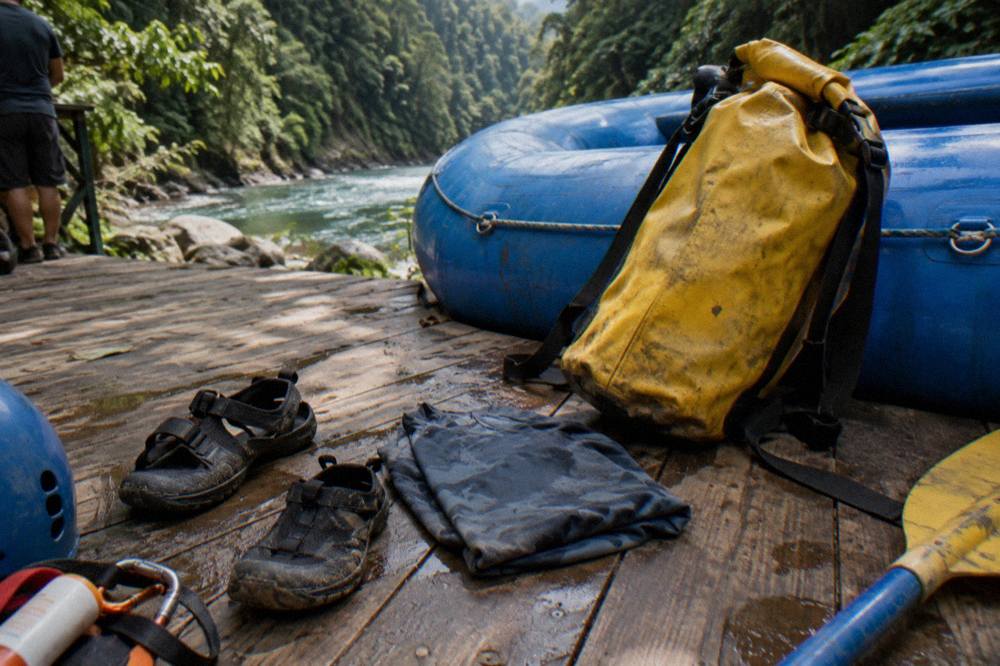
Keep a set of dry clothes and a towel in the vehicle or locker for the end of the day. Operators commonly schedule showers, changing time and lunch at a center near the take-out before the return drive, and the drive back to San Jose from the Caribbean slope is long enough that sitting in wet clothes is genuinely unpleasant. A plastic bag for the wet set solves the second half of that problem.
What Goes In A Dry Bag On A Pacuare Rafting Trip?
Strictly: a full change of clothes, towel, any essential medication in a waterproof container, and optionally a small camera you accept full responsibility for. Everything else, wallets, passports, room keys, spare electronics, stays on land. Valuables brought on the raft are the participant's responsibility, and operator guides state this plainly.
The dry-bag discipline is about what stays off the raft as much as what goes on it. There is no reason for a passport to ride a Class IV rapid; leave it in the hotel safe. The same goes for laptops, travel documents and anything whose loss would ruin the trip. What earns a place in the dry bag is what you will genuinely want at the take-out: dry clothes, towel, and medication such as an inhaler or epinephrine auto-injector that the operator should also know about when you check in.
Two items deserve a yes and a no. Sunglasses: yes, but only with a retainer strap, because the Pacuare will take them otherwise. Hats: a cap with a brim works under or clipped to a helmet, but a wide-brim sun hat generally will not fit and becomes another thing to lose. If your listing mentions lockers, as the Puerto Viejo departure does, use them for everything except what you need on the water.
| Item | On the raft (dry bag) | Left at base or in vehicle | Notes |
|---|---|---|---|
| Change of clothes | Yes | Copy in vehicle | The post-raft shower matters |
| Towel | Yes | Either | Quick-dry pack towels save space |
| Essential medication | Yes, waterproofed | No | Tell the operator at check-in |
| Sunglasses | Only with retainer strap | Spare pair | River takes unstrapped pairs |
| Passport, wallet | No | Yes, ideally in a safe | Never needed on the water |
| Phone | Only if you accept the risk | Recommended | Photo service is the alternative |
| Sunscreen, repellent | Yes, small bottles | Rest of the bottle | Reapply at the lunch stop |
For multi-day trips the calculus changes. The 2-Day Tour of the Pacuare River in Costa Rica, from $397 per person, includes dinner, two breakfasts, two lunches and private transportation. The two day Pacuare overnight guide has the full lodge-trip packing breakdown; the short version is pack like a backpacker, not a resort guest. For a single day, the Ticos River Adventures four-hour Turrialba run with pickup lists lunch and a safety kayak, from $119 per person.
How Do You Handle Cameras, Phones And Photos On The Pacuare?
Optional professional photo and video services are sold separately on several Pacuare listings, and this is the reliable way to get images of yourself in the rapids. Personal cameras and phones brought on the raft are carried at your own risk, and no listing guarantees their survival.
The pattern across the roster is consistent. The Day Trip to Pacuare River Rafting Class III-IV from San Jose lists souvenir photos and DVD as available to purchase; the Pacuare River Whitewater Rafting from San Jose listing, 4.6 from 70 reviews, from $119 per person, prices its photography option at US$32.00 per person as a listed exclusion. The Ticos River Adventures listing names photos and videos as its exclusion. In every case you are buying the images after the fact, which is one reason to carry cash.
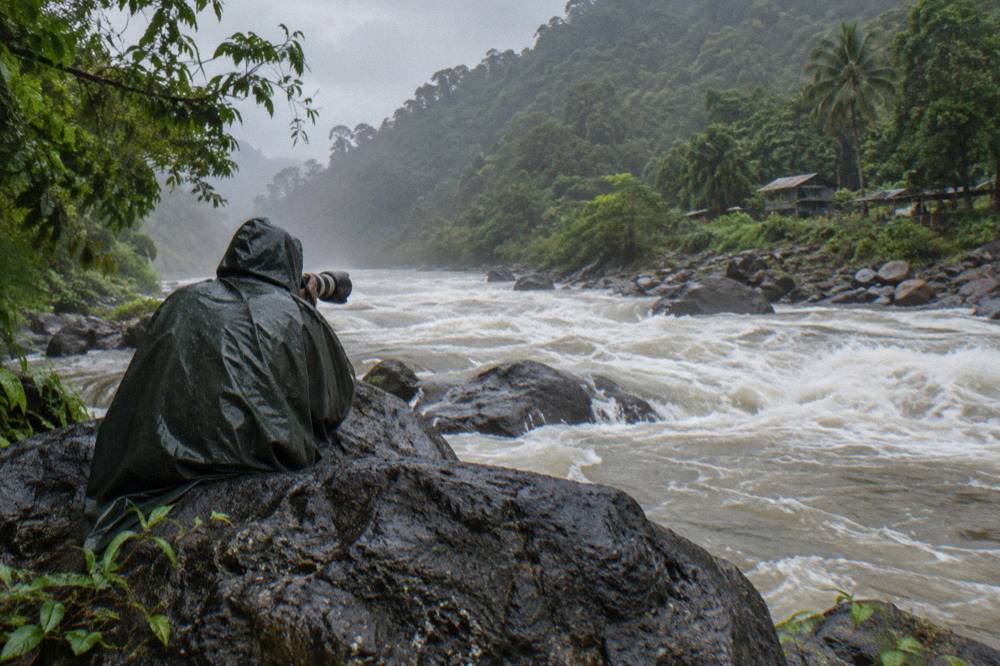
If you do bring a phone, the practical setup is a floating, lanyard-attached waterproof case, the phone zipped inside your rash guard or clipped to the life jacket, and an honest acceptance that a swim could still end it. Waterproof phone cases are a listed exclusion on at least one trip; the White Water Rafting Pacuare River From San José listing, 4.7 from 250 reviews, from $125 per person, lists exactly that.
The deeper question of what operators permit, and the habits that keep gear alive on multiday trips, are covered in the Pacuare photos and GoPro rules guide. Operators do not publish explicit GoPro mounting rules, so if a helmet mount is your plan, ask the operator directly before the trip rather than assuming.
How Much Sun And Bug Protection Do You Need In The Pacuare Gorge?
Bring reef-safe sunscreen in a small tube and reapply at the lunch stop, plus insect repellent for the put-in, the take-out and the evening if you are staying overnight. The gorge itself is shaded and the river mist keeps you cool, but the shuttle drives, the breakfast stops and the open sections burn unprotected skin quickly at Costa Rican latitude.
The common mistake is treating a rafting day like a beach day, sunscreen once in the morning and done. By the time you are through the safety talk and paddle practice, usually about 45 minutes on operators' published schedules, and three hours on the water, the morning application is half washed off. A tube in the dry bag and a second application at lunch is the working system. Lip balm with SPF earns its space too; sunburned lips are a frequent and avoidable complaint.
Insects are a jungle-slope reality rather than a river problem. The calm stretches and the put-in areas near the forest edge are where repellent matters, and on a two-day trip the late afternoon at the lodge is the peak window. The Caribbean slope gets rain through much of the year, unlike the Pacific side, so conditions stay humid and green even in the months operators describe as drier, February to April. For the wider weather picture, the best time to raft the Pacuare River guide explains the seasonal water levels.
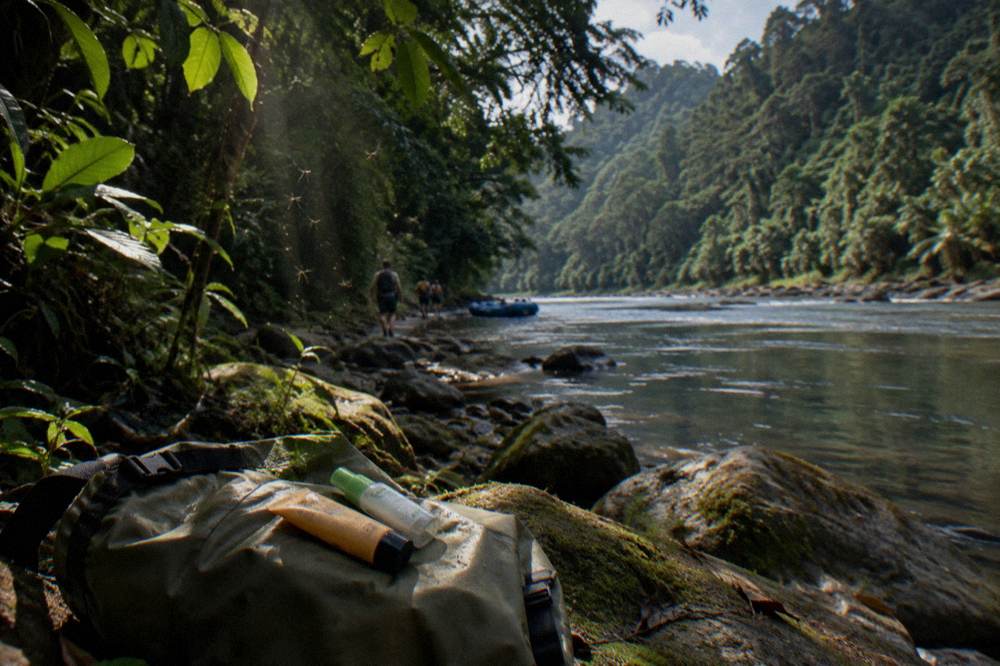
A compact packing approach: one small tube of sunscreen, one small repellent, lip balm, and nothing else from the pharmacy aisle unless you have a specific need. Full-size bottles add weight, leak in dry bags, and mostly ride around in the support vehicle all day.
How Much Cash Should You Carry, And Who Do You Tip?
Carry a modest amount of US dollars in small notes for two purposes: tips for the guide and crew, and optional souvenir photos or drinks sold at the take-out. Gratuities appear as a listed exclusion on about half of the Pacuare listings in the roster, which is the industry's way of saying tips are expected and not included in the price you paid.
No operator publishes a gratuity norm, so treat any percentage you read anywhere as custom rather than rule. Tipping is a cash, in-person transaction at the end of the day. Small notes make it straightforward; a single large bill does not. Alcoholic drinks are listed as available to purchase on some trips, another cash-or-card moment.
Costa Rica's currency is the colon, and US dollars are widely accepted, so there is no need to exchange money specifically for rafting day. Two things not to do: do not bring a wallet on the raft for tipping money you will not need until the drive home, and do not plan on paying for photos with a card without confirming the operator takes one.
| Cash moment | Where it happens | Typical form |
|---|---|---|
| Guide and crew tips | At the take-out, end of trip | US dollars, small notes |
| Souvenir photos or video | Take-out center display | Per person, priced per listing |
| Alcoholic drinks | Lunch or take-out, where listed | Cash is safest |
| Nothing else | The river itself | Bring no wallet on the raft |
For an overnight trip, the cash list grows slightly: lodge staff on multi-day trips are also tipped, and the packing instinct should be the same, small notes divided into envelopes or pockets by day. No roster listing prices a tip, and any figure you see published elsewhere is someone's etiquette opinion, not an operator price.
What Should Beginners And Families Add To The Pacuare Packing List?
Families should add a spare outfit per child in the vehicle rather than the dry bag, motion-sickness remedies for the winding shuttle drives, and a written note of any medical condition handed to the operator at check-in rather than mentioned in passing. Minimum ages are set per listing and by the national norm: Class III to IV rapids are legally open from age 12 in Costa Rica.
The national technical norm for rafting, INTE G60-1:2019, sets minimum ages by rapid class: 8 to 11 years may run Class I to III, 12 to 17 may run Class I to IV, and Class VI is never run commercially. On that basis a Class III-IV Pacuare trip is legally open from 12, which matches the listings that state a minimum age, and some operators raise the bar to 14 in the wetter months when the water runs higher. Always check the listing for the age and any weight or size limits before packing for a mixed-age group; the Pacuare rafting age limits and fitness guide covers the rules in full.
The shuttle drives deserve their own line on the packing list. San Jose hotel pickups commonly run 6:00 to 6:30 a.m. with returns around 5:30 p.m., and the drive from San Jose to Turrialba is about 1h20 to 1h40, commonly reported, with the river leg beyond that. Winding mountain roads before breakfast have ended more rafting mornings than any rapid has; a motion-sickness tablet taken before pickup is cheap insurance. The Pacuare rafting with kids and teens guide builds on this for family trips.
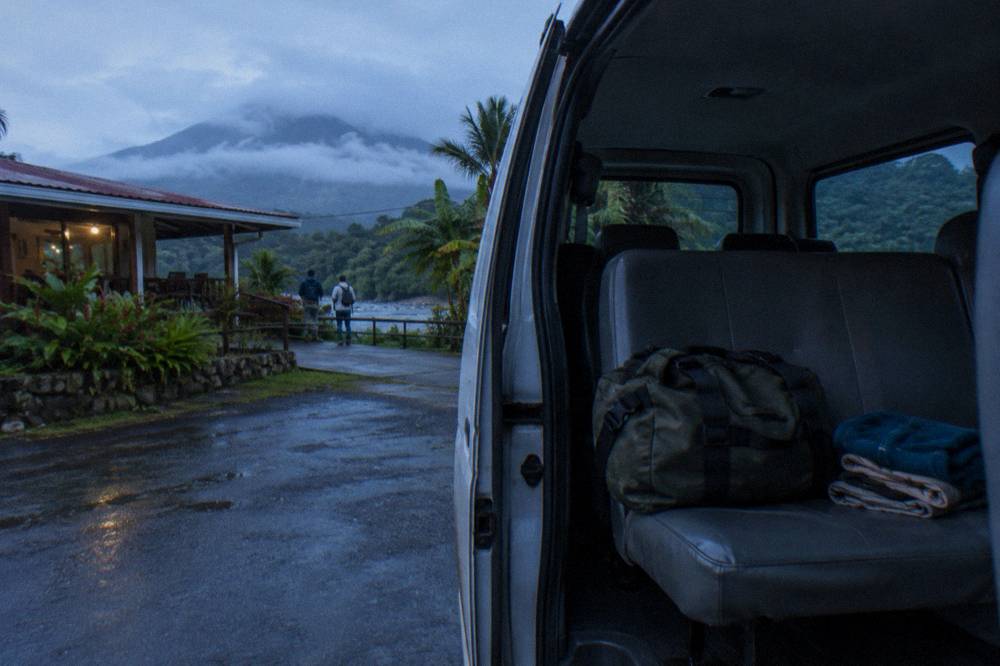
One more beginner item: a strap for glasses, treated with the same seriousness as the sunglass strap.
What Can You Leave Behind On A Pacuare Rafting Day?
Leave behind the passport and flight documents, valuables, drones, large cameras without a waterproof housing, cotton clothing, flip-flops, and anything you would be upset to see at the bottom of a river. The river carries enough of your day without carrying your important papers.
The exclusion list is shorter than the packing list, which is the point. Lockers and changing facilities are named inclusions on the Puerto Viejo departure; where the roster line says pickup not stated or hotel pickup excluded, the meeting point is as the listing states, and the same leave-it-on-land logic applies to whatever you meet them with.
Wetsuits belong on the leave-behind list for almost everyone. With water typically around 21 C (70 F) and higher on the Pacuare, operators state that no wetsuit is needed; a synthetic layer covers the cold-sensitive minority. Drones are a different case: flying one over a protected forest reserve and other guests' experience is the kind of decision to clear with the operator in writing before you pack it, not on the gravel bar at the put-in.
| Leave behind | Why |
|---|---|
| Passport and travel documents | Never needed on the water, hotel safe is safer |
| Expensive jewelry and watches | A rapid will find it |
| Flip-flops | Come off on the first wet portage |
| Cotton clothes | Stay wet and cold all day |
| Wetsuit | Water is warm enough per operator pages |
| Drone | Protected area and operator permission questions |
| Large non-waterproof camera | Personal responsibility on the raft |
Common Questions About Packing For A Pacuare Rafting Trip
Do You Need A Wetsuit For Pacuare Rafting?
No. Operators state water temperature typically sits around 21 C (70 F) and higher, with measured examples up to about 26 C in the drier months, and no wetsuit is needed. A quick-dry synthetic layer is enough for most people.
Can You Bring A Phone On The Pacuare Rapids?
Only at your own risk. Listings state that valuables such as cameras and phones brought on the raft are the participant's responsibility, and one lists waterproof phone cases as an exclusion. The reliable route to photos is the operator's professional photo service, sold as an exclusion on many listings.
What Shoes Should You Wear Rafting The Pacuare?
Tennis shoes or secure sandals with heel straps that can get wet and muddy. Flip-flops come off in the first rapid, and loose clogs drain badly. Old running shoes are the standard workaround.
Does The Pacuare Trip Include Lunch?
Most listings in the roster include lunch, and the San Jose and Caribbean departures typically add breakfast too. The Turrialba day trips list lunch at the end of the run. Check your specific listing, since one Turrialba listing excludes food and drinks.
Should You Bring A Towel And Change Of Clothes?
Yes to both, kept in the vehicle or a locker rather than on the raft. Operators commonly provide showers, changing facilities and lunch at a center near the take-out before the return drive, and the shuttle back is long enough that wet clothes become genuinely uncomfortable.
How Much Cash Should You Bring For Tips And Photos?
A modest amount of US dollars in small notes. Gratuities are a listed exclusion on about half the listings, and souvenir photos or video are sold separately at the take-out, priced per listing. No operator publishes a tipping percentage, so treat any figure you see as custom, not rule.
The final short version: shoes that strap on, clothes that dry fast, sun and bug protection in small tubes, dry clothes waiting on land, a little cash, and nothing precious on the raft. The operator brings the rest, from helmets and life vests on the most reviewed Turrialba day trip to the cooked meals on the multi-day lodge runs. If you are still choosing between departures, Pacuare Costa Rica Rafting compares all 21 listings side by side, and the packing logic above applies to every one of them.
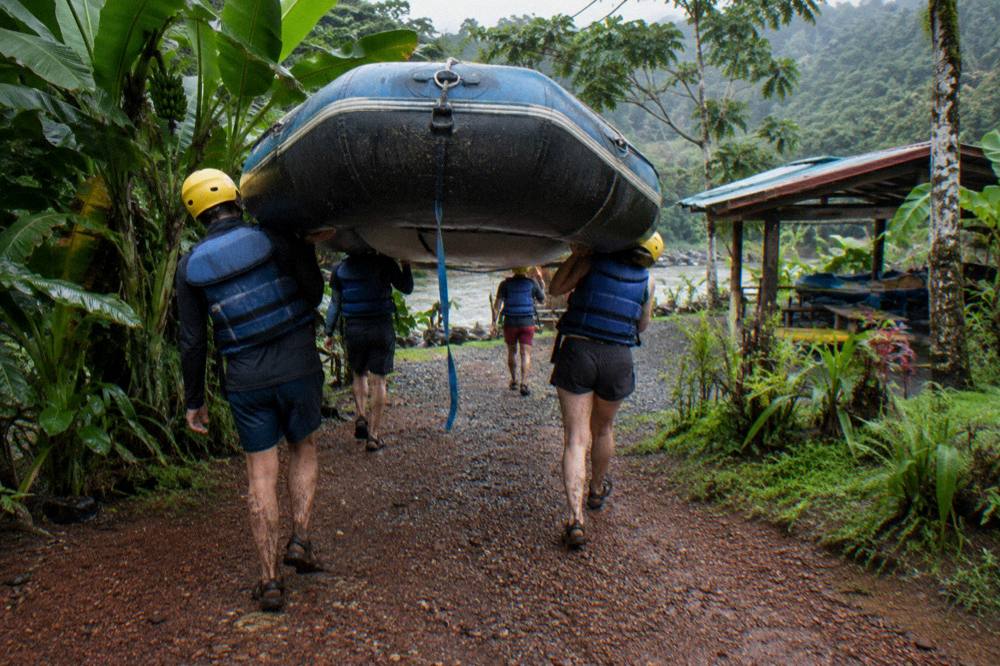
What Is The One-Page Checklist Before You Leave The Hotel?
Wear: quick-dry clothes and secure shoes. Pack in a small dry bag: towel, change of clothes, sunscreen, repellent, lip balm, medication, sunglasses on a strap. Leave: passport, wallet, electronics, everything else. Carry: small US dollar notes for tips and photos. Confirm on the listing: minimum age, pickup point or meeting point, and what the operator's base offers for lockers.
Run the list the night before, not at 5:30 a.m., because Pacuare pickups from San Jose hotels commonly begin between 6:00 and 6:30 a.m., and Caribbean coast pickups run on similar early schedules. Everything on the checklist takes ten minutes to gather; the mistakes all come from doing it in the dark while a van waits.
The river supplies the memorable part. Your job on packing day is modest: be shod correctly, be sun-protected, be dry by dinner, and carry nothing down the gorge that the gorge could keep. Whichever departure you choose, from the most reviewed Turrialba day trip to the two-day lodge runs, the checklist above holds.