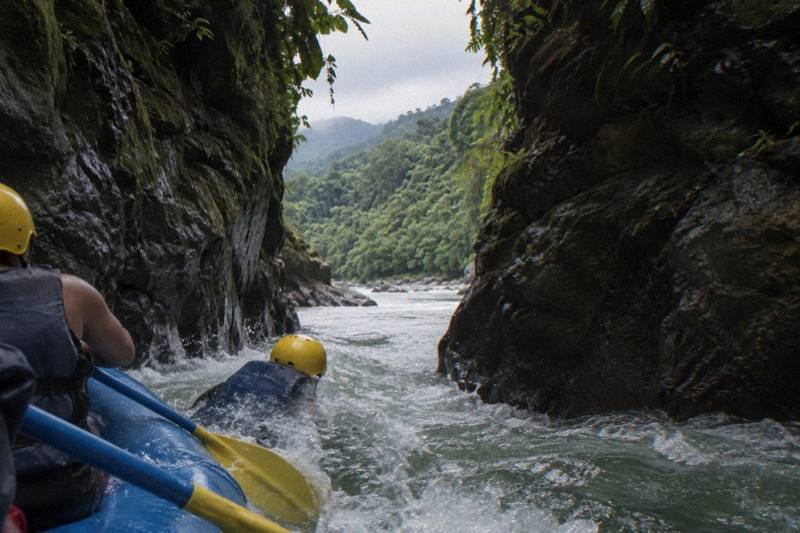
What To Wear Rafting In Costa Rica: Clothing That Works
Swimwear or quick-dry clothes, secure water shoes and a change of clothes for after: that is the core of a Costa Rica rafting outfit, because the outfitter supplies the helmet, life jacket and paddle. Here is the full breakdown, season by season, for the Pacuare.
Short answer
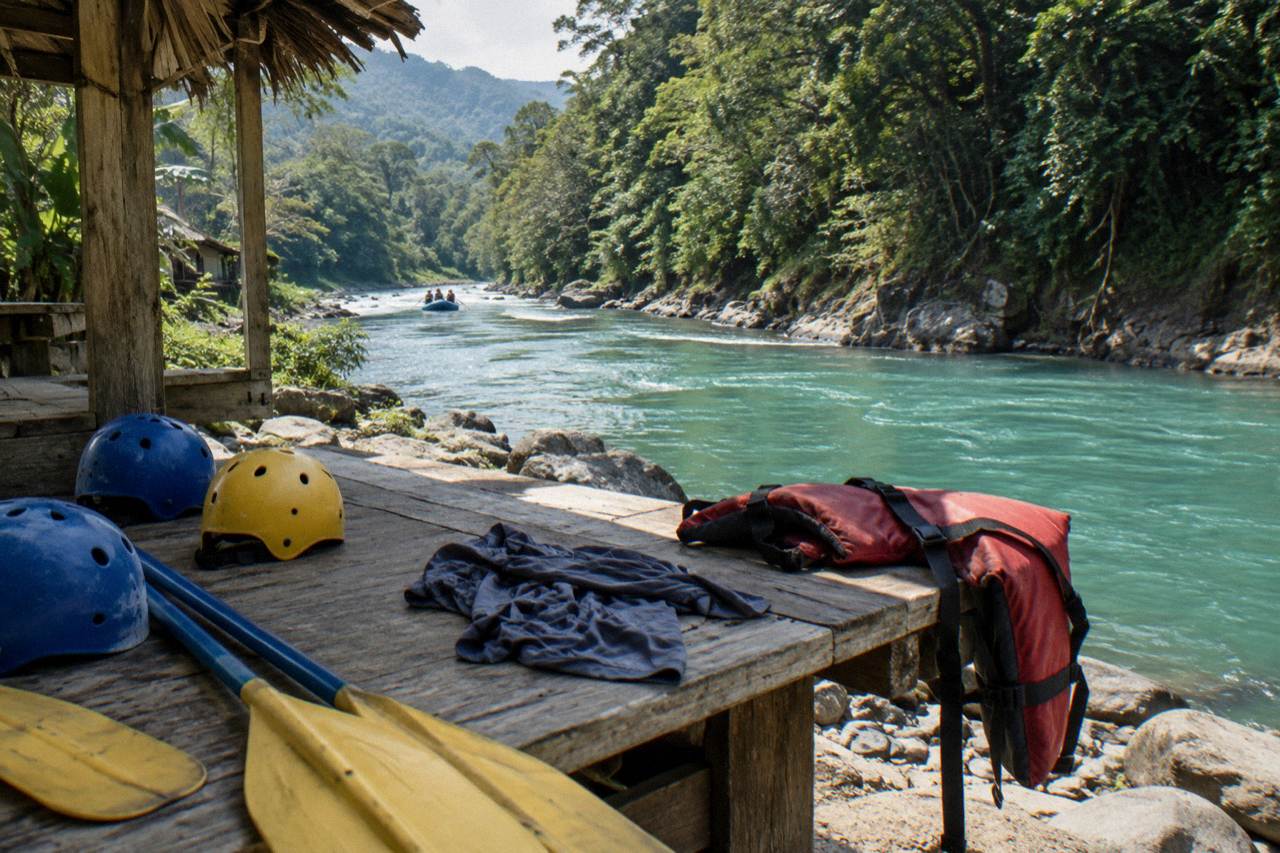
Wear a swimsuit under quick-dry shorts and a rash guard or synthetic t-shirt, with secure sandals or old trainers that can get wet and muddy. No cotton, no flip-flops. Water on the Pacuare runs warm, typically 21 C (70 F) or higher, so no wetsuit is needed. The outfitter supplies helmet, life jacket and paddle.
What Should You Wear Rafting On The Pacuare River?
The working outfit is a swimsuit under quick-dry shorts and a synthetic top, with secure water shoes on your feet: no cotton, no flip-flops, no wetsuit. Pacuare water typically runs 21 C (70 F) or higher, and operators who publish water temperatures report readings from about 21 to 26 C across the year, so cold is not the problem. Sun, chafe and losing a shoe are.
The starting point is the layer that stays wet for hours. A swimsuit or boardshorts plus a rash guard or polyester t-shirt dries fast and does not sag or rub the way cotton does once soaked. Cotton is the one fabric worth actively avoiding: it holds water against your skin, stays heavy, and on a long day in a paddle boat it can chafe badly at the shoulders where the life jacket straps sit. Synthetic fabrics, merino or purpose-made rafting tops all behave better.
Operators who publish packing guidance for Pacuare and Costa Rica rafting trips list the same core kit: swimwear or quick-dry clothes, secure water shoes, sunscreen, a towel and a change of clothes for the end of the day. The helmet, life jacket and paddle are supplied by the operator. That division, your clothes and their gear, is the whole logic of packing for this river.
The most reviewed trip on this roster, Rafting Pacuare River One Day from Turrialba (5.0 from 385 reviews, from $99 per person), states it provides helmets, life vests and paddles plus a typical Costa Rican lunch at the end of the trip, which is exactly when that change of clothes earns its place. Its listing is worth reading before you pack, because the end-of-day photo everyone wants is the one where you are dry and fed.
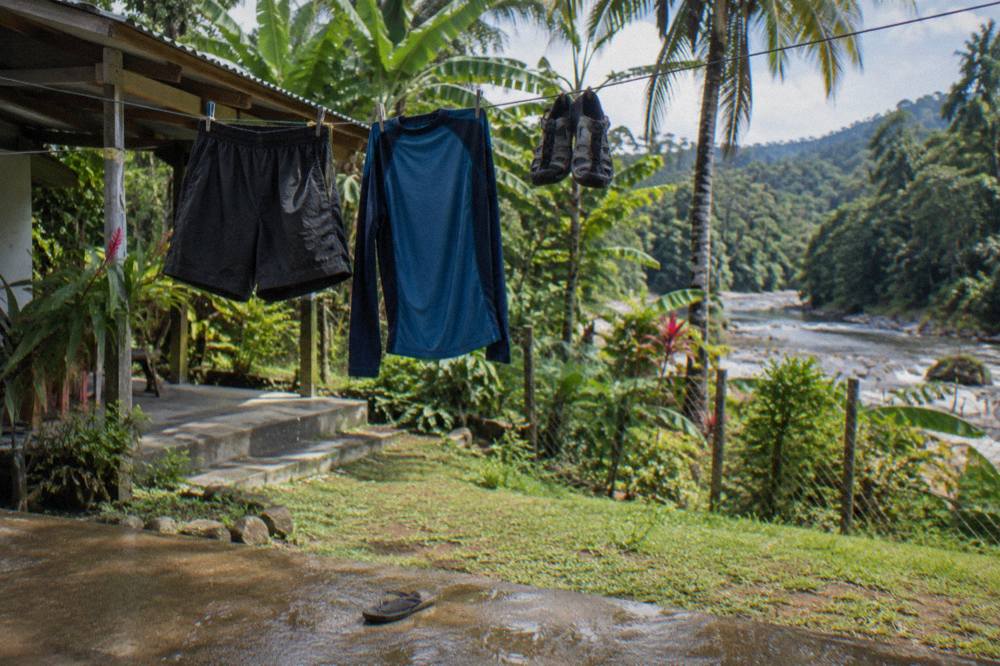
For your upper body, think in two states: on the water and after the water. On the water, a rash guard gives sun protection that does not wash off and adds a small amount of warmth on windy sections. After the water, operators commonly finish at a center with showers and changing facilities before the return drive, so a dry set of clothes and a towel ride in the van, not in the raft. Loose jewelry, watches and anything without a good strap belong in that bag too.
What Footwear Works For Costa Rica Whitewater?
Secure sandals with heel straps, old trainers or proper river shoes are the accepted footwear for the Pacuare: they stay on your feet when the raft hits a wave and they protect your toes on the rocky put-in and take-out paths. Operators state plainly that flip-flops are not acceptable, and no one rafts barefoot.
Footwear is the packing decision that actually ends trips. The paths down to put-ins and up from take-outs are muddy in the green season and slick year-round. Operator guidance for the Pacuare recommends tennis shoes or secure sandals and river shoes that can get wet and muddy, with flip-flops ruled out. A shoe that comes off mid-rapid is gone: the current takes it and you finish the run with one wet sock.
Three options rank clearly. Strapped sandals with a heel strap, the classic rafting choice, drain instantly and grip well. Old trainers you do not mind ruining give the best toe protection. Proper river shoes with a sticky sole do both. What links them is a closure system that survives a swim: if you can kick it off standing on dry land, the river can take it off you in a rapid.
| Footwear type | Works for Pacuare rafting | Notes |
|---|---|---|
| Strapped sandals with heel strap | Yes | Drains fast |
| Old trainers that lace tight | Yes | Best toe protection on rocky banks |
| Purpose-made river shoes | Yes | Sticky sole, drains, protects |
| Slip-on water shoes | Marginal | Only if they genuinely lock on |
| Flip-flops | No | Banned by operator guidance, they float away |
| Barefoot | No | Rocky, muddy access paths |
Socks are a small but real decision. Thin neoprene socks add grip inside sandals and warmth on cooler mornings; cotton socks just hold water and grit. Whatever you wear on the river, pack the dry pair in the van bag, because the drive back to Turrialba or San Jose is long in wet shoes, commonly reported at about 1h20 to 1h40 from San Jose to Turrialba alone.
If you are departing from the capital rather than Turrialba, the footwear point matters even more. White Water Rafting Pacuare River From San José (4.7 from 250 reviews, from $125 per person, hotel pickup listed) is a 10-hour day door to door, and operators commonly report San Jose hotel pickups starting between 6:00 and 6:30 a.m., so your feet spend a full day in whatever you chose. Dress for the whole day, not just the descent.
What Does The Outfitter Supply On A Pacuare Trip?
Pacuare operators supply the safety kit: helmet, life jacket and paddle, and several listings add a safety kayaker or private transport. You supply only the clothing layer underneath, footwear, sunscreen and a dry change for afterward. Trip-to-trip differences are in transport, meals and group size, not in the protective gear.
Reading the roster as a packing list, the pattern is consistent. The featured Turrialba day trip lists helmets, life vests and paddles. The Turrialba Pacuare River Rafting listing run by Ticos River Adventures (4.9 from 27 reviews, from $119 per person) goes further and lists gear for the activity, certified guides, a safety kayak, a deli-style lunch, beverages and an insurance policy among its inclusions. The San Jose Full Day Pacuare River Rafting Experience (4.8 from 17 reviews, from $124 per person) lists 5 hours of rafting within its day, a river guide, rafting equipment and a safety kayaker.
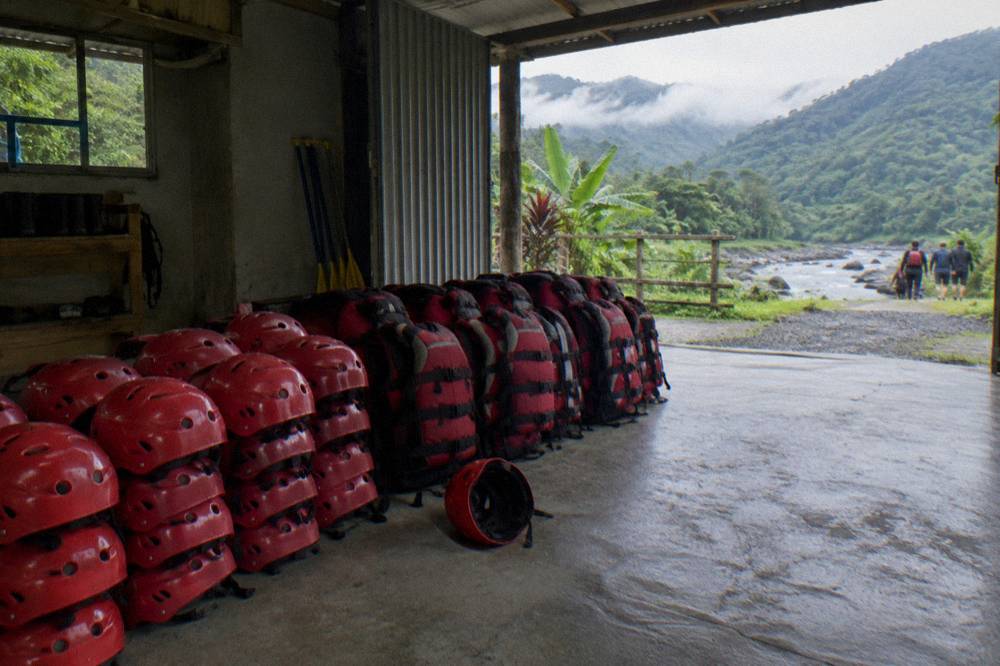
Two things follow from that. First, you do not need to buy any technical gear to raft the Pacuare, which keeps the real cost of a first trip close to the listing price. Second, the life jacket has to fit over your clothing, so a bulky fleece or a thick hoody underneath is counterproductive: it compresses, holds water and can compromise the fit that the guide checks before launch. Thin, tight, synthetic layers are not just comfortable, they are what the safety equipment is designed to work with.
| What the operator supplies | What you bring |
|---|---|
| Helmet | Swimsuit or quick-dry shorts |
| Life jacket | Rash guard or synthetic t-shirt |
| Paddle | Secure water shoes |
| Safety kayaker (several listings) | Sunscreen |
| Lunch, and breakfast on San Jose day trips | Towel and change of clothes |
| Transport where the listing states it | Dry bag or plastic bag for wet gear |
Costa Rica's national rafting norm, INTE G60-1:2019, requires operators to check weather and river conditions and to scout when flow rises, which is why the kit and the safety brief are standard rather than optional extras. Operators on the Pacuare run a safety talk and paddle practice before the descent, and guests are expected in their gear, dressed correctly, for that talk.
The 2-Day Tour of the Pacuare River in Costa Rica (from $397 per person) changes the packing math only slightly: you still wear the same on-water outfit both days, but the van bag grows to include overnight clothes and the listing's meals, breakfast, lunch and dinner, are included. This one refunds in full only 6 or more days out, so a clothing question is never the reason to delay booking it.
Does Rafting Clothing Change With The Season In Costa Rica?
Yes, but modestly: the Pacuare is runnable all year and the water stays warm, so the core outfit is constant, and the seasonal adjustments are sun cover and a warm layer in the driest months, and more rain protection and quick-dry everything in the wettest. Water is highest October to December and lowest March to April, and operators prefer February to April for first timers and families.
The Caribbean slope where the Pacuare runs gets rain through much of the year, unlike the Pacific side with its hard dry season. Modelled ERA5 averages for the Turrialba area put annual rainfall at about 3,714 mm, with February to April the driest months (181 to 198 mm per month) and October to December the wettest (360 to 477 mm). For clothing, that translates to a simple rule: in February to April, plan around sun; in October to December, plan around rain and mud, on the banks and on your dry clothes left in the van.
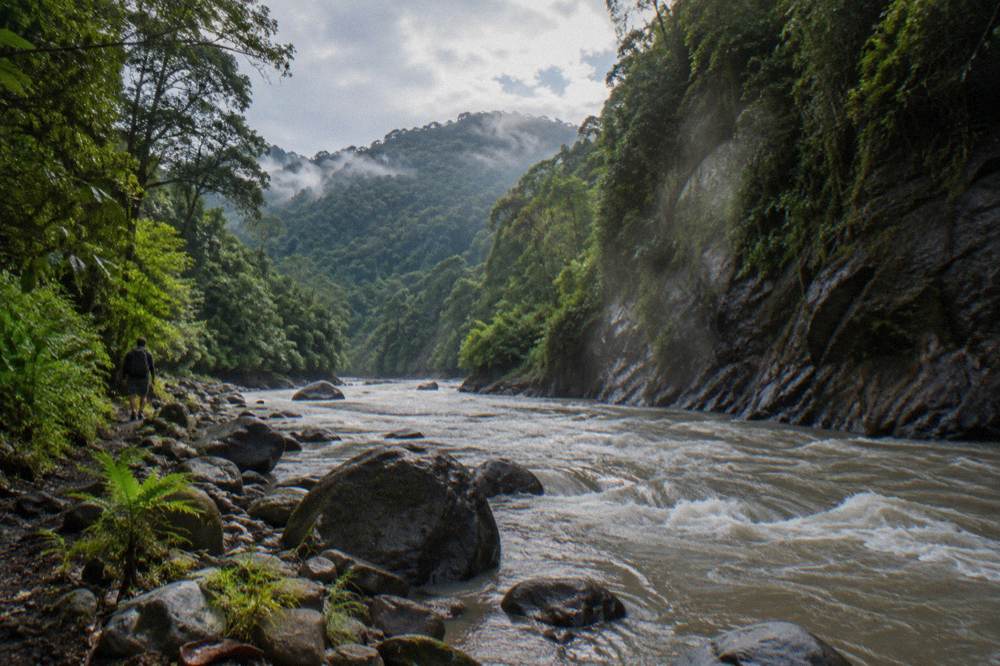

Rapid difficulty moves with the water rather than the calendar label. One operator describes the same Pacuare run as Class 3-plus at low water and Class 4 at high water, and in the green season many Class III rapids run a class harder while dry-season Class IV rapids often ease. That affects who should be on the boat more than what anyone wears, but it does mean a light rain shell for the take-out is a smarter carry in the wet months than in March. Never a heavy one: it lives in the van, not on the river.
| Season window | Water character | Clothing emphasis |
|---|---|---|
| February to April | Lowest, most predictable | Sun cover, rash guard, sunscreen |
| May to August | Rising, greener | Quick-dry everything, light shell in the van |
| September to December | Highest, fastest | Full quick-dry kit, rain protection for after, old shoes for mud |
Sun deserves more respect than the latitude suggests. You are on open water in the tropics for hours, and the gorge sections that feel shaded alternate with wide runs of full sun. A rash guard with a collar, sunscreen reapplied at the lunch stop, and a cap that fits under the helmet (some operators allow it, check with the guide) make more difference to comfort than any fabric choice. For a wider look at how the calendar changes the whole trip, not just the outfit, see the guide to the best time to raft the Pacuare.
What Should You Leave In The Van Or Locker?
Everything you would be sad to lose: passport-style documents you do not need, wallets beyond a little cash, phones without a waterproof case, cameras, jewelry and anything cotton you want to stay dry. Operators state that valuables brought on the raft are the participant's responsibility, and one Caribbean-coast listing explicitly includes lockers for personal belongings and changing facilities at its center.
The honest mechanic here is that dry storage on a paddle raft is minimal. Anything in your pockets will get wet unless it is in a purpose-built dry bag, and operators offering photo packages sell them precisely because your own camera stays behind. The Puerto Viejo departure, White Water Rafting Pacuare River with Lunch From Puerto Viejo (4.8 from 62 reviews, from $147 per person, minimum age 12), lists lockers and changing facilities among its inclusions, and other operators' Siquirres-area centers commonly provide showers, changing rooms and lunch before the return drive.
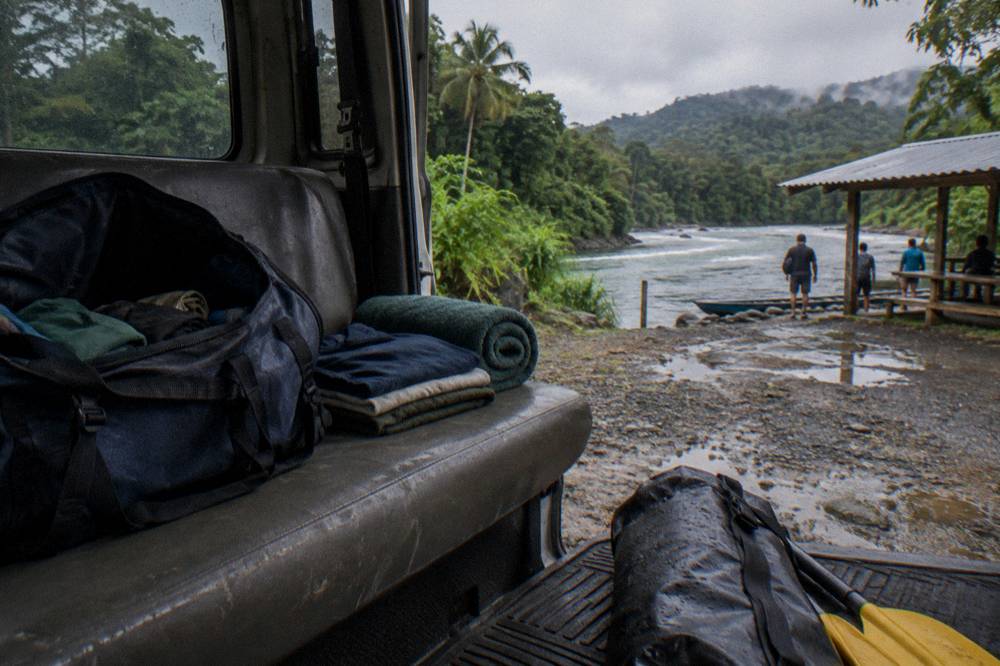
A practical split that works on every rostered trip:
| Ride in the raft with you | Stay in the van or locker |
|---|---|
| Swimwear and quick-dry layers | Phone without waterproof case |
| Secure water shoes | Wallet, cards, documents |
| Sunscreen | Camera unless waterproofed |
| Glasses with a strap | Jewelry and watches |
| Small cash for tips, in a dry bag | Towel and full change of clothes |
The towel-and-change bag deserves a labeled place in the vehicle, not a hope. Turrialba departures are shorter days by the clock, but the San Jose day trips run 9 to 12 hours total on the roster, and sitting through the drive back in a wet rash guard is the avoidable low point of an otherwise strong day. If you want the photographic memory without the risk, the separate question of photos and camera rules on the Pacuare is covered in its own guide.
What Should Kids And Teens Wear For Pacuare Rafting?
The same outfit as adults, sized down and biased warmer: quick-dry layers, secured footwear and a properly fitted life jacket, which the guide checks. The legal floor under Costa Rica's rafting norm is age 12 for Class III to IV water, several listings state a minimum age of 12, and some operators raise it to 14 in the wetter months, so the clothing question only starts once the age question is settled. Check the listing.
Costa Rica's national technical norm for rafting sets minimum ages by rapid class: 12 to 17 years may run Class I to IV, and 18 and over Class I to V. On the Pacuare, which roster listings grade from Class III-IV up to Class IV on the specialist Turrialba departure, that puts 12 as the legal floor for the standard run. Operators can and do go higher, and published operator guidance shows some raising the minimum from 12 to 14 between June and November when the water runs higher.
Clothing-wise, a full rash guard rather than a t-shirt, and neoprene socks or trainers rather than sandals, are the better call for teenagers. The family-facing details, ages by listing and what a first-timer should expect, are pulled together in the rafting with kids and teens guide.
For a family matching the outfit to the trip, the Class IV listing from Turrialba (Pacuare River Rafting Class IV from Turrialba, from $125 per person, up to 18 guests) states its class on the listing, while the mainstream family choice remains the Class III-IV day trips, where the same clothing rules apply. Whatever the departure, the guide's word on the day is final on fit, layers and what stays ashore.
What Should You Not Wear White Water Rafting?
Cotton anything, flip-flops, loose jewelry, non-waterproof watches, heavy denim and anything you would be upset to lose or see soaked: that is the honest ban list for the Pacuare. No wetsuit is needed, the water runs warm, and bulky layers under a life jacket are worse than useless because they interfere with the fit the guide checks before launch.
Cotton tops the list because it fails in exactly the way rafting punishes: it absorbs water, stops insulating, gains weight and chafes under straps. Denim is the same failure one step worse. Flip-flops fail by leaving your feet. Loose jewelry and unset glasses fail by disappearing into the river, and operators state plainly that valuables on the raft are your responsibility. None of these are judgment calls.
The counterintuitive item is the wetsuit. On cold alpine rivers it is standard; on the Pacuare it is simply not needed, with water typically 21 C or higher and readings up to about 26 C at low water published by operators who measure it. If anything, overheating in the sun between rapids is the more likely discomfort, which is one more argument for thin, light, quick-dry layers.
A final word on the day itself. The whole outfit question exists to make one decision easy: once you are dressed right, the booking is the only thing left. Pacuare Costa Rica Rafting exists to make that half of the equation as simple as the packing list above, with every departure town and trip length compared in one place.
Beyond the standard day trips, the longer runs reward the same clothing discipline over more days. The 3 Day Tour of the Pacuare River (from $505 per person) and the Two-Day Rafting Tour with transportation included (from $370 per person, overnight at Avesol Lodge) both include breakfast, lunch and dinner, so the van bag carries two days of dry clothes rather than one, and the same no-cotton rule applies to every dry layer as well. For a single day, the Ticos River Adventures four-hour Turrialba run is 4.9 from 27 reviews, from $119 per person.
For Caribbean-coast travelers, the same list transfers unchanged. The La Fortuna departure with a shuttle onward to San Jose airport or Puerto Viejo (5 from 20 reviews, from $150 per person) is a 10-hour day on the roster, and it is the trip where a genuinely complete van bag, towel, dry clothes, warm layer, earns its keep most clearly.
Common Questions About What To Wear Rafting In Costa Rica
Do You Need A Wetsuit For Pacuare River Rafting?
No. Water on the Pacuare typically runs 21 C (70 F) or higher, with operator-published readings up to about 26 C at low water, so a rash guard and quick-dry shorts are enough. Overheating in the sun is more likely than getting cold.
Can I Wear Flip-flops White Water Rafting?
No. Operator guidance for the Pacuare rules them out: they come off in a rapid and the rocky banks demand covered or securely strapped feet. Wear strapped sandals, old trainers or river shoes.
Should I Wear Glasses Or Sunglasses On The Raft?
Only with a retaining strap, and even then at your own risk: operators state that valuables you bring on the raft, including glasses and phones, are the participant's responsibility. Prescription sports straps work; loose fashion sunglasses usually end up in the river.
What Do I Wear After The Rafting Trip?
A full change of dry clothes and a towel, carried in the van. Operators' take-out centers commonly provide showers and changing facilities, and the drives back to San Jose or Turrialba are long enough that wet clothes are a real misery.
Does What To Wear Change Between Dry And Rainy Season?
Only modestly. February to April is the drier, lower-water window, so sun cover leads; October to December brings the highest water and the most mud, so quick-dry everything and a light rain shell in the van are the additions. The core outfit stays the same year-round.
What Should You Not Wear White Water Rafting?
Cotton of any kind, denim, flip-flops, loose jewelry and non-waterproof watches or phones. Cotton stays wet and chafes under the life jacket, and bulky layers interfere with the jacket's fit, which the guide checks before launch.