Pacuare Rafting Photos And Video: Cameras, Guides And Keepsakes
Every Pacuare rafting trip runs through a rainforest canyon where the walls drop waterfalls straight into the river, and almost everyone on the raft wants a photo of it. Here is what the operators' listings actually say about cameras, GoPros, dry bags and the professional photo packages most of them sell.
Short answer
No Pacuare listing on this site bans personal cameras, but several listings list photos and videos as a paid extra rather than an inclusion. One San Jose listing prices its photography add-on at US$32.00 per person. Guest cameras stay the guest's responsibility on the water, and life jackets and helmets are worn the whole trip.
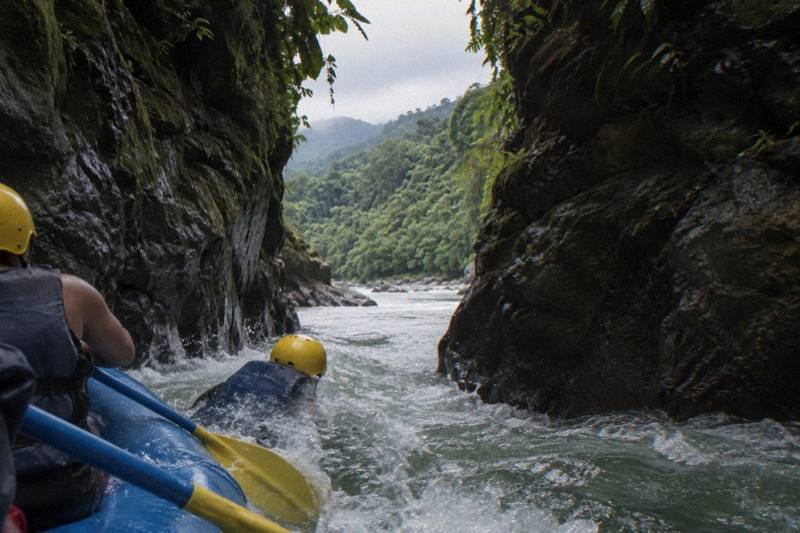
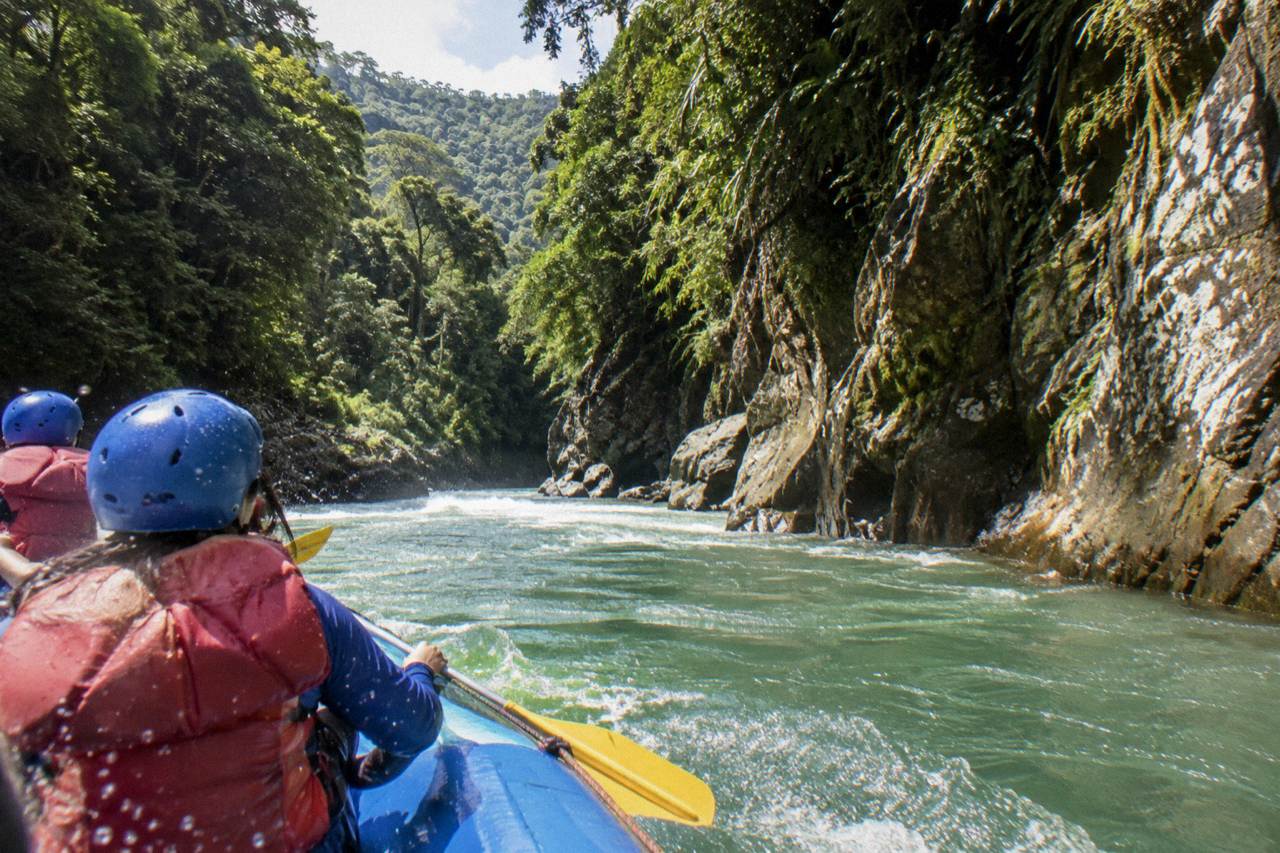
The Pacuare runs through a gorge with no road access along most of the commercial run, walls that shed waterfalls, and water warm enough that operators say no wetsuit is needed, typically 21 C and higher. That combination also means every camera you bring rides a raft through Class III and IV water. The question for most rafters is not whether there will be something worth photographing, it is whether their own gear will survive, or whether the operator's photographer has it covered.
This guide lays out what the actual listings on this site say about cameras and photo services, what the operator community publishes about filming on the water, and how to pack so that the phone you carry is the phone you still own at the take-out. The short version: personal cameras are generally allowed but ride at your own risk, professional photos are usually sold separately for a fee, and the smartest photo strategy on most Pacuare trips costs less than a new phone.
Can You Take Your Own Camera Rafting On The Pacuare River?
Yes, in general you can bring your own camera on a Pacuare rafting trip, but operator guidance is consistent about one thing: valuables you carry on the raft, including cameras and phones, remain your responsibility. Operator planning pages state plainly that valuables such as cameras or phones brought on the raft are the participant's responsibility, and that optional professional photo and video services are available separately.
No listing on this roster bans personal cameras outright. What the listings do instead is carve photography out of the included price. Several roster lines list souvenir photos among the exclusions with the phrase "available to purchase", which tells you two things at once: the operator runs a photo service, and it is not part of your fare. The Puerto Viejo departure operated by Destination Services Costa Rica, White Water Rafting Pacuare River with Lunch From Puerto Viejo, from $147 per person and rated 4.8 from 62 reviews, lists souvenir photos as an exclusion alongside gratuities and alcoholic beverages. So does the Day Trip to Pacuare River Rafting Class III-IV from San Jose listing, from $139 per person.
None of this prevents you from shooting your own frames. It just means the operator's liability ends where your camera bag begins, and that the classic move, letting a professional shoot the rapids while you shoot the scenery from a calm stretch, is usually available for a fee. If you want the full packing picture beyond camera gear, the companion piece on what to bring on a Pacuare rafting trip covers clothing, footwear and towels.
| Listing | Photo service on the listing | How it appears |
|---|---|---|
| Pacuare River Whitewater Rafting from San Jose | Photography add-on priced at US$32.00 per person | Listed exclusion with a firm price |
| Pacuare River Rafting (Ticos River Adventures, Turrialba) | Photos and videos | Listed exclusion |
| White Water Rafting Pacuare River with Lunch From Puerto Viejo | Souvenir photos | Exclusion, "available to purchase" |
| La Fortuna: Pacuare Rafting with SJO or Puerto Viejo Shuttle | Photos | Exclusion, "optional, for an additional fee" |
| Day Trip to Pacuare River Rafting Class III-IV from San Jose | Souvenir photos and DVD | Exclusions, "available to purchase" |
Where a listing says nothing about photos at all, ask the operator on the day.
Are GoPros Allowed On Pacuare Rafting Trips?
No Pacuare listing on this roster publishes an explicit GoPro rule. The deciding factor is almost always your guide, who can veto anything that looks unsafe for the paddle line.
Because there is no published rule, the practical guidance comes from how these trips actually run. Guides on Pacuare trips are trained in swift water rescue and carry safety kits for the full length of the trip, and life jackets and helmets are mandatory for the entire trip, including all calm sections. A selfie stick that occupies a paddle hand, or a loose strap that could snag on a swim, is a different matter, and a guide who says put it away is making a safety call, not a camera-policy call.
A few practical points worth counting before you mount anything:
- A tether beats a mount. A short leash to the jacket keeps the camera attached even when the mount lets go in a hole.
- Chest mounts survive swims better than hand-held filming, and both hands stay on the paddle.
- Shoot the calm pools, not the biggest drop. In the gorge itself your job is three paddle strokes, not framing.
- Bring more battery than you think.
One hard limit in the current material is physical, not photographic: one San Jose operator outside this site's roster requires participants to weigh 45 to 90 kg and stand at least 1.35 m tall, a reminder that these are physical trips first and camera platforms second. For the broader safety picture, including how operators handle high water, see is Pacuare River rafting safe.
Photo-minded rafters generally get more usable frames per colón on a Turrialba departure than a San Jose one, simply because the day is shorter on the road.
Do Pacuare Rafting Operators Sell Professional Photos And Video?
Yes, many of them do. The listings list these photos as exclusions, with one firm price visible: US$32.00 per person for photography on the Pacuare River Whitewater Rafting from San Jose listing. Everywhere else, no price is published.
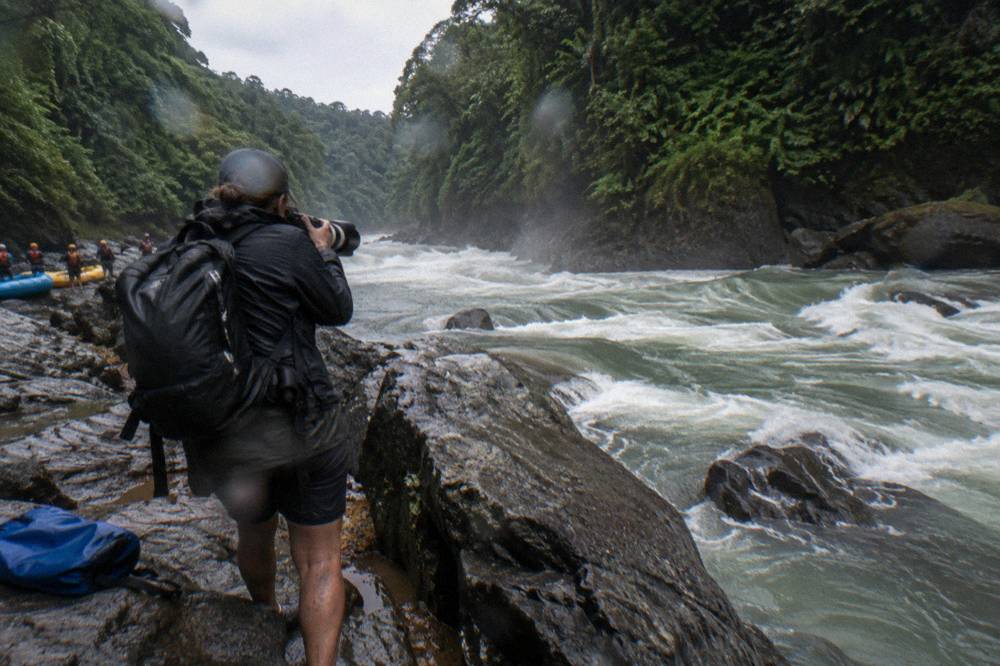
This division of labor exists for a good reason. The best Pacuare photos are taken from shore: a raft mid-drop at Upper or Lower Huacas, spray frozen, every face working. You cannot take that picture from inside the raft, because you are in it.
The Pacuare River Rafting listing from Ticos River Adventures, from $119 per person and rated 4.9 from 27 reviews, includes a deli-style lunch, gear, certified guides, a safety kayak and an insurance policy, and lists photos and videos as its one exclusion. Ask at check-in what the package costs and what you get: stills only, video, or both, and whether files transfer to your phone at the base or by download link afterward.
Two practical cautions. First, treat any photo fee as cash-or-card-on-the-day spending, not as part of your tour price, and expect it to be per person. Second, do not build your keepsake plan around buying the operator's photos alone. Operators cancel or reroute in high water, and no photo product is promised on any listing here.
What Photo Gear Survives A Pacuare Raft, And How Do You Pack It?
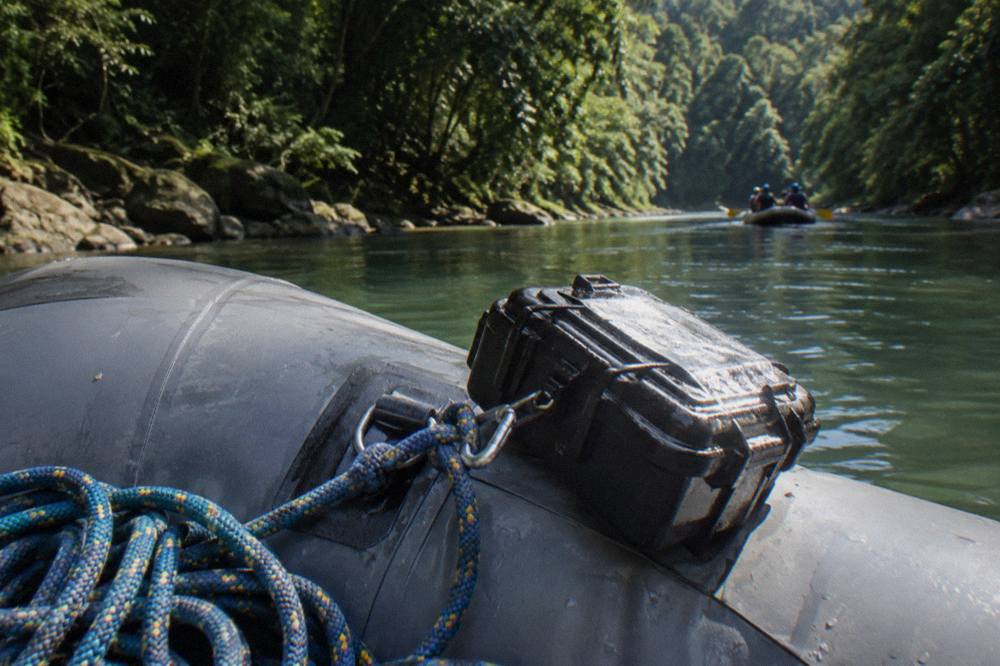
Dry bags and hard waterproof cases are what survive, because the failure mode to plan for is not spray but a swim: when a raft flips in a Class IV rapid, an unsealed pocket fills in seconds, and a phone in a thin "splash-proof" pouch dies with it. Pack only gear rated to submersion, clipped or tethered to your body, and accept that losing it is a real possibility.
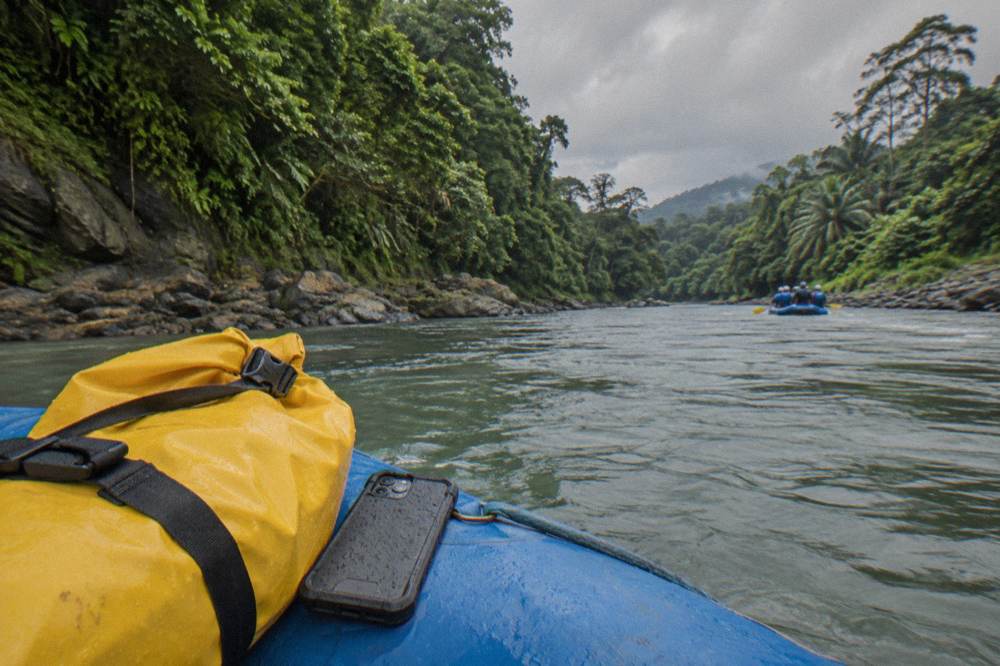
Operators provide the safety kit: helmets, life vests and paddles appear as listed inclusions on many lines here, and the most reviewed Turrialba day trip, Rafting Pacuare River One Day from Turrialba from $99 per person, states it provides helmets, life vests and paddles directly on its listing. Cameras are not part of that kit. What you bring, you protect, and the layering that works looks like this:
| Layer | What it is | What it protects against |
|---|---|---|
| Hard waterproof case | A rated submersible phone or compact-camera shell | Full immersion in a swim |
| Dry bag, rolled and clipped | Small roll-top bag tethered inside the raft | Splash, rain, and brief submersion |
| Tether or leash | Short line from camera to life jacket | Dropping the camera overboard |
| Base storage | Lockers or the vehicle at the meeting point | Everything, for anything you do not need on the water |
The last row is the one people forget. The Puerto Viejo listing operated by Destination Services Costa Rica is unusually explicit about it: its inclusions list lockers for personal belongings and changing facilities at the center. That listing, from $147 per person and rated 4.8 from 62 reviews, effectively answers the valuables question before you ask it. Where a listing does not mention lockers, the vehicle you arrived in is the usual answer, and the standard plan is to carry one sealed camera on the water and leave everything else behind.

Battery and heat deserve a line each. Airplane mode, one spare battery or power bank sealed in the dry bag, and a decision made in advance about which two or three moments you actually want to film, all of this does more for your photo haul than any expensive case.
Where Are The Best Photo Moments On The Pacuare Gorge?
The Lower Pacuare's gorge section is the money shot, and the named rapids on it are the frames operators build their photo products around. English-language river references list Upper and Lower Huacas at Class IV and Cimarrones at Class IV inside the Huacas River Gorge, and operators report that the Huacas waterfall drops 150 feet directly into the river channel. Calm pools between the drops are where you actually shoot.
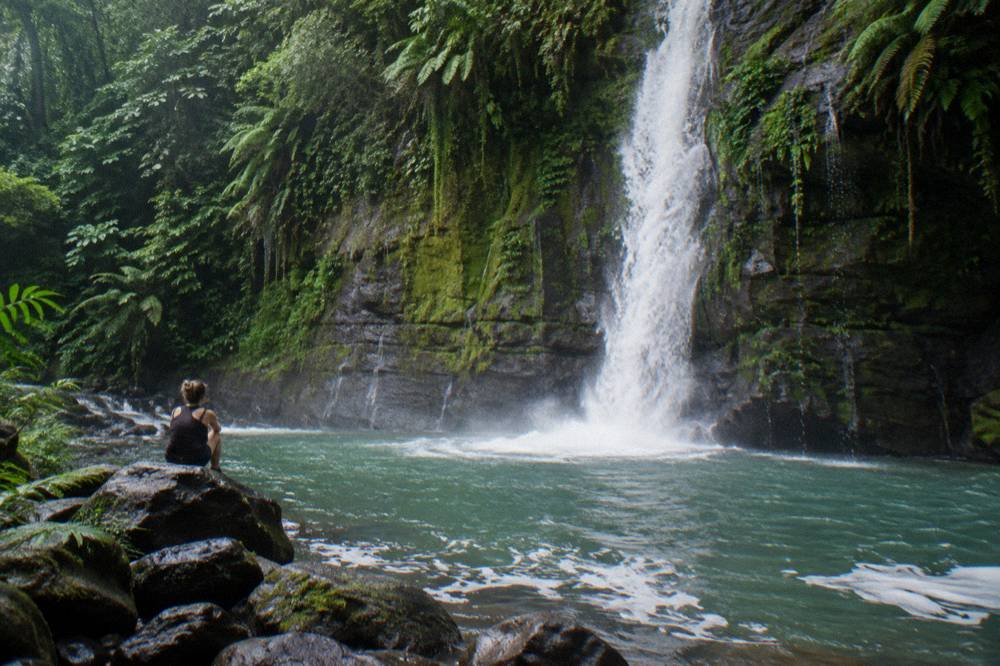
The rhythm of a commercial Pacuare day is paddle-drop-recover, and each phase photographs differently. The drop is the operator's photographer's moment. The recovery pool is yours: rafts regroup, people breathe, walls rise on both sides, and the light in the gorge shifts as the river turns. Trip material from operators running the standard day describes roughly 3 hours on the water with a riverside or center picnic lunch, and the lunch stop is the other reliable frame, boats beached on a rock bar with the canyon behind them.
Two honest qualifiers, because the gorge is wild, not a studio. First, exact put-ins and take-outs vary by operator, so do not pre-scout a map pin for a specific rapid; the listings name Turrialba, Siquirres, San Jose, Puerto Viejo and La Fortuna as departure towns, and the rest is the operator's call on the day. Second, wildlife is commonly reported by operators and guests but never promised: toucans and sloths appear in guest accounts of the gorge, and the honest framing is that you may get a wildlife frame, and the river will get you a canyon frame. For more on that, see Pacuare River wildlife and the rainforest gorge.
If photography is a genuine priority rather than a nice-to-have, trip length matters more than camera brand. A two-day trip such as the 2-Day Tour of the Pacuare River in Costa Rica, from $397 per person, puts you at a riverside lodge for the evening light and the morning mist, hours no day trip can reach. The trade is simple: one day gets you the gorge, two days get you the gorge twice plus the hours photographers actually covet.
What Do Guides And Safety Rules Say About Filming On The Water?
Costa Rica's national rafting norm, INTE G60-1:2019, governs who may raft which class of water and what operators must check, and it says nothing about cameras; filming rules on the Pacuare are made by each operator and each guide. The practical hierarchy on the water is safety talk, paddle commands, then cameras, in that order, and anything that interferes with the first two comes off the raft.
The safety layer is real and worth understanding before you mount a camera anywhere. Operator material describes a safety talk and paddle practice before the descent, guides trained in swift water rescue carrying safety kits the full length of the trip, and mandatory life jackets and helmets on every section, calm ones included. One family-run Turrialba operator, Ticos River Adventures, running Pacuare trips for over 30 years, includes dedicated safety kayak support on its trips. None of this is camera regulation, but all of it shapes what filming is possible: your hands belong to the paddle, your helmet is a rescue item before it is a mount, and the guide's instructions outrank your shot list.
The other rule that touches photographers is seasonal. Operators describe the Pacuare's water as highest and fastest October to December and lowest March to April, with the run runnable all year, and some raise their minimum age from 12 to 14 in the wetter months because the same rapids read a class harder at high water. For a camera, high water means bigger spray, fewer calm shooting windows and higher odds your gear gets a full bath. The months of February to April are what operators prefer for first timers and families, and they are also, not coincidentally, the friendlier filming window: lower, more predictable water and more recovery pools long enough to shoot in.
Footwear is the quiet gear rule that affects your filming stance. Recommended footwear on these trips is tennis shoes or secure sandals or river shoes that can get wet and muddy, and flip-flops are explicitly out. You will be braced in a moving raft, sometimes standing in the shallows at lunch, and a stable foot makes a stable frame. The full clothing picture is in what to wear rafting in Costa Rica.
Which Pacuare Trip Should A Photo-Minded Rafter Book?
For most photographers the answer is a Turrialba day departure, because it maximizes time in the gorge per dollar and per hour, and the roster's most reviewed listing is exactly that: Rafting Pacuare River One Day from Turrialba, 5.0 from 385 reviews, from $99 per person, six hours total with lunch included. The upgrade path for serious image-makers is a two-day lodge trip, which adds evening and morning light to the gorge hours.
The San Jose departures trade money and road time for convenience, commonly picking up from hotels around 6:00 to 6:30 a.m. and returning around 5:30 p.m. per operator schedules. That is a long day with the same three gorge hours in the middle, so if photos are the point, the calculus favors staying in or near Turrialba. The From San Jose listings still suit anyone whose trip is anchored in the capital, and the most convenient of them for gear-heavy travelers is one with hotel pickup listed, such as From San José: Pacuare River Class 3 & 4 Rafting Day Trip, 4.7 from 291 reviews, from $125 per person, which includes transportation from hotels in San José along with breakfast, lunch, gear and a tour guide.
The Caribbean option deserves its own sentence for photographers. White Water Rafting Pacuare River with Lunch From Puerto Viejo, from $147 per person, rated 4.8 from 62 reviews, is the one listing that spells out lockers for personal belongings, changing facilities, a freshly prepared riverside Costa Rican lunch and river access and entrance fees in its inclusions. For a photographer, a listed locker is not a luxury, it is the plan for the second body and the dry clothes.
| Trip type | Listing example | Price | Photo advantage |
|---|---|---|---|
| Turrialba day trip | Rafting Pacuare River One Day from Turrialba | From $99 per person | Most reviewed, shortest road leg, 6 hours total |
| Turrialba day trip with pickup | Rafting Pacuare River from Turrialba | From $120 per person | Pickup from Turrialba listed, lunch included |
| San Jose day trip with hotel pickup | From San José: Pacuare River Class 3 & 4 Rafting Day Trip | From $125 per person | Door-to-door transport, no gear hauling on buses |
| Caribbean coast day trip | White Water Rafting Pacuare River with Lunch From Puerto Viejo | From $147 per person | Listed lockers and changing facilities |
| Two-day lodge trip | 2-Day Tour of the Pacuare River in Costa Rica. | From $397 per person | Evening and morning light at a riverside lodge, all meals included |
The two-day row is the photographer's upgrade because a lodge night in the gorge buys light no day trip can schedule.
What Should You Do With Your Phone And Valuables At The Pacuare Base?
Leave everything you do not need on the water in the vehicle or a locker at the base, carry one sealed device, and accept that the operator's photo package is your backup plan. Operator guidance is blunt on this point: valuables brought on the raft are the participant's responsibility, and professional photo and video services exist separately.
The daily flow at the Siquirres-area centers makes this easy. Post-rafting logistics commonly include showers, changing facilities and lunch before the return drives to San José, La Fortuna or Caribbean coast towns. That means the base is where the trip's two economies meet: the cash you did not risk on the water, and the photos taken by someone whose job was to stand on the shore with a long lens.
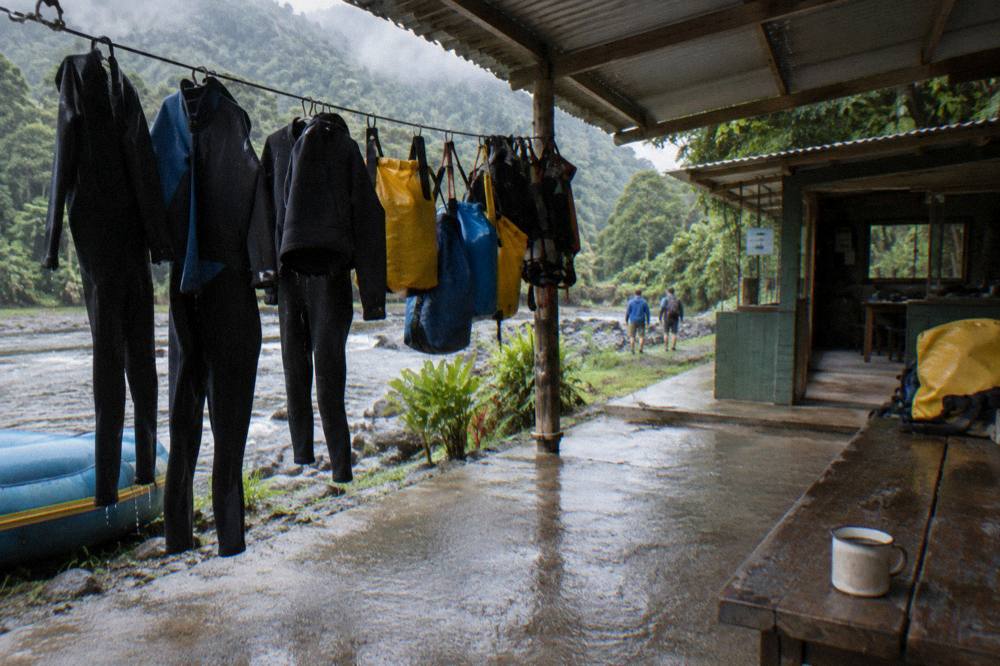
A checklist that fits in a dry bag lid:
- One sealed phone or camera on the water, tethered, airplane mode, spare battery in the bag.
- Passport, wallet, keys and the second device in the vehicle or a listed locker.
- Cash or a card set aside for the photo package and gratuities, which several listings list as an exclusion.
- A towel and dry clothes for the base, since changing facilities are commonly provided.
One more pairing worth naming: a trip whose listing includes breakfast and lunch saves you the logistics of feeding a camera battery and a person at the same time on a 6 a.m. start. Nearly every listing here includes at least lunch, and the San Jose departures generally include both meals, so the decision is really about the road, not the food.
The through-line for Pacuare Costa Rica Rafting readers planning around photos is that the river does the hard work: the gorge, the waterfall and the warm water are fixed features, and every listing on the roster runs through them. Your job is the small stuff, a sealed case, a tether, a locker and a bit of cash for the photographer, and the keepsakes tend to follow. For the wider decision, the trip picker and homepage comparison cover every departure town and trip length side by side.
Common Questions About Pacuare Rafting Photos
Can You Bring A Camera On A Pacuare Rafting Trip?
Yes. No listing on this roster bans personal cameras, and operators treat valuables brought on the raft as the participant's responsibility. Pack a rated waterproof case or dry bag, tether the device, and expect the best shots of the big rapids to come from the operator's photographer rather than your own hands.
How Much Do Pacuare Rafting Photos Cost?
One San Jose listing, Pacuare River Whitewater Rafting from San Jose, prices its photography at US$32.00 per person. Other listings show photos and videos as an optional extra without a published price, so the honest answer is to check at check-in on the day and budget a per-person amount accordingly.
Are GoPros Allowed On Pacuare Trips?
No Pacuare operator publishes an explicit GoPro policy in current material. The guide makes the final call on anything that could interfere with paddling or rescue. Tether the camera and keep both hands free in the rapids.
What Is The Best Way To Keep A Phone Dry On The Pacuare River?
A hard waterproof case rated for submersion, clipped or tethered to your body, plus a small roll-top dry bag for spares. Spray is the everyday hazard, but a swim in a Class IV rapid is the scenario your gear must survive, and thin splash-proof pouches generally do not.
Do Pacuare Trips Have Lockers For Valuables?
Some do. The Puerto Viejo listing operated by Destination Services Costa Rica lists lockers for personal belongings and changing facilities among its inclusions. Where a listing does not mention storage, the tour vehicle is the usual secure option for anything you do not carry on the water.
Which Pacuare Trip Is Best For Photography?
A Turrialba day departure gives the most gorge time for the least road time, and the most reviewed listing on this site is exactly that: Rafting Pacuare River One Day from Turrialba, 5.0 from 385 reviews, from $99 per person. A two-day lodge trip adds evening and morning light in the canyon, which is what serious image-makers usually want.