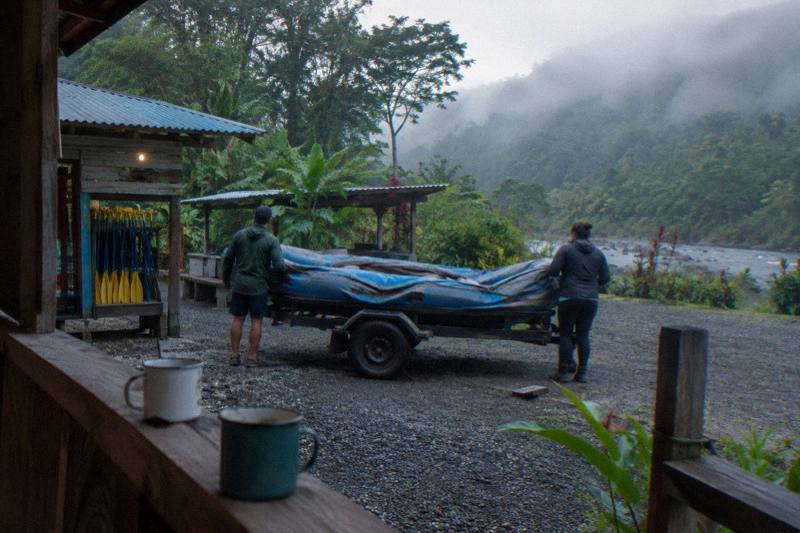
Pacuare River Wildlife And Rainforest Gorge: What You Will See
The Pacuare River cuts through a rainforest gorge with no road access for most of its run, and that is the single reason wildlife and scenery here feel different from anywhere else in Costa Rica.
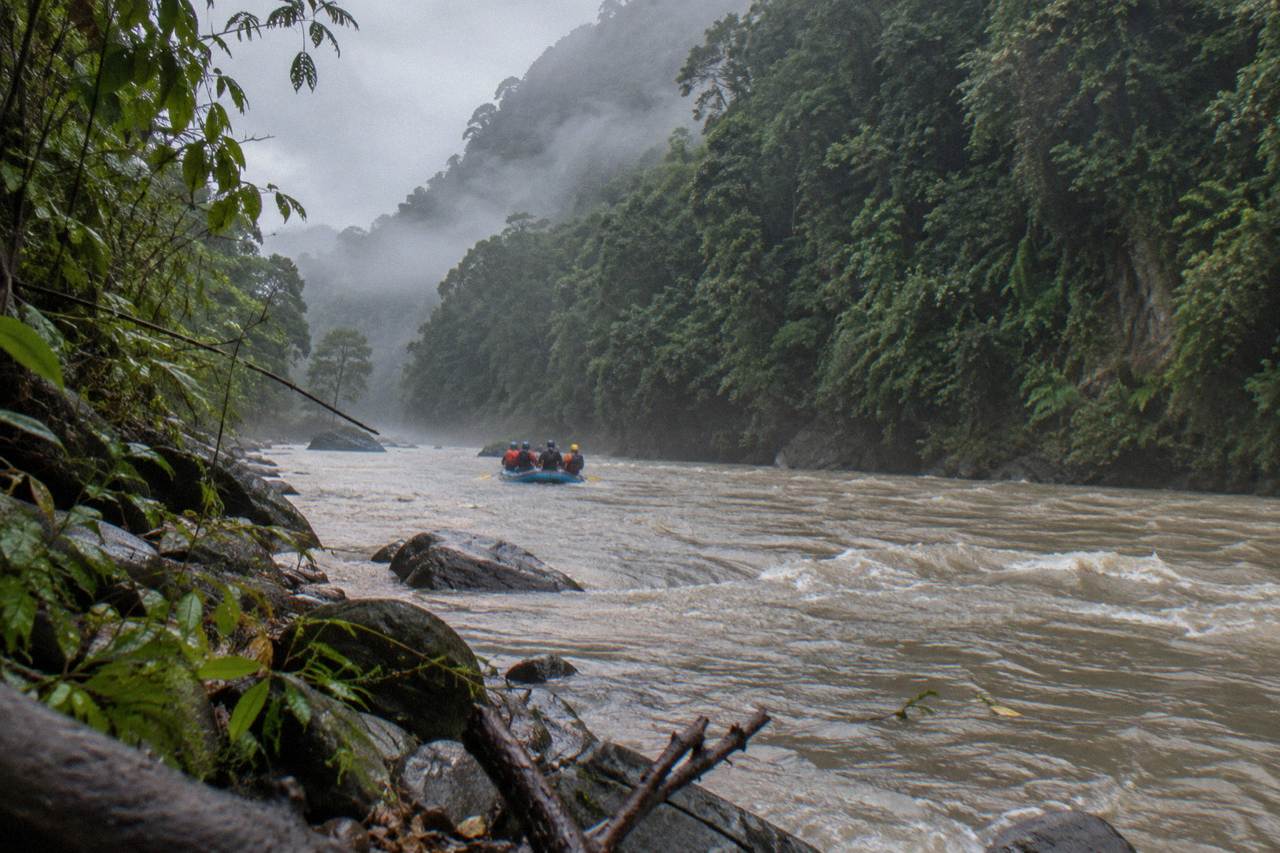
Short answer
The Pacuare runs about 108 to 133 km depending on the source, through a protected forest reserve and Cabecar indigenous territory in a gorge with no road access along most of the commercial run. Operators and guests commonly report sloths, monkeys, toucans and herons; the Huacas waterfall drops about 150 feet into the river channel. Day trips from Turrialba start from $99 per person.
The Pacuare River rises in the Cordillera de Talamanca and runs east to the Caribbean through Limon province, and for most of its commercial rafting stretch there is no road along it at all. That fact shapes everything a visitor experiences. The gorge is reachable by raft, by trail or by lodge path, and the rainforest on both walls is part of a protected forest reserve overlapped by Cabecar indigenous territory. The name itself comes from the Cabecar language: "Pacuare" means baby macaw, pronounced Pa-Kwa-Ray, according to the Pacuare Outdoor Center's own river facts page.
What that means in practice is a run where the scenery does the selling. Operators and guests report sloths, monkeys, toucans, parrots and herons along the banks, though no honest operator will promise an animal on a given day. Between the rapids, the river flattens into pools where rafts drift and everyone just looks up. This guide covers what actually lives in the gorge, which waterfalls drop directly into the river, whose land you are floating through, and which of the trips on this site spend the most time inside the canyon. The most reviewed of them, Rafting Pacuare River One Day from Turrialba, rated 5.0 from 385 reviews and from $99 per person, is the straightforward way in for most first-time visitors. To see exactly where rafts launch, where the gorge sits along the run, and which sections each trip actually covers, the Pacuare River map of put-ins, take-outs and rafting sections lays out the whole route.
What Wildlife Lives Along The Pacuare River?
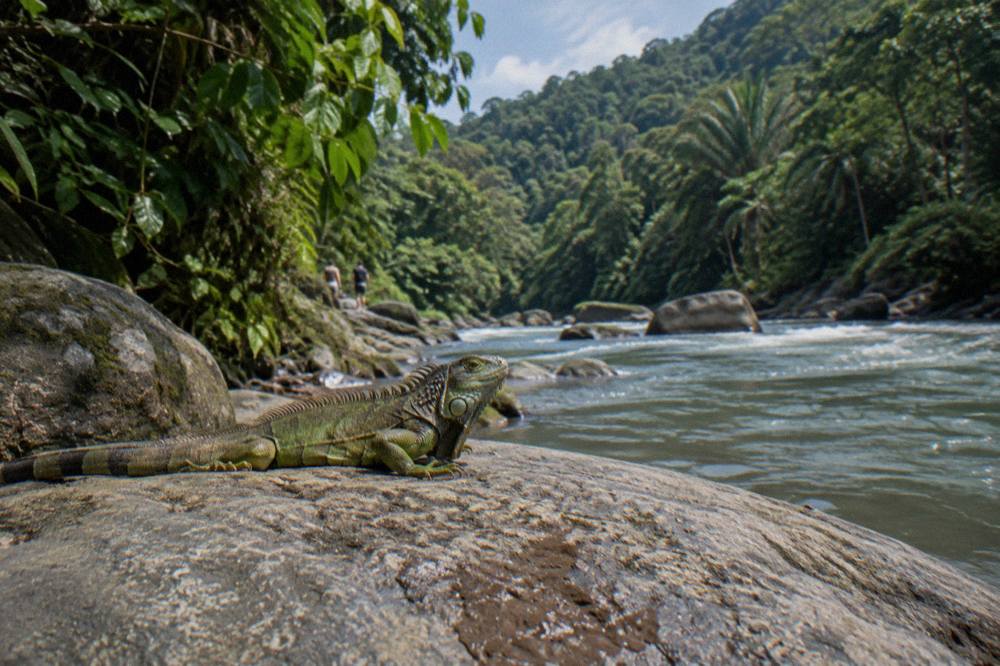
Wildlife reported along the Pacuare includes sloths, monkeys, coatis, morpho butterflies and colorful frogs, plus birds such as toucans, parrots, herons and vultures. Sightings depend on season, water level and luck; and no listing on this site promises an animal.
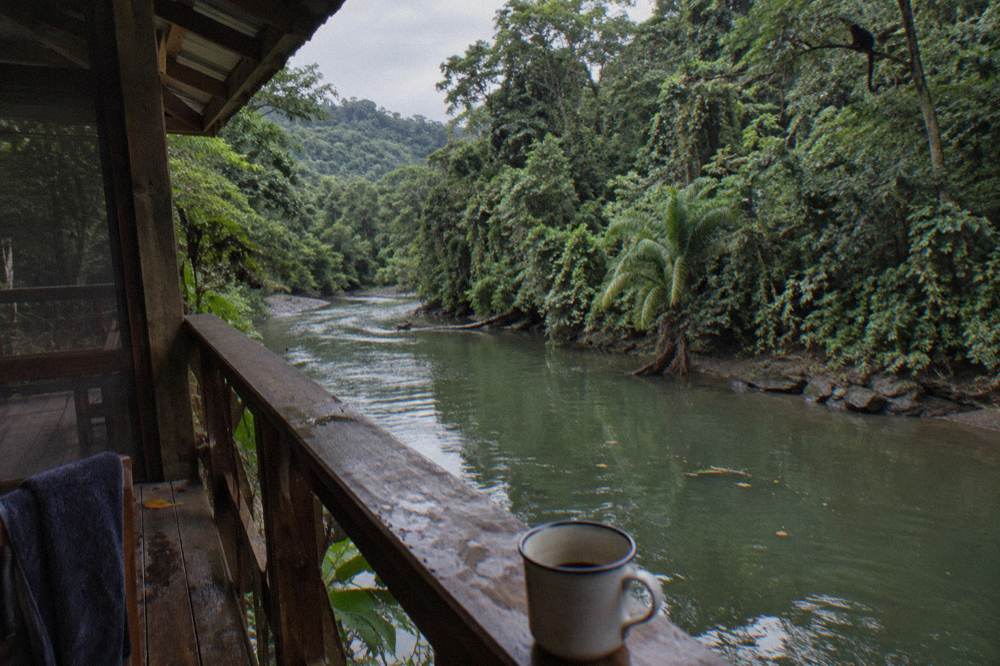
The reason the wildlife is there at all is the absence of people. The commercial run passes through the Huacas River Gorge, where the canyon walls close in, waterfalls drop from the cliffs, and there is no road access along most of the stretch, as operator descriptions of the standard day trip consistently note. The river corridor sits inside a protected forest reserve.
One Turrialba operator, Ticos River Adventures, is family-run with more than 30 years on the river and includes a dedicated safety kayak on its Pacuare trips, which means a second craft on the water and a second set of eyes on the banks.
The bird life rewards early starts. San Jose departures pick up around 6:00 to 6:30 a.m. per operator itineraries, which puts rafts on the water in the late morning after the drive, breakfast and a safety talk. Turrialba departures, closer to the river, get you there sooner. The San Jose departure guide covers the trade-offs between the two start points in detail.
| What | Where on the run | How commonly reported |
|---|---|---|
| Sloths | Canopy along the run | Named in an operator listing and guest reviews |
| Monkeys | Forest near the lodges | Heard by guests on a lodge night |
| Coatis, morpho butterflies and colorful frogs | Forest along the run | Named in an operator listing |
| Toucans and parrots | Forest along the run | Named in an operator listing and guest reviews |
| Herons and vultures | River channel and banks | Named in guest reviews |
Can You See Sloths, Monkeys And Toucans During The Rapids?
Realistically, most sightings happen in the calm pools between rapids, not inside them. While you paddle, your eyes are on the guide and the water; when the raft drifts, guides point out sloths, monkeys and birds in the canopy. Multi-day lodge trips, with two or three days on the river and hikes at the lodge, give the wildlife far more chances than a single descent.
The one-day descents run the Lower Pacuare, Class III and IV, with flat water linking the rapids. On the two-day trips the pattern deepens: the Exploradores Outdoors two-day listing describes day two with a scheduled exploratory hike stop and a river lunch, which is time on foot in the forest, not just time on the water. The lodge itself sits inside the corridor, so dawn and dusk happen around you rather than being raced past in a raft.
If wildlife is the main reason you are booking, the practical advice is simple. Go longer if you can. The two-day Pacuare rafting guide compares the overnight options, which run from $269 per person for the Exploradores Outdoors Pacuare River Lodge trip up to $397 per person for the Tropical Rivers private two-day tour. A day trip gets you the gorge; an overnight gets you the gorge plus its quiet hours.
For day-trip only travelers, choose the departure that maximizes river time rather than road time. The Turrialba day trips skip the long San Jose transfer entirely. Rafting Pacuare River from Turrialba, run by Explornatura, is a 6-hour trip rated 5.0 from 196 reviews, from $120 per person, with hotel pickup in Turrialba listed and lunch included. The picks below pair two more Turrialba departures, from Adrenalina Rafting Turrialba and Ticos River Adventures, with a two-day lodge trip.
The two day trips carry free cancellation on their listings; the two-day lodge trip sets its own 6-day window.
Why Is The Pacuare Gorge Considered So Scenic?
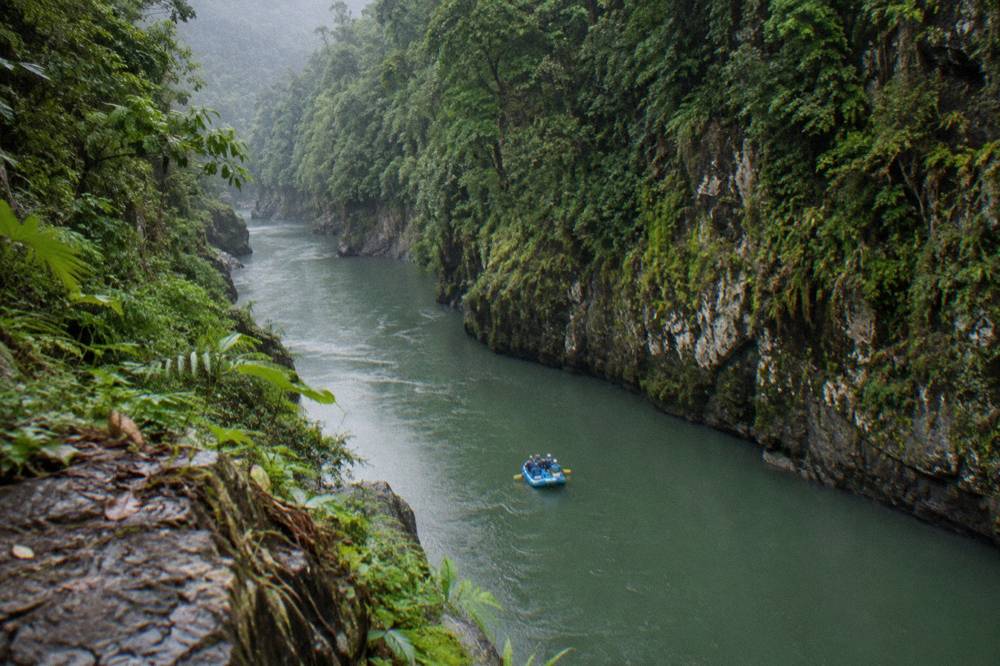
The gorge section combines vertical rainforest walls, waterfalls that drop directly into the river channel, and no road access along most of the run. The Lower Pacuare drops roughly 370 m over about 37 km from Finca La Cruz to Siquirres through Class III and IV rapids, with the gorge section known as the Huacas River Gorge.
Those numbers come from the standard reference description of the river's sections, and they frame why the canyon photographs the way it does. A river that falls 1,200 feet in 23 miles inside a forest that was never cleared for a road reads, from a raft, as wall after wall of green with the sky a strip above. Operators describe the gorge stretch as roughly 18 miles of Class III and IV with waterfalls pouring off the walls, with no road access.
The scenery is not incidental to the rafting; it is half of what operators sell. The rapid names themselves are gorge names. Upper and Lower Huacas, Doble Drop and Cimarrones are the named rapids of the Lower section, per the standard section description, and trip descriptions from operators frequently list Huacas, Pele el Ojo and Cimarrones as the highlights of the run. You remember the rapids with your arms and the pools with your eyes.
| Gorge feature | What it is | Where the fact comes from |
|---|---|---|
| Huacas River Gorge | The gorge section holding the named rapids | Standard river section description |
| Lower Pacuare | Class III and IV, about 37 km, dropping about 370 m | Standard river section description |
| Named rapids | Upper and Lower Huacas, Doble Drop, Cimarrones | Standard river section description |
| Road access | None along most of the commercial run | Operator descriptions of the day trip |
| Protected status | Protected forest reserve | Conservation sources |
| Length of river | About 108 to 133 km depending on the source | Conflicting primary sources, published as a range |

What Waterfalls Drop Into The Pacuare River?
The best known is the Huacas waterfall, which operators describe as dropping about 150 feet directly into the river channel inside the gorge. Several smaller seasonal falls pour off the canyon walls during and after rain, and some two-day lodge trips add hikes to waterfalls that day trips only float past.
The Huacas waterfall is the one that anchors the gorge's reputation. It drops from the wall straight into the channel, and because there is no road access, the only way to see it at river level is from a raft or kayak. Operators name it in their trip descriptions. In the wetter months the walls carry more water overall; operators report higher, faster water October to December and lower, gentler water from February to April.
The lodge trips reach falls the day trips cannot. The two-day Excitement Costa Rica listing explicitly includes hiking trails and waterfalls at its Avesol Lodge overnight, plus a happy hour, breakfast, lunch and dinner, from $370 per person with transport from San Jose. The Greenway Nature Day Tours two-day trip, overnighting at Pacuare River Lodge with up to 14 guests, includes a night of lodging and full meals from $375 per person. These are hikes on foot to pools and falls in the corridor, which is a different experience from photographing a cliff-side fall while drifting.
For a day trip from the coast, the Puerto Viejo departure is worth a look: White Water Rafting Pacuare River with Lunch From Puerto Viejo, rated 4.8 from 62 reviews, from $147 per person, lists a freshly prepared riverside Costa Rican lunch, river access and entrance fees, lockers and changing facilities, and a minimum age of 12.
Whose Land Does The Pacuare River Run Through?
The Pacuare corridor overlaps Cabecar indigenous territory, and commercial runs pass through it, which is why the river carries a Cabecar name, "baby macaw". The surrounding forest sits inside a protected forest reserve, and a presidential decree bars new large hydroelectric dams on the main channel for a 25-year period, which is why the gorge remains undammed.
That last point matters more than most visitors realize. The state power utility proposed a hydroelectric dam on the Pacuare in 1986, and the plan was rejected in 2005 after years of opposition on pollution, tourism and ecology grounds. Later, a decree barred hydroelectric projects of 500 kW or more on the Pacuare main channel for 25 years from 2015. The river you raft is free-flowing because of that fight, and the forest reserve and the Cabecar presence are part of the same story. The official national rafting norm, INTE G60-1:2019, also requires operators to check weather and river conditions and scout when flow rises, a reminder that this is a regulated activity inside a regulated landscape. The full index of guides sits on Pacuare Costa Rica Rafting.
Practically, being a guest here means behaving like one. Lodges such as Rios Lodge are reached primarily by raft, with reclaimed-wood construction and hydroelectric power.
Visitors pairing the river with a land day can extend the cultural thread. Turrialba, the usual base for the Turrialba departures, is the gateway town for the area's other protected sites, including Guayabo National Monument, Costa Rica's most significant pre-Columbian archaeological site with stone structures, aqueducts and roads dating from roughly 1000 BC to 1400 AD, recognized as an International Historic Civil Engineering Landmark, as local reporting on the area's 2026 reopenings notes.
The two-day Tropical Rivers tour above departs Siquirres, runs Class III and IV, includes breakfast, lunch and dinner, and is a private trip, from $397 per person. Its sister three-day tour, from $505 per person, adds a second night in the corridor.
When Is Wildlife Most Active On The Pacuare?
Dawn and dusk are the high-activity hours, which favors overnight lodge trips over day trips for sightings. Seasonally, February to April brings the lowest, gentlest water and drier forest trails, while October to December brings the highest water; wildlife is commonly reported year round, and the river is runnable all year, but no operator promises sightings in any month.
The rainfall pattern explains the seasons. ERA5 modelled monthly averages for the Turrialba area show the driest stretch from February to April, with monthly means around 181 to 198 mm, and the wettest from October to December, with November around 477 mm. Station records cross-check the shape of that curve: February to April driest, October to December wettest. On the river, rafting sources describe rainy-season water as adding roughly half a class of difficulty, with some Class III rapids becoming Class IV and some operators raising the minimum age from 12 to 14 between June and November.
For a wildlife-focused trip, the season argument is about the forest, not the animals. In the drier months the lower water makes the calm pools longer and calmer, which is where you look up at the canopy. In the wet months the gorge is louder, faster and greener, which some rafters love for different reasons. The best time to raft guide works through the full trade-off.
| Period | Water level | What operators report | Fit for a wildlife-first trip |
|---|---|---|---|
| February to April | Lowest of the year | Gentler rapids, preferred for first timers and families | Strong fit: long calm pools |
| May to August | Rising | Higher, faster water, bigger waves | Good, with bigger water |
| September to December | Highest, peaking October to December | Some Class III becomes Class IV, some operators raise minimum age to 14 | Wet, loud, lush |
| Year round | Runnable all year | Wildlife commonly reported in every season | No month guarantees sightings |
Which Pacuare Trip Puts You Deepest In The Gorge?
The three-day Pacuare River expedition spends the most time inside the corridor, from $505 per person, followed by the two-day lodge trips from $269 per person. Among day trips, the Turrialba departures trade the San Jose transfer for more time at the river; the most reviewed day trip on this site is Rafting Pacuare River One Day from Turrialba, rated 5.0 from 385 reviews, from $99 per person.
Depth here means hours in the canyon, and the roster makes the ladder plain. Day trips: one descent, lunch, out. Two-day trips: a shorter first day to the lodge, an evening, a dawn and a full second day, with the Exploradores Outdoors itinerary describing 13 km and 14 rapids on day one and 23 km and roughly 30 rapids on day two, per that listing's own description. Three days: the Tropical Rivers 3 Day Tour, from $505 per person, private, departing Siquirres, with three breakfasts, three lunches and two dinners included.
If the budget or the calendar says one day, pick the departure town carefully and take the option with the most river time rather than the lowest headline number; the cost comparison guide breaks every price on the roster against what each includes.
| Trip | Days | Price from | Gorge time | Key inclusions per the listing |
|---|---|---|---|---|
| Rafting Pacuare River One Day from Turrialba | 1 | $99 per person | One descent, lunch after | Lunch, gear, private transportation; 5.0 from 385 reviews |
| Rafting Pacuare River from Turrialba | 1 | $120 per person | One descent, Turrialba pickup listed | Lunch, guide, transfer from Turrialba; 5.0 from 196 reviews |
| San Jose Caribe Arenal Pacuare Hiking and Rafting 2-Day Trip | 2 | $269 per person | Two descents, hikes, lodge night | 2 breakfasts, 2 lunches, 1 dinner, Pacuare River Lodge night |
| Two-Day Rafting Tour with Transportation included | 2 | $370 per person | 5 hours of rafting listed, hiking trails and waterfalls | Avesol Lodge night, all meals, gear, safety kayaker |
| 2-Day Tour of the Pacuare River | 2 | $397 per person | Private trip, Class III-IV | All meals, private transportation |
| 3 Day Tour of the Pacuare River | 3 | $505 per person | Longest corridor stay | 3 breakfasts, 3 lunches, 2 dinners, private |
What Should You Bring To Actually See And Photograph The Gorge?
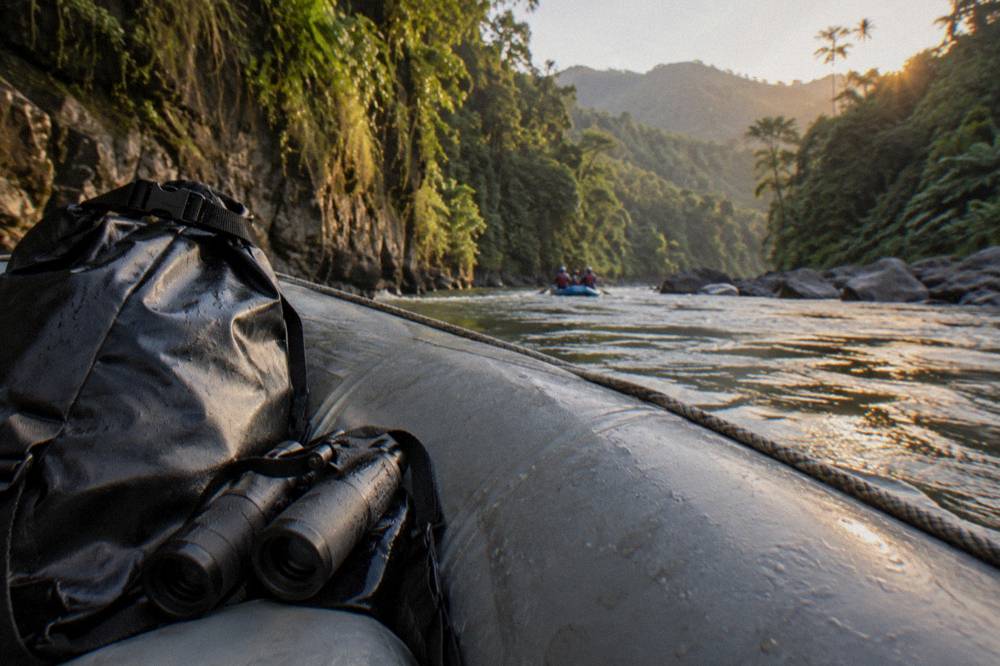
Bring quick-dry clothes, secure water shoes, sun protection, a towel and a change of clothes; operators provide helmet, life jacket and paddle. Cameras and phones on the raft are your own responsibility, many listings sell photo packages separately, and the practical wildlife kit is a dry bag, binoculars and neutral colors rather than a big camera rig.
The gorge punishes unprepared gear. Spray, rain and the inevitable swim mean anything not waterproofed will get wet, and operator guidance is blunt that valuables brought on the raft are the participant's responsibility while professional photo and video services are sold separately on many listings, several of which list souvenir photos as a paid exclusion. Footwear matters too: tennis shoes or secure sandals that can get wet and muddy, never flip-flops.
For wildlife specifically, binoculars beat lenses. A sloth at 30 meters in canopy shade is a smudge to a phone camera and a clear animal through compact binoculars. Keep them on a strap, in a dry bag, and pull them out only in the calm pools. The what to bring guide carries the full packing list, and the GoPro and photos rules guide covers what operators do and do not allow on the water.
One practical habit: put the camera away for the first gorge hour. The walls, the Huacas waterfall and the first big rapids arrive together, and fumbling with a case while Lower Huacas approaches is how people lose phones. Shoot the lunch stop and the last flat pools instead.
Is The Gorge The Same In High Water And Low Water?
No. One operator grades the Pacuare as roughly Class 3+ at low water and Class 4 at high water, with water highest and fastest October to December and lowest March to April. In the wet months the waterfalls pour harder, the walls seem closer, and some rapids step up a class; in the dry months the pools stretch out, and operators point first timers and families at February to April.
The same run is genuinely two different trips. High-water season delivers the gorge at its most dramatic: more water off the cliffs, bigger features, louder everything. It also brings the stricter age practice, with one operator raising its minimum age from 12 to 14 for June to November because of the higher water, even though the national norm, INTE G60-1:2019, sets the legal floor for Class IV at 12. Low-water season trades volume for clarity and calm, and one traveler account describes the river in May as very beginner friendly with lower levels.
The official Costa Rica tourism rafting pages place the Pacuare among the country's principal rafting rivers on the Caribbean slope, alongside the Reventazon, and the comparison holds: the Pacuare is the flagship jungle-canyon run of that region, while the Reventazon's lower sections are gentler. The Pacuare versus Reventazon guide works through that choice river by river.
For visitors whose priority is the gorge itself rather than maximum adrenaline, the honest summary is that there is no bad month, only different months. Water temperature helps: operators report the Pacuare typically at 21 C (70 F) or warmer, with measured readings from 21.2 C at high water to 26.2 C at low, so no wetsuit is needed at any time of year. You will get wet regardless; the season decides how hard.
The Excitement Costa Rica two-day above suits travelers based in San Jose: from $370 per person with transport, a standard room at Avesol Lodge, all meals, and hiking trails and waterfalls listed.
The through-line of all of this is that the Pacuare gorge is not scenery attached to a rafting trip; it is a protected, inhabited, undammed rainforest corridor that happens to have a whitewater run down the middle of it. The wildlife, the falls, the Cabecar name and the dam fight are one story, and the raft is simply the only practical way to read most of it. Choose your depth accordingly: a day for the gorge's greatest hits, two or three days for its quiet hours. Whatever you pick, book the trip that matches your season and departure town, pack the dry bag, and let the pools do the rest.
Common Questions About Pacuare River Wildlife
What Wildlife Lives Along The Pacuare River?
Operators and guests report sloths, monkeys, coatis, toucans, parrots, herons and vultures. Sightings are common but never guaranteed, and no listing on this site promises an animal.
Can You See Sloths, Monkeys And Toucans During The Rapids?
Most sightings happen in the calm pools between rapids, when rafts drift and guides scan the canopy. Multi-day lodge trips give wildlife more chances, since they add hikes plus dawn and dusk hours inside the corridor.
What Waterfalls Drop Into The Pacuare River?
The best known is the Huacas waterfall, which operators describe as dropping about 150 feet directly into the river channel inside the gorge. Smaller seasonal falls pour off the canyon walls in the wetter months, and lodge trips add guided hikes to waterfalls and swimming holes.
Whose Land Does The Pacuare River Run Through?
The corridor overlaps Cabecar indigenous territory, and the name Pacuare comes from the Cabecar word for baby macaw. The surrounding forest sits inside a protected forest reserve, and a decree bars new large hydroelectric dams on the main channel for a 25-year period.
Which Pacuare Trip Puts You Deepest In The Gorge?
The three-day expedition from $505 per person spends the most time inside the corridor, followed by the two-day lodge trips from $269 per person. Among day trips, the Turrialba departures trade the San Jose transfer for more time at the river.
Is The Gorge The Same In High Water And Low Water?
No. One operator grades the run about Class 3+ at low water and Class 4 at high water, with the highest water October to December and the lowest March to April. Wet months bring harder-pouring waterfalls and bigger rapids; dry months bring longer calm pools and usable forest trails.