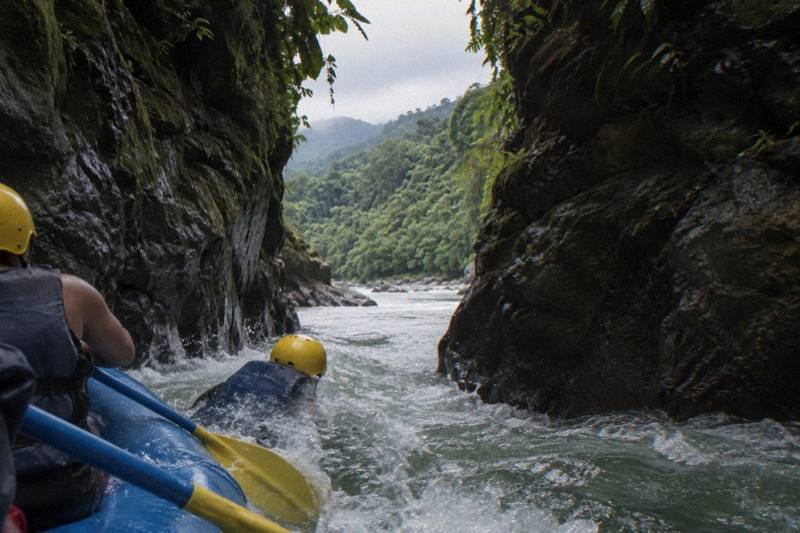
Pacuare River Map: Where The Rafting Sections Start And End
The Pacuare is usually described as about 108 to 133 km long depending on the source, but only three of its roughly sixteen sections carry commercial rafts. This guide maps those sections, where trips start and end, and which listing matches each stretch of water.
Short answer
The Pacuare rises in the Cordillera de Talamanca and runs to the Caribbean near Siquirres. Commercial trips use the Lower section, Class III and IV for about 37 km from the Finca La Cruz area to Siquirres, while harder Upper and Upper Upper sections see mostly kayaks. Multi-day trips start higher up the river.
Where Does The Pacuare River Start And End?
The Pacuare River begins on the Atlantic slope of the Cordillera de Talamanca, then flows east and north toward the Caribbean through Limon province. Its journey ends where the river reaches the sea between the Boca del Parismina and the Urpiano lagoon, near the Matina river. Its total length is contested between sources: English references give about 108 km, while Spanish references and the Pacuare Outdoor Center give 133 km, so the honest answer is about 108 to 133 km depending on the source. The name comes from the Cabecar language and means "baby macaw", pronounced Pa-Kwa-Ray. Along the way the river picks up tributaries including the Siquirres, Suru, Peje and Piedras Blancas rivers.
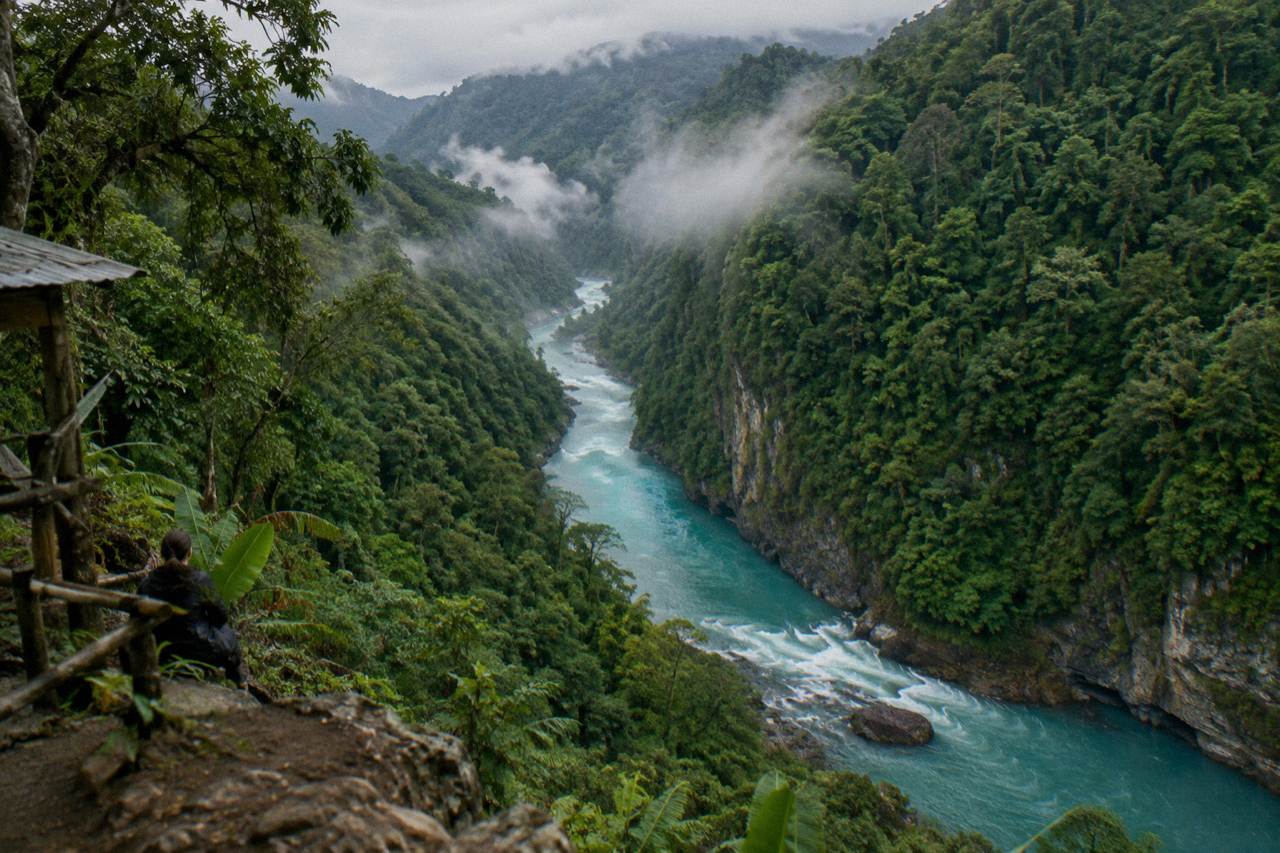
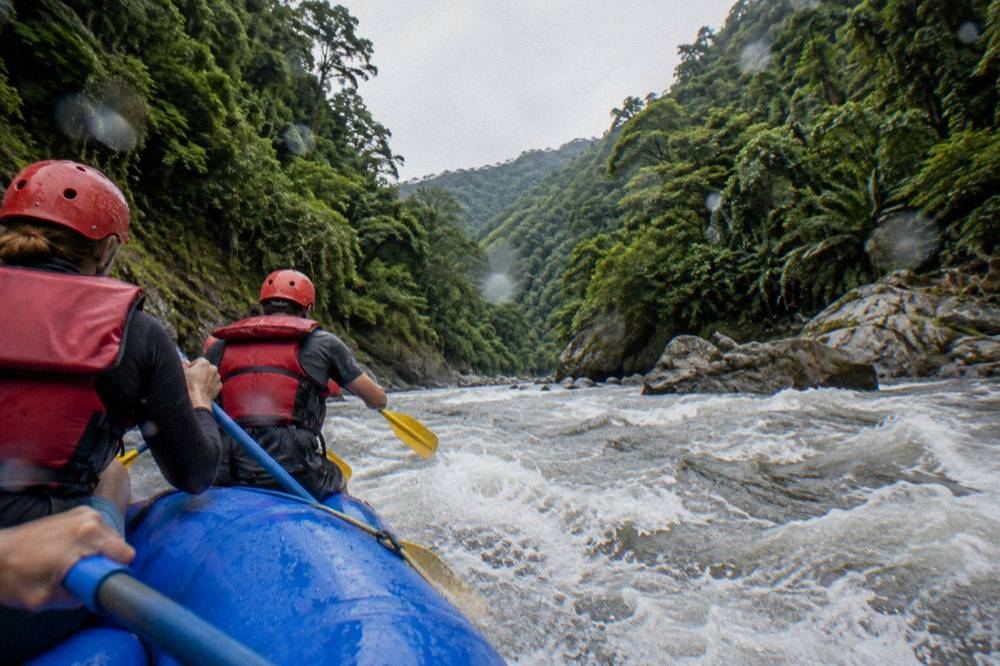
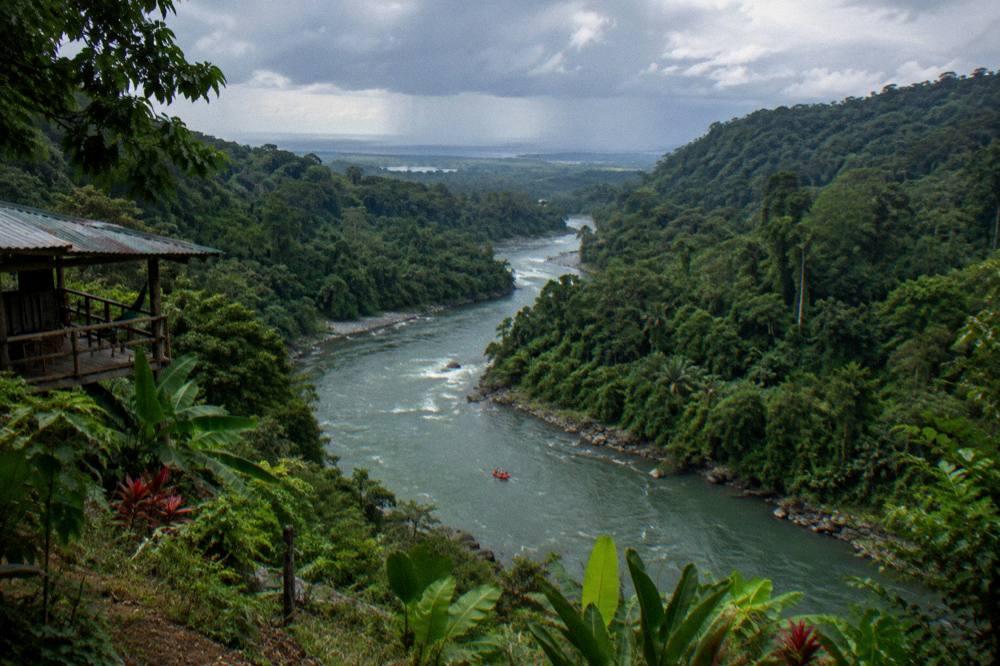
For rafting purposes the start and end matter less than the middle. Almost every commercial trip on the river covers the same general corridor: a jungle gorge with no road access along most of the run, where waterfalls drop from the walls directly into the current. The standard reference on the river splits it into about sixteen sections, of which three are commonly run. The rest is either flat water, creek-boating territory for expert kayakers, or simply inaccessible.
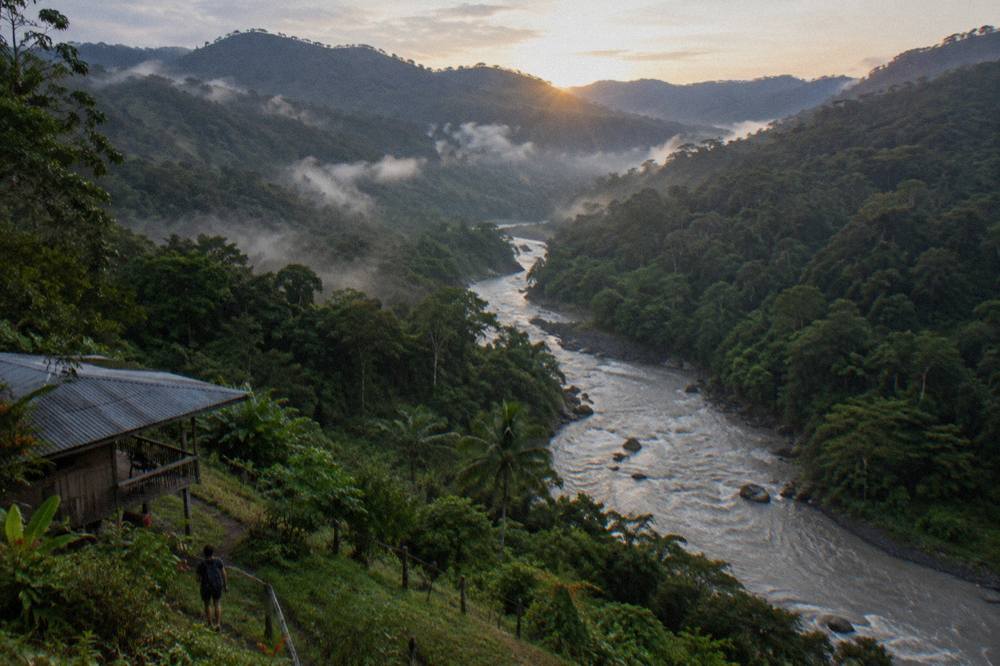
There is no automated flow gauge on the Pacuare. Operators instead read a painted rock marker downstream of one of the river lodges: when the water reaches the red mark or higher, the river is considered too high to run. That is an operator convention, not a government rule, and it is one reason trip routes can shift with conditions. The wider story of the river's protection matters here too: the Pacuare corridor sits inside a protected forest reserve, and a hydroelectric dam proposal from 1986 was rejected in 2005. For more on the gorge itself, see the companion guide to the Pacuare's rainforest gorge and wildlife.
What Are The Upper, Middle And Lower Pacuare Sections?
The three run sections are the Upper Upper, the Upper and the Lower: the Upper Upper runs about 26 km at Class II to IV, the Upper runs about 10 miles at Class IV and V with waterfalls and is mostly run in creek kayaks, and the Lower runs about 37 km at Class III and IV from the Finca La Cruz area down to Siquirres. The Lower is the commercial heart of the river, the stretch every day trip and overnight lodge trip on this site covers, at least in part. It drops roughly 370 m over those 37 km.
| Section | Approximate extent | Rapid class | Who runs it |
|---|---|---|---|
| Upper Upper | About 26 km | Class II to IV | Not run by the listings on this site |
| Upper | About 10 miles | Class IV and V, waterfalls | Mostly expert creek kayakers; take-out Finca La Cruz |
| Lower | About 37 km, Finca La Cruz area to Siquirres | Class III and IV | Nearly all commercial day trips and lodge trips |
Named rapids cluster in the Lower's Huacas River Gorge: Upper and Lower Huacas at Class IV, Doble Drop at Class III, and Cimarrones at Class IV. Operators' itineraries frequently name Huacas, Pele el Ojo and Cimarrones as highlights of the gorge section. The Huacas waterfall itself drops about 150 feet directly into the river channel. None of this is promised on any given day: rapid class on the day varies with water level, and one operator grades the same Lower section as roughly Class 4 at high water and Class 3+ at low water.
If you are mapping this against a booking, the practical takeaway is simple. The one-day and two-day listings on this site all cover the Lower Pacuare, with multi-day trips simply starting further upstream and adding a night at a river lodge. The San Jose day trip From San José: Pacuare River Class 3 & 4 Rafting Day Trip, rated 4.7 from 291 reviews and priced from $125 per person, is a typical Lower-section run: Class III-IV water, nine hours door to door, hotel pickup from San Jose with breakfast and lunch included.
Which stretch you actually paddle also depends on the season, since the Pacuare is rain-fed and the gorge changes character between the wettest and driest months. The seasonality is covered in full in the best time to raft the Pacuare; on the map, all it changes is how big those named Lower rapids feel.
Where Do Pacuare Rafting Trips Put In?
Operators report that one-day Lower trips put in near Tres Equis or the Finca La Cruz area, while multi-day trips start higher, around the San Martin area, and overnight at a river lodge; exact access points vary by operator, and no listing should be read as promising one fixed put-in. This is the single most map-dependent fact on the river. The roster listings themselves name Turrialba, Siquirres, Puerto Viejo and La Fortuna as departure towns, which is where you meet transport, not where the raft enters the water.
The distinction matters because a "departure town" and a "put-in" are different places on the map. A trip departing San Jose drives roughly 1h20 to 1h40 to reach the Turrialba area and continues toward the river from there; commonly reported figures put San Jose to Siquirres at about 1h37 by road. One lodge operator's own logistics page describes meeting at Finca Tres Equis, between Turrialba and Siquirres, at 10:00 a.m. sharp for raft arrival, with free secure car storage and a shuttle back on checkout. That is one operator's arrangement, useful as a map anchor for where the corridor sits between the two towns.
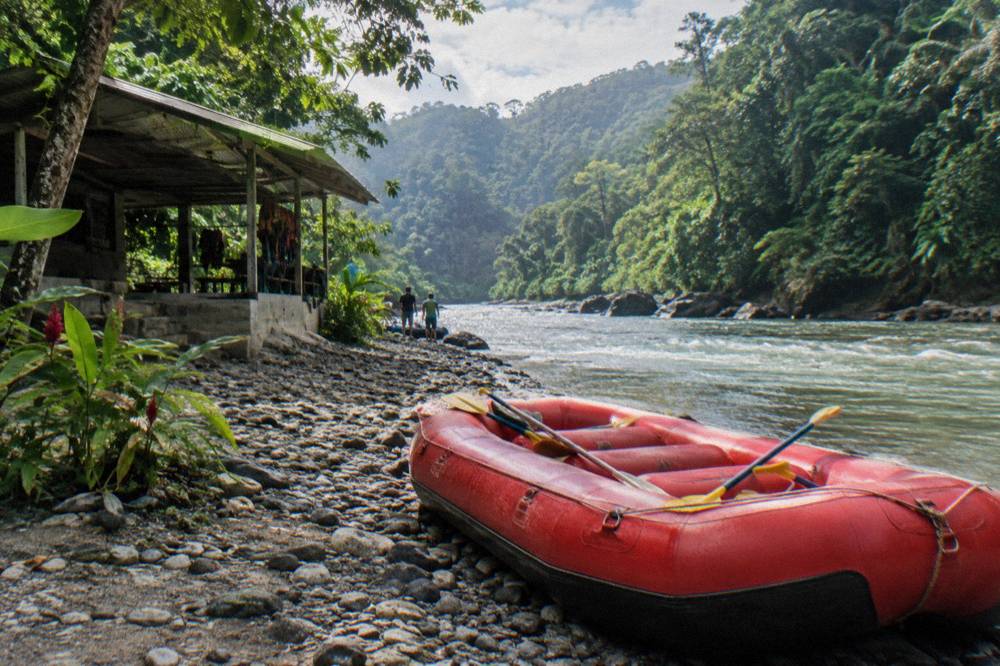
What happens between meeting the operator and reaching the water follows a pattern the operators themselves publish. One San Jose operator's itinerary runs: drive to its Siquirres-area exploration center, breakfast there, a roughly 45-minute safety talk and paddle practice, then the descent, then showers, changing facilities and lunch before the return drive. Post-rafting logistics at Siquirres-area centers commonly include showers, changing rooms and lunch before return drives to San Jose, La Fortuna or Caribbean coast towns. Day trips typically cover a roughly 30 km Lower Pacuare stretch, per operators' own descriptions, though trip length varies with water level.
The listing you book determines which departure town you start from, so match the listing to where you are sleeping the night before. The Turrialba-based day trip Rafting Pacuare River from Turrialba, rated 5.0 from 196 reviews and from $120 per person, departs from the operator's Turrialba base with transfer from Turrialba and lunch included, a short drive from town to the river corridor. For a night in the gorge instead, Tropical Rivers' 2-Day Lodge Trip is from $397 per person.
Where Does The Pacuare Take Out At Siquirres?
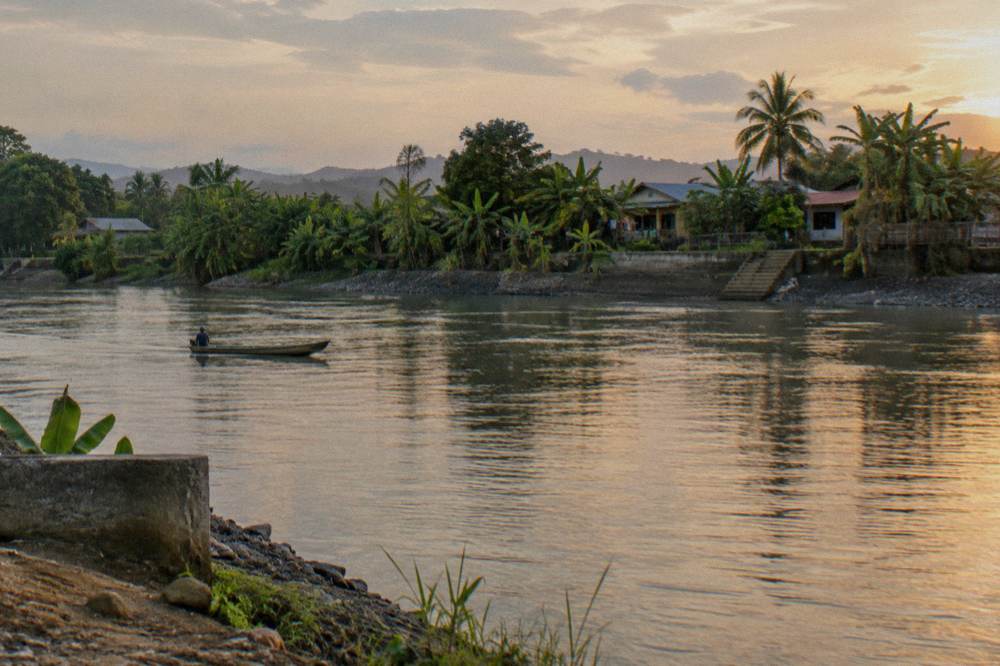
Nearly all commercial Pacuare trips take out at or near Siquirres, the lowland town east of the gorge where the river leaves the canyon and flattens toward the Caribbean; the town sits at about 62 m elevation with a district population of about 21,546. Operators run exploration and changing centers on the outskirts, which is where the rafting day effectively ends: gear comes off, showers and lunch happen, and the return drives begin. Multi-day trips also finish here, including the two-day itineraries that describe ending at a Siquirres exploration center after the second day's rapids.
Siquirres is a useful map anchor for another reason: it sits on the road corridor between the Central Valley and the Caribbean coast, which is why a Pacuare trip can be combined so naturally with Puerto Viejo or La Fortuna itineraries. The La Fortuna listing La Fortuna: Pacuare Rafting with SJO or Puerto Viejo Shuttle, rated 5 from 20 reviews and from $150 per person, uses exactly this geography: you raft the Lower Pacuare and can ride a shuttle onward to San Jose airport or Puerto Viejo rather than backtracking to your starting point. Ten hours total, Class III-IV, breakfast and lunch included.
The take-out is also where the map explains the drive-time puzzle people notice on itineraries. A trip that departs San Jose at dawn and returns around 5:30 p.m. spends only a fraction of that on the water; the rest is the loop down to the river and back. Operators commonly schedule pickups from San Jose between roughly 5:40 and 6:30 a.m., from La Fortuna around 5:20 to 5:40 a.m., and from Cahuita and Puerto Viejo between 6:00 and 6:30 a.m., with returns around 5 p.m. depending on traffic. Those are operator schedules, so confirm times on the listing.
What Does Each Day Trip Cover On The Map?
Every one-day listing on this site covers the Lower Pacuare gorge: roughly the same Class III and IV corridor between the Tres Equis or Finca La Cruz area upstream and Siquirres downstream, with the differences between listings being the departure town, transport inclusions, price and group size rather than a different stretch of river. The map-level choice is not "which section" but "where you start the day and what is included." The most reviewed day trip on the roster, Rafting Pacuare River One Day from Turrialba, rated 5.0 from 385 reviews, runs from $99 per person for six hours total with lunch.
| Listing | Departs | Rating and reviews | From (per person) | Total duration |
|---|---|---|---|---|
| Rafting Pacuare River One Day from Turrialba | Turrialba | 5.0 from 385 reviews | $99 | 6 hours |
| Rafting Pacuare River from Turrialba | Turrialba | 5.0 from 196 reviews | $120 | 6 hours |
| From San José: Pacuare River Class 3 & 4 Rafting Day Trip | San Jose hotels | 4.7 from 291 reviews | $125 | 9 hours |
| White Water Rafting Pacuare River From San José | San Jose hotels | 4.7 from 250 reviews | $125 | 10 hours |
| White Water Rafting Pacuare River with Lunch From Puerto Viejo | Puerto Viejo | 4.8 from 62 reviews | $147 | 7 hours 30 minutes |
| La Fortuna: Pacuare Rafting with SJO or Puerto Viejo Shuttle | La Fortuna | 5 from 20 reviews | $150 | 10 hours |
Read the table as a map of drive times as much as a price list. The Turrialba departures are short because the town sits closest to the corridor: San Jose to Turrialba is about 62 km and 1h20 to 1h40, commonly reported. The San Jose departures stretch to nine, ten or twelve hours because of the round trip, and the listing durations are the operator's own total trip length, not time on the water. The rest of the planning pages sit on Pacuare Costa Rica Rafting.

One Turrialba listing exists for a harder, more specific audience: Pacuare River Rafting Class IV from Turrialba, from $125 per person for eight hours with up to 18 guests and lunch included, too few reviews for a star claim. Its Class IV label, straight from the roster, is the closest thing on the site to a section-specific grade. For a fuller walkthrough of the standard day, read the one-day Pacuare trip explained. Explornatura's Turrialba day trip, 5.0 from 196 reviews, from $120 per person, is the more reviewed alternative.
How Do Multi-Day Trips Use The River Map?
Multi-day trips start higher up the Pacuare and use the Lower's length in slices: one operator reports overnight trips putting in as much as 6.5 km upstream of the day-trip entry, running about 13 km and 14 rapids on day one to a river lodge, then about 23 km and roughly 30 rapids on day two to the Siquirres take-out. Those figures come from one operator's own listing and should be read as its itinerary, not a survey of the river. The map logic is that the lodge sits inside the gorge, so the overnight turns the one-day corridor into a two-day descent with a night in the middle.
| Listing | Nights and lodge | From (per person) | Rapids class | Departs |
|---|---|---|---|---|
| San José Caribe Arenal Pacuare Hiking and Rafting 2-Day Trip | 1 night, Pacuare River Lodge | $269 | Class III-IV | San Jose, Puerto Viejo or La Fortuna |
| Two-Day Rafting Tour on the Pacuare River Transportation included | 1 night, Avesol Lodge | $370 | Not stated | San Jose |
| 2 Day Pacuare River Rafting and Hiking Tour | 1 night, Pacuare River Lodge | $375 | Not stated | San Jose |
| 2-Day Tour of the Pacuare River in Costa Rica. | 2 days | $397 | Class III-IV | Siquirres |
| 3 Day Tour of the Pacuare River in Costa Rica. | 3 days | $505 | Not stated | Siquirres |
The Exploradores Outdoors two-day trip, from $269 per person, includes two breakfasts, two lunches, one dinner, the night at Pacuare River Lodge, hikes, insurance and transport to and from San Jose, Puerto Viejo or La Fortuna. The Three-Day Tour of the Pacuare River, from $505 per person, extends the same corridor with three days of meals. The full overnight story, including what the lodges actually include, is in the two-day Pacuare overnight guide. The Excitement Costa Rica two-day trip with transport included, overnight at Avesol Lodge, is from $370 per person.
How Do You Reach The Pacuare From Each Departure Town?
The five departure towns on the roster map onto the river from different sides: San Jose trips approach from the Central Valley via Cartago, Turrialba sits about 1h20 to 1h40 from San Jose closest to the corridor, La Fortuna connects from the north in about 3h30 to Turrialba, and Puerto Viejo, roughly 3h30 to 4h25 from San Jose, reaches the Siquirres side along the coast road. All drive times are commonly reported figures, not operator promises.
| From | To | Drive time, commonly reported |
|---|---|---|
| San Jose | Turrialba | About 1h20 to 1h40, about 62 km |
| San Jose | Siquirres area | About 1h37 |
| San Jose | Puerto Viejo de Talamanca | About 3h30 to 4h25, about 215 km |
| La Fortuna | Turrialba | About 3h30 |
Public transport exists for the budget-minded: direct buses run hourly from the San Jose terminal to Turrialba for a few dollars, which makes a Turrialba-departure listing a realistic car-free option. Road conditions on the approach can matter, and Ruta 32 closures have at times pushed truck traffic onto the Ruta 10 through Turrialba, causing congestion. If you are staying in the area the night before, the where to stay near the Pacuare and Turrialba guide maps the practical overnight bases.
The Caribbean departure deserves its own map note. White Water Rafting Pacuare River with Lunch From Puerto Viejo, rated 4.8 from 62 reviews and from $147 per person for seven and a half hours, includes hotel pickup from Puerto Viejo de Limon, breakfast, a freshly prepared riverside Costa Rican lunch, river access and entrance fees, lockers and changing facilities, with a minimum age of 12 and up to 25 guests. It is the natural pick if your trip is anchored on the coast and you want the gorge without backtracking through San Jose.
Which Pacuare Trip Should You Pick For Each Section?
If you want the classic Lower Pacuare gorge in one day, pick a San Jose or Turrialba Class III-IV listing; if you want the extended upper start and a night inside the canyon, pick a two-day lodge trip; if you want the hardest commercially guided water, the Class IV Turrialba listing is the only roster product that names Class IV alone in its title. No listing on this site runs the Class V Upper section; that water belongs to expert kayakers. The choice is really about departure town, duration and group size, all of which the roster states directly.
| You want | Best-fit listing on the roster | Why |
|---|---|---|
| Cheapest firm-priced day on the water | Rafting Pacuare River One Day from Turrialba | From $99, most reviewed at 5.0 from 385 reviews |
| Door-to-door from a San Jose hotel | From San José: Pacuare River Class 3 & 4 Rafting Day Trip | Hotel pickup listed, 4.7 from 291 reviews, from $125 |
| Raft plus onward travel without backtracking | La Fortuna: Pacuare Rafting with SJO or Puerto Viejo Shuttle | Ends with a shuttle toward the airport or coast |
| A night inside the gorge | San José Caribe Arenal Pacuare Hiking and Rafting 2-Day Trip | From $269, one night at Pacuare River Lodge |
| The longest descent | 3 Day Tour of the Pacuare River in Costa Rica. | From $505, three days with all meals |
Age and water level shape the map as much as geography. The national rafting norm sets 12 as the minimum age for Class IV water, operators set their own minimums and some raise them to 14 in the wet months, and several roster listings simply say to check the listing. Group sizes range up to 40 guests on the most reviewed Turrialba trip and as low as 10 on the small-group San Jose tour. Those details, and the fitness question behind them, are unpacked in Pacuare age limits and fitness.
However you map it, the booking decision comes down to three variables: where you sleep the night before, how many hours you can give the day, and whether one descent is enough.
Common Questions About The Pacuare River Map
Where Does The Pacuare River Start And End?
It rises in the Cordillera de Talamanca and flows to the Caribbean in Limon province, with its mouth between the Boca del Parismina and the Urpiano lagoon near the Matina river. Its length is given as about 108 to 133 km depending on the source.
Which Section Of The Pacuare Do Commercial Rafting Trips Run?
Nearly all commercial trips run the Lower Pacuare, about 37 km of Class III and IV water from the Finca La Cruz area down to Siquirres, through the Huacas River Gorge. Multi-day trips start further upstream and overnight at a river lodge inside the canyon.
Where Do Pacuare Rafting Trips Put In And Take Out?
Operators report one-day trips putting in near Tres Equis or the Finca La Cruz area, with multi-day trips starting higher, around the San Martin area. Nearly all trips take out at or near Siquirres. Exact access points vary by operator, so confirm on the listing.
Does Every Pacuare Day Trip Cover The Same Water?
Essentially yes. The differences between listings are the departure town, transport inclusions, price, duration and group size, not a different stretch of river. Turrialba departures are shortest because the town sits closest to the corridor.
Can You Raft The Upper Pacuare Class V Section?
Not on a commercial listing on this site. The Upper section, Class IV and V with waterfalls, is described in standard references as mostly run in creek kayaks by experts. Every bookable product here covers Class III and IV water at most.
How Far Is The Pacuare From San Jose?
San Jose to Turrialba is about 62 km, commonly reported at 1h20 to 1h40, and San Jose to the Siquirres area about 1h37 by road. Day trips from San Jose hotels typically run nine to twelve hours total because of the round trip.