Costa Rica Rainy Season: What It Means For Rafting And Travel
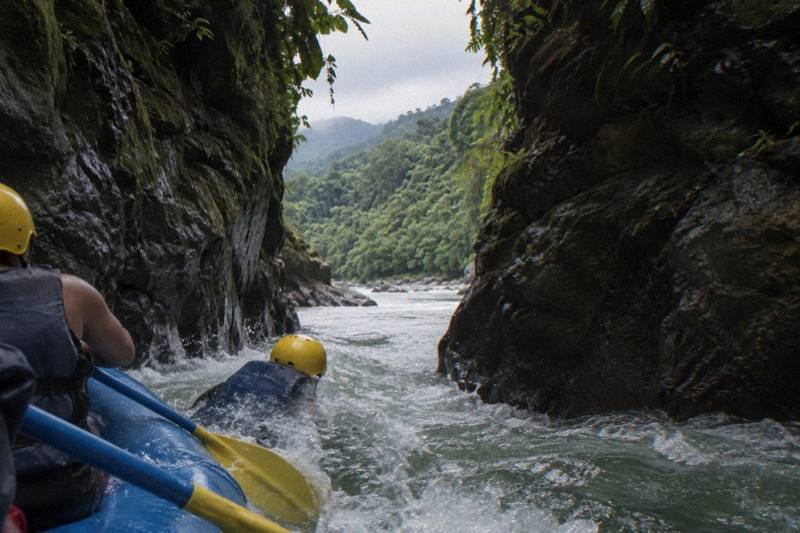
The rainy season does not shut the Pacuare down. It reshapes it: higher water, bigger rapids, greener forest, and a few practical adjustments to travel plans and packing.
Short answer
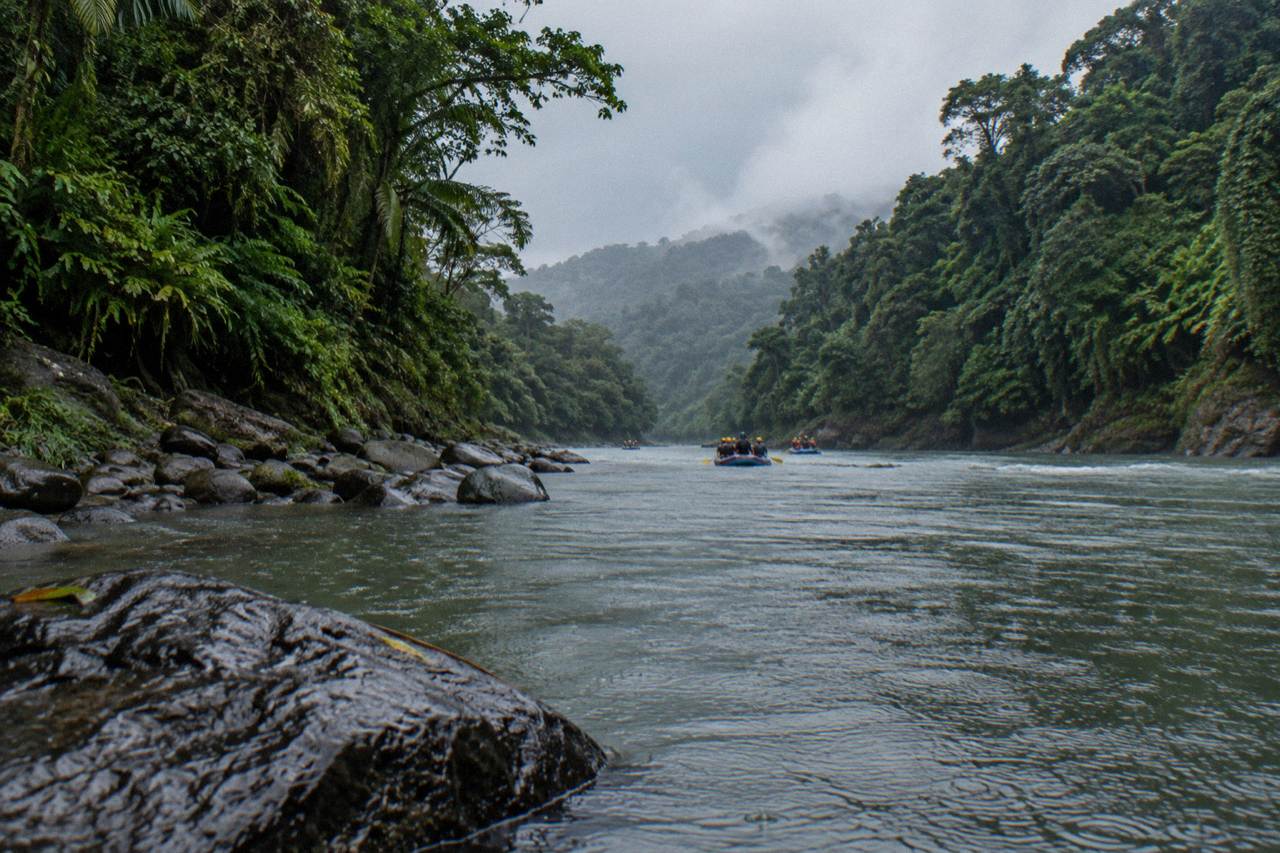
Costa Rica's rainy season runs roughly May to November, with the wettest months October to December and the driest February to April. Pacuare operators run all year. Some raise the minimum age from 12 to 14 in the wetter months. Turrialba area rainfall averages about 477 mm in November against about 181 mm in March, per ERA5 modelled data.
Rain sits at the center of most Costa Rica trip planning, and for good reason: the country's Caribbean slope, where the Pacuare flows, receives rain through much of the year, and the monthly totals swing hard between a soaking November and a comparatively dry March. The mistake some visitors make is treating the rainy season as a closed season. It is not. Pacuare operators run the river all year, and the wettest months are, for some experienced rafters, exactly the months worth coming for.
The practical questions are narrower than "should I go". Does rain cancel trips, or just change them? Which months dump the most water on Turrialba and the river corridor? What happens to the drive from San Jose, and what goes in the dry bag? This guide works through each of those, anchored on the Pacuare and the trips listed on this site, from the most reviewed Turrialba day trip, Rafting Pacuare River One Day from Turrialba, 5.0 from 385 reviews and from $99 per person, to the two-day lodge overnights that turn the rainforest into the whole point of the stay.
When Exactly Is The Rainy Season In Costa Rica?
Costa Rica's rainy season, often called the green season, runs roughly May to November, with the Pacific side following that pattern most cleanly. The Caribbean slope, including the Pacuare watershed, receives rain through much of the year instead of a strict wet and dry split. Water on the Pacuare is highest October to December and lowest March to April.
The classic framing, a dry season from December to April and a wet season from May to November, describes the Pacific side well. The Caribbean slope behaves differently, as regional rafting guides note: rain reaches the Pacuare corridor in almost every month, just in different doses. ERA5 modelled averages for the Turrialba grid point show February to April driest and October to December wettest, with March at about 181 mm and November at about 477 mm. Farther downstream near Siquirres, the same modelled dataset puts November even higher, about 556 mm.
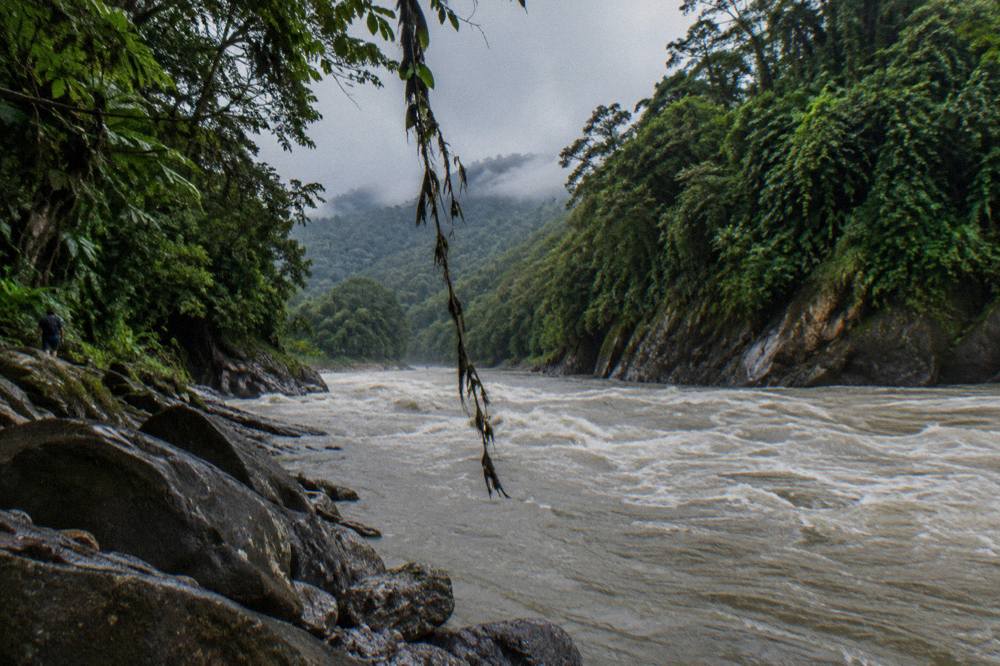
What that means for a rafting decision is simpler than the calendar suggests. Operators describe higher, faster water in the wetter months and lower, gentler water from February to April, and many prefer that February to April window for first timers and families. The river remains runnable all year. If your dates are fixed by school holidays or flight prices, the season you land in shapes the trip more than it permits or forbids one.
One nuance worth keeping: the transition months cut both ways. A traveler account from May describes the Pacuare as very beginner friendly at lower water. December can hold November's high water or open the drier stretch, depending on the year. The only honest planning rule is that the operator on the day reads the river; the calendar only sets the odds.
Does Rain Ever Cancel Rafting Trips On The Pacuare?
Yes, operators can and do cancel or reroute Pacuare trips when the river runs dangerously high, and heavy rain is the reason. There is no automated flow gauge on the river; a painted rock marker downstream of a river lodge is used as a rough reference, with red and higher meaning too high. Most days, though, trips run as planned. If you're wondering where all that water is headed, our Pacuare flow direction guide traces the river from the Talamanca mountains down to the Caribbean.
Cancellation is a safety valve, not a routine outcome. The rafting norm that governs Costa Rica operators, INTE G60-1:2019, requires operators to check weather and river conditions and to scout when flow rises, and Pacuare operators describe exactly that practice. Guides are trained in swift water rescue and carry safety kits for the full length of the trip, and life jackets and helmets are worn for the entire run, calm sections included. When the river is genuinely too high, the operator makes the call and the listing's cancellation terms apply; nearly every day trip on this site's roster lists free cancellation. For a clear picture of how hard the run actually is and how that shifts with the season, the guide to the Pacuare's rapid classes and difficulty rating lays out which sections carry which rapids and who the trip suits.
The bookings that follow the weather most closely are the big-water months. September and October draw some experienced rafters precisely for bigger water, though afternoon thunderstorms are more likely then. If you are booking a day trip for that window, the San Jose departure From San José: Pacuare River Class 3 & 4 Rafting Day Trip, 4.7 from 291 reviews and from $125 per person, includes hotel pickup and both breakfast and lunch, so a long day on the road is at least fully catered.
The smart rainy season move is to build one buffer day into the itinerary. A trip cancelled for high water on your only free Tuesday is a lost day; the same cancellation on day two of a four day stay becomes a rebooking. The Budget 6-Hour Rafting link shows the live calendar alongside the internal page for the one day Turrialba rafting trip, where the schedule and what's included are laid out in full.
For a fuller treatment of how difficulty shifts with the water, see the companion guide on Pacuare rapid classes and the Class III to IV run.
How Does The Rainy Season Change Pacuare Rapids And Water Levels?
Rainy season water on the Pacuare runs higher and faster, and the difficulty rises with it. One operator grades the standard run Class 4 at high water and Class 3+ at low water. Guides describe many Class III rapids becoming Class IV in the wet season, and green season adding roughly half a class of intensity.
This is the single biggest seasonal difference, and it is graded in fractions rather than leaps. The same rapids you read about in dry season trip reports, with names like Huacas and Cimarrones on the gorge section, read harder when the gauge rock is climbing. The Huacas waterfall, which drops 150 feet directly into the river channel, is the corridor's landmark; water volume changes how the rapids around it behave, not whether they exist.
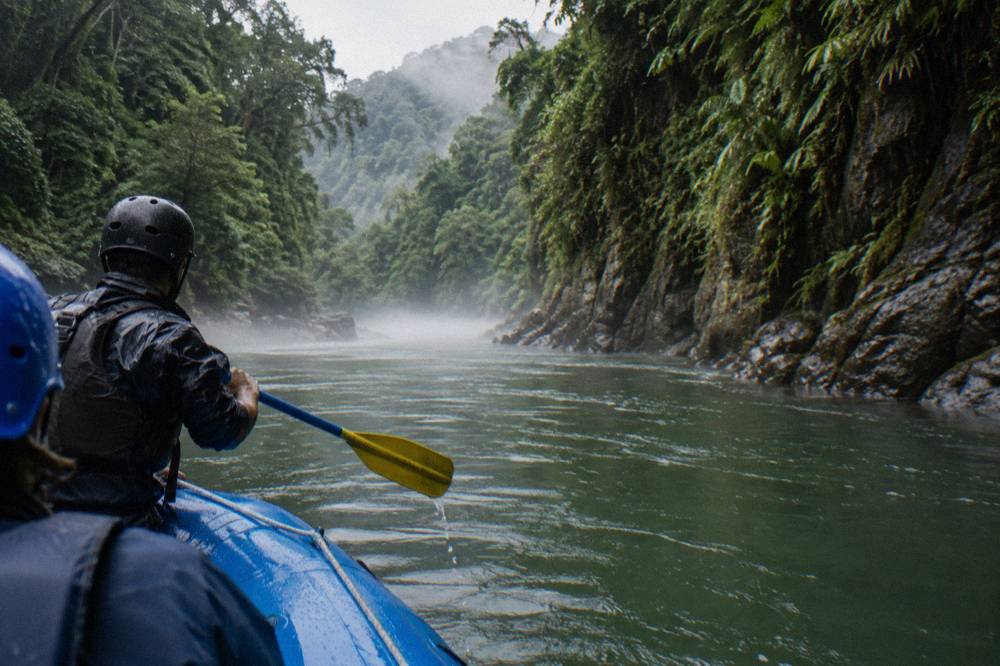
The age rules move with the water too. One operator, Rios Adventure Travel, sets the Pacuare minimum age at 12 from December to May and raises it to 14 from June to November because water runs higher, while another maintains 12 year round. The national norm sets 12 to 17 years as the bracket for Class I to IV water, so a Class III-IV run is legally open from age 12, but operators can and do set higher minimums in the wet months. Always check the listing for the age in force on your date. The deeper dive on that is the guide to Pacuare age limits and fitness.
| Condition | Typical grading | What it means on the water |
|---|---|---|
| Low water, February to April | Class 3+ | More predictable rapids, calmer pools, guides prefer it for first timers and families |
| Medium water, transitional months | Class III-IV | Standard commercial character, punchy but forgiving |
| High water, October to December | Class 4 | Faster current, bigger waves, wetter swims, some operators raise the minimum age to 14 |

If your heart is set on big water, the two-day options reward the wet months. The 2-Day Tour of the Pacuare River in Costa Rica, from $397 per person with breakfast, lunch and dinner listed as included, spends a night in the gorge; the operator of the comparable Exploradores two-day states day one covers 13 km and 14 rapids and day two 23 km and about 30 rapids, per its listing. Rain on a lodge trip is atmosphere, not inconvenience. For a day trip from the coast instead, the Puerto Viejo departure is 4.8 from 62 reviews, from $147 per person.
Which Months Get The Most Rain Around Turrialba And The Pacuare?
Around Turrialba, ERA5 modelled averages show the wettest months as November, about 477 mm, October, about 412 mm, and July, about 379 mm, and the driest as March, about 181 mm, April, about 187 mm, and February, about 198 mm. Near Siquirres downstream, November averages about 556 mm.
Month by month at the Turrialba grid point, the modelled means run: January 305 mm, February 198, March 181, April 187, May 303, June 309, July 379, August 323, September 280, October 412, November 477, December 360. That is about 3,714 mm across the year. A station-record cross-check published by climate sites agrees on the shape of the curve, February to April driest and October to December wettest, while differing on which single month is wettest. These are averages, not forecasts; any given week can break the pattern, especially on the Caribbean slope.
| Month | Turrialba modelled rainfall (mm) | River character to expect |
|---|---|---|
| January | 305 | Moderate, settling after the December peak |
| February | 198 | Drier, lower water, popular with families |
| March | 181 | Lowest water of the year |
| April | 187 | Low water, warm, predictable rapids |
| May | 303 | Transitional, water beginning to build |
| June | 309 | Green season running, bigger waves |
| July | 379 | High side, some operators raise age minimums |
| August | 323 | Solid green season flow |
| September | 280 | Big-water seekers' month, storm risk |
| October | 412 | High water |
| November | 477 | Wettest modelled month |
| December | 360 | High water easing toward the dry stretch |
Two patterns in that table deserve comment. First, the mid-year dip: September's 280 mm sits below July's 379 mm in the modelled data. Second, the totals never approach zero: even March's 181 mm would count as a wet month in much of Europe or North America. Costa Rica's "dry" season on this slope means drier, not dry, which is why the gorge stays green all year.
For help matching a month to a trip style, the guide on the best time to raft the Pacuare works through the same calendar from a purely rafting standpoint.
What Does The Rainy Season Mean For Roads And Travel Times?
Wet season driving in Costa Rica is slower, not blocked: the San Jose to Turrialba leg is commonly reported at about 1h20 to 1h40, and rain, fog and Ruta 32 maintenance diversions can stretch that. Day trips from San Jose typically pick up around 6:00 to 6:30 a.m. and return near 5:30 p.m., so the day is long regardless of season.
The road facts around Turrialba matter to rafting logistics because most day trips start early and end late. Ruta 32 closures for weather or maintenance have diverted heavy truck traffic onto Ruta 10 through Turrialba, causing congestion noted by local media in late 2025, and a rehabilitation of 12 km of Ruta 230 began in September 2025 under the roads ministry. None of this closes the river; it just argues for patience, and for trusting the operator's transfer timing rather than planning your own tight connection.
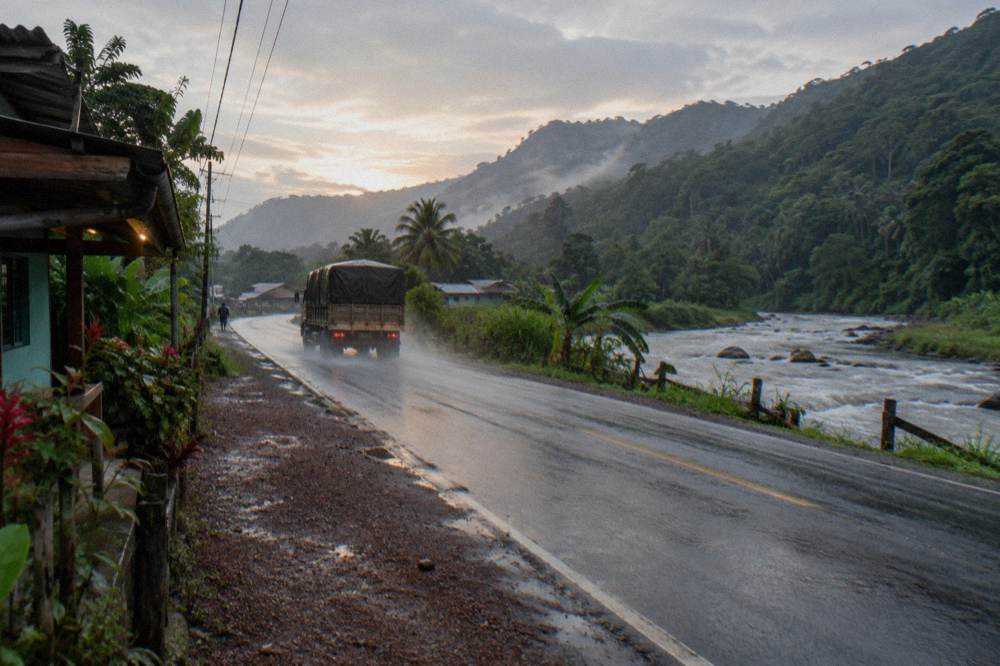
If the 6 a.m. pickup sounds punishing, the Turrialba departures shorten the whole day. Pacuare River Rafting, run by Ticos River Adventures, 4.9 from 27 reviews and from $119 per person, lists a 4 hour total duration with transport from Turrialba included, a deli style lunch, certified guides and a safety kayak among the inclusions. Staying a night or two in Turrialba turns an eleven hour San Jose day into something far more relaxed, and the guide on where to stay near the Pacuare and Turrialba covers the base town options.
For travelers combining the Caribbean coast with the river, the same logic applies: the drive from San Jose to Puerto Viejo de Talamanca is commonly reported at about 3h30 to 4h25, and rain adds margin. White Water Rafting Pacuare River with Lunch From Puerto Viejo, 4.8 from 62 reviews and from $147 per person, lists hotel pickup from selected Puerto Viejo hotels, breakfast and lunch, lockers and changing facilities, with a listing minimum age of 12. More on that routing sits in the guide to Pacuare rafting from Puerto Viejo and the Caribbean coast.
The one planning rule worth repeating: book the rafting day with a spare day after it, not before departure home. A high-water cancellation the morning of your international flight is the only genuinely bad outcome the rainy season can produce, and it is entirely avoidable.
What Should You Pack For Rainy Season Rafting?
Pack for permanent damp: quick dry clothes, secure water shoes rather than flip flops, a towel and full change of clothes, sunscreen, and dry bags or waterproof protection for anything electronic. Operators provide the helmet, life jacket and paddle. Valuables carried on the raft are the participant's responsibility, and professional photos are sold separately.
The seasonal twist on the standard kit is that in the wet months nothing dries overnight. A packing list built around two sets of river clothes, worn on alternating days, works better than one heavy set. Footwear rules are consistent across operator pages: tennis shoes or secure sandals and river shoes that can get wet and muddy, no flip flops. The full kit rundown, including what to leave in the van, is in the guide on what to bring on a Pacuare rafting trip.
| Item | Why it matters in the rainy season |
|---|---|
| Quick dry top and shorts, two sets | Nothing dries overnight in high humidity |
| Secure river shoes | Muddy put-ins and wet rocks; flip flops are refused |
| Towel and full change of clothes | Operators list showers and changing facilities at the end |
| Dry bag or waterproof phone case | Some listings exclude them from inclusions |
| Sunscreen | The equatorial sun burns through cloud cover |
| Light rain jacket for the drive | Transfers run early and late in air conditioned vehicles |
One thing not to over-pack for: a wetsuit. The Pacuare's water temperature typically sits at about 21 C and higher, with operator measured examples from 21.2 to 26.2 C, so no wetsuit is needed even in the wet months. The rain is warm rain. That single fact resets most visitors' mental image of the season; this is not alpine rafting in a cold drizzle, it is tropical rafting under clouds.
Which Rafting Trips Suit A Rainy Season Visit Best?
For the wet months, the strongest fits are the Turrialba day trips, which keep the day short, and the two-day lodge trips, where the rainforest is the point. First timers nervous about high water should book February to April instead, or pick the most reviewed Turrialba day trip, 5.0 from 385 reviews from $99 per person, and confirm conditions with the operator.
The roster splits naturally by season. Dry season, February to April, belongs to first timers and families: lower water, predictable rapids, operators' preferred window. Green season trips reward travelers who want the jungle at its loudest and do not mind bigger waves. And the multi-day trips are the rainy season's secret weapon, because the lodge evenings, the gorge and the waterfalls are at their most dramatic with moisture in the air.
| Trip | Season fit | Price basis | Key roster facts |
|---|---|---|---|
| Rafting Pacuare River One Day from Turrialba | All year, forgiving schedule | From $99 per person | 5.0 from 385 reviews, 6 hours, lunch listed, up to 40 guests |
| From San José: Pacuare River Class 3 & 4 Rafting Day Trip | All year, long day | From $125 per person | 4.7 from 291 reviews, 9 hours, hotel pickup listed |
| White Water Rafting Pacuare River with Lunch From Puerto Viejo | All year, coast pairing | From $147 per person | 4.8 from 62 reviews, 7 hours 30 minutes, minimum age 12 |
| San José Caribe Arenal Pacuare Hiking and Rafting 2-Day Trip | Rainy season showcase | From $269 per person | Pacuare River Lodge overnight, meals listed, Class III-IV |
| 2-Day Tour of the Pacuare River in Costa Rica. | Rainy season showcase | From $397 per person | Class III-IV, private, full board listed, departs Siquirres |
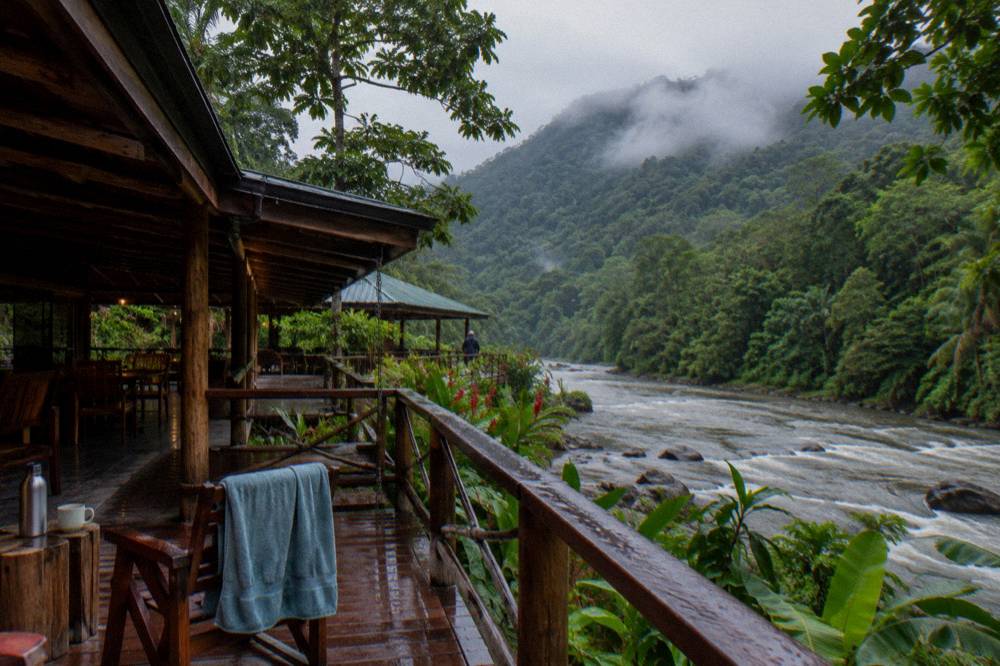
The two-day San José Caribe Arenal Pacuare Hiking and Rafting 2-Day Trip, from $269 per person, lists a night at Pacuare River Lodge, two breakfasts, two lunches, one dinner, insurance, and transfers from San Jose, Puerto Viejo or La Fortuna. Its listing allows free cancellation up to 24 hours before, but other lodge overnights set windows of 3 to 6 days, which matters if your rainy season plans are loose. Read the listing's own terms before booking either. If you're still weighing which month to book, our month-by-month guide to Pacuare rafting conditions explains how water levels and rapid classes shift across the year.
For the La Fortuna side, the Calypso Adventures trip La Fortuna: Pacuare Rafting with SJO or Puerto Viejo Shuttle, 5 from 20 reviews and from $150 per person, runs Class III-IV water with a shuttle to San Jose airport or Puerto Viejo built in, a genuine itinerary tool for travelers moving between Arenal and the coast in the wet months.
Is The Rainy Season Actually A Good Time To Visit?
For many travelers, yes: the forest is at its greenest and the rafting is bigger if that is what you want. The trade-offs are real, higher water, more frequent afternoon storms, possible high water cancellations and slower roads, and they suit flexible itineraries far better than rigid ones.
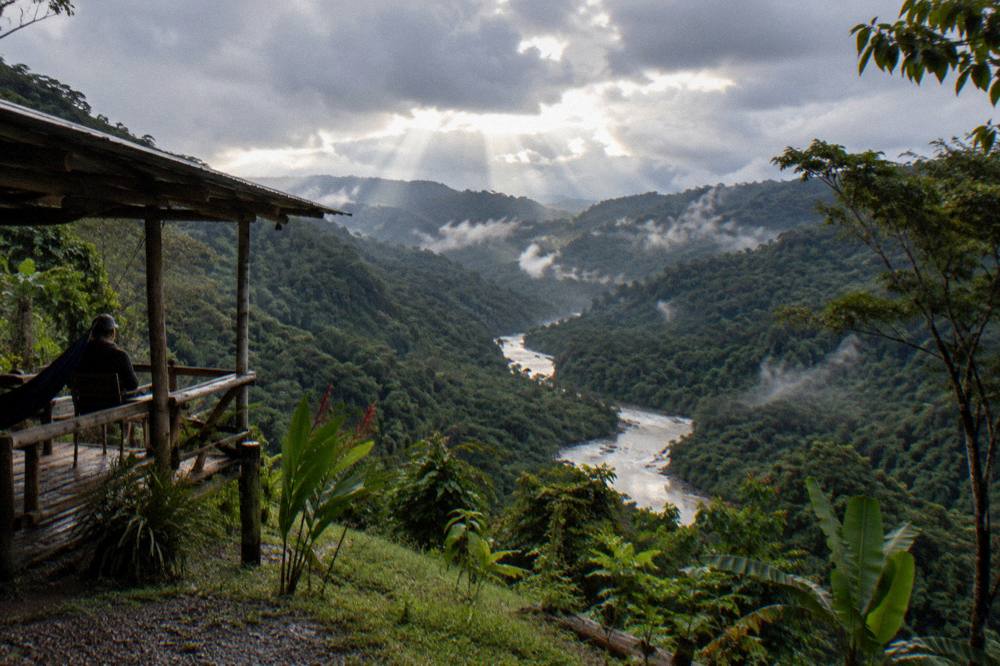
The honest framing is by traveler type. A family with 12 year olds testing the rafting waters for the first time: book February to April, when operators report gentler, more predictable water, or accept the operator's judgment on the day. A solo traveler or couple with flexible dates and a taste for big waves: the September to November corridor delivers the river at its most powerful, with the caveat that a cancellation is possible. Anyone pairing the Pacuare with time in Turrialba: the green season is when the coffee country is at its most photogenic, as covered in the guide to free things to do near Turrialba and the Pacuare. If the town itself is new to you, the short primer on what Turrialba is known for covers the volcano, the coffee farms, and the rafting scene in one read.
Wildlife watching also leans green season, with the standard caveat that no sighting can be promised: wildlife on the Pacuare corridor is commonly reported by operators and guests. If wildlife is the priority, the dedicated guide to Pacuare wildlife and the rainforest gorge sets expectations properly.
Whatever the month, the booking mechanics do not change: check the listing for the age minimum in force, the pickup arrangement that listing actually includes, and the cancellation terms, which differ between day trips and lodge overnights. This site exists for exactly that comparison; the Pacuare rafting trips compared guide and the trip picker on the homepage line up every listing side by side, and Pacuare Costa Rica Rafting keeps the roster's prices and ratings as the reference for every page like this one.
The rainy season, in the end, is not the season to avoid. It is the season that separates the travelers who want the Pacific postcard from the travelers who want the river at full voice. The Pacuare accommodates both, twelve months a year.
Common Questions About Costa Rica Rainy Season Rafting
When Exactly Is The Rainy Season In Costa Rica?
Roughly May to November on the Pacific side. The Caribbean slope, including the Pacuare watershed, receives rain through much of the year, with the wettest months October to December and the driest February to April.
Does Rain Cancel Rafting Trips On The Pacuare?
Operators can cancel or reroute when the river runs dangerously high, and heavy rain is the usual cause. There is no automated flow gauge; a painted rock marker is used as a rough reference. Most days trips run as planned, and nearly every day trip on this site's roster lists free cancellation.
Do The Rapids Get Harder In The Rainy Season?
Yes. One operator grades the standard run Class 4 at high water and Class 3+ at low water, and guides describe many Class III rapids becoming Class IV in the wet season. Some operators raise the minimum age from 12 to 14 between June and November; check the listing.
Which Month Has The Most Rain Around Turrialba?
By ERA5 modelled averages, November, at about 477 mm at the Turrialba grid point, followed by October at about 412 mm. March is the driest at about 181 mm.
What Should I Pack For Rainy Season Rafting?
Quick dry clothes in two sets, secure water shoes, a towel and full change of clothes, sunscreen, and dry protection for electronics. Operators provide helmet, life jacket and paddle. A wetsuit is not needed; water runs about 21 C or higher.
Is The Rainy Season A Bad Time To Visit Costa Rica?
No. The forest is greenest and the rafting is bigger. The trade-offs are afternoon storms, possible high water cancellations and slower drives, which suit flexible itineraries better than rigid ones.