What Month Is Best For White Water Rafting?
The month-by-month answer for white water rafting in Costa Rica, with the Pacuare as the benchmark river: water levels, rapid classes, minimum ages and which trips fit each season.
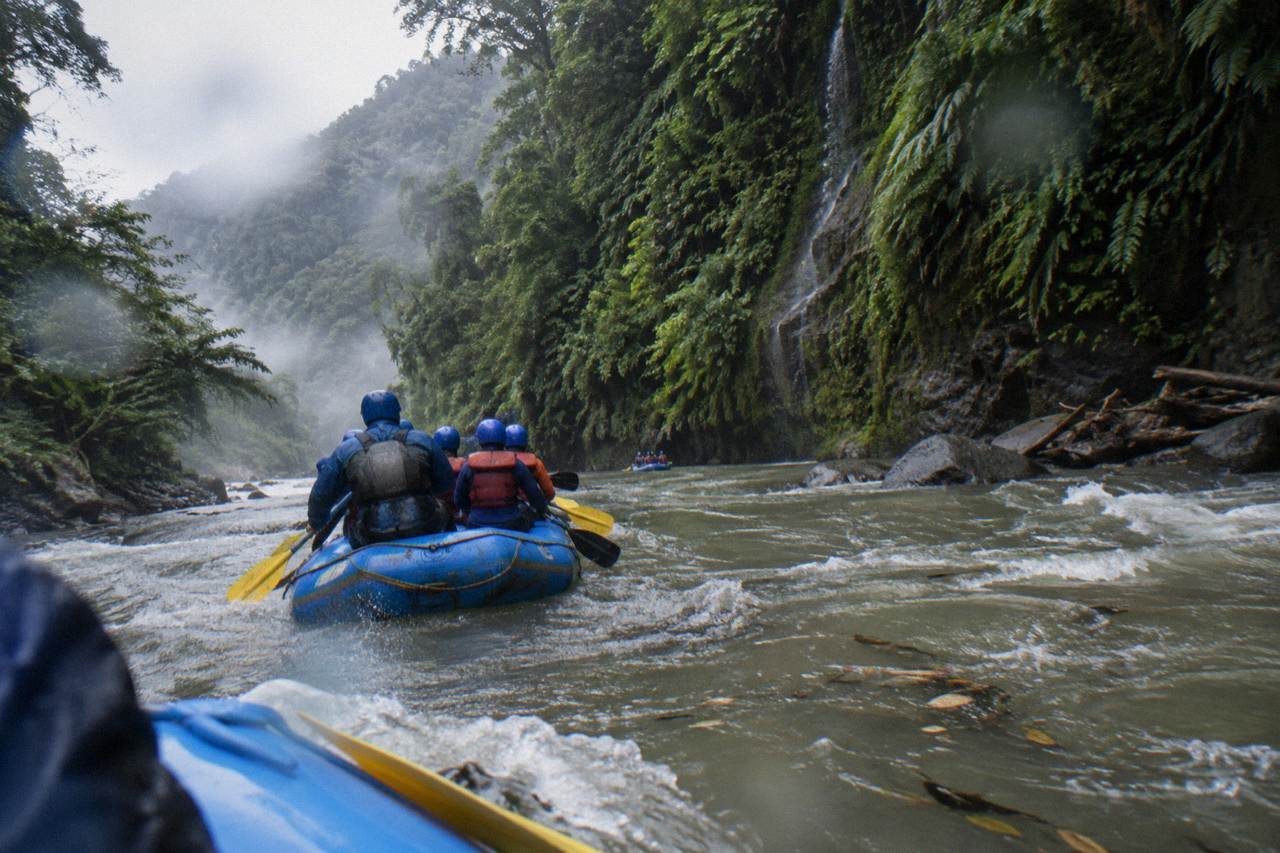
For most people the best month for white water rafting is February, March or April: the water on Costa Rica's Caribbean-slope rivers, above all the Pacuare, is at or near its lowest and most predictable, rapid classes stay stable, and operators describe these months as their preferred window for first timers and families. The river runs all year, so there is no month when trips simply stop. What changes is the character of the water. Highest flows arrive October to December, lowest flows March to April, and in between the river swings with the rain. One operator, Rios Adventure Travel, even raises its minimum age from 12 to 14 between June and November because the water runs higher, which tells you how much the month itself shapes who can go. Once you have settled on a month, the next question is how hard the run itself will feel, and our plain-English guide to the Pacuare's rapid classes answers exactly that.
That single age shift is the clearest signal in the whole calendar. The same river, the same rapids, the same guides, and yet a 12-year-old who can legally and practically raft the Pacuare in March cannot book with that operator in August. Choose the month around who is rafting and how much punch you want, not around a search for a "good" season, because there is no bad one, only different ones.
The deeper answer splits three ways, and the rest of this article works through each. If you want reliable, readable whitewater with the lowest chance of a weather reroute, aim for the February to April window. If you want the biggest, fastest water the river can offer and you have experience, the October to December peak is the draw, with the trade-off that operators cancel or reroute more often in genuinely high water. And if your travel dates are fixed by something else, a school holiday, a flight, a wedding, the honest position is that every month on the roster is bookable and the trips run, you just adjust expectations and pick the right listing. However you time your trip, safety is usually the next question, and our guide to white water rafting safety in Costa Rica covers the mandatory gear, guide training, and what the season means for the Pacuare.
For the trips this site covers, the month rarely changes the price. The most reviewed Pacuare day trip, Rafting Pacuare River One Day from Turrialba, is from $99 per person, and the Class III and IV day trip from San Jose, from $125 per person, both hold the same listing price across the calendar. What changes month to month is the water under the raft. If you want to see what those flat prices actually cover, the full breakdown of Pacuare rafting trip costs spells out what is included and where you will pay extra.
Why February To April Suits Most Rafters
February to April suits most rafters because operators themselves point first timers and families toward this window: the Pacuare runs lower and gentler then, the rapids hold a steadier class, and weather delays are least likely. Calmer water, steadier rapid ratings, and fewer weather disruptions combine to make these months the clear choice for the majority of paddlers. Water is at its lowest March to April on this river, and the stretch from February through April combines enough flow for real whitewater with conditions that are not swollen. One rental-and-travel writer calls March and April the sweet spot, with enough water for exciting rapids without the raised difficulty that comes with high flows.
The mechanics are simple. The Pacuare is rain-fed, with no dam smoothing the curve, so the river literally follows the sky. Modelled climate averages for the Turrialba area, from the ERA5 archive over 2005 to 2024, put rainfall at its annual minimum in that stretch: about 181 mm in March and 187 mm in April, against 477 mm in November and 412 mm in October. A station-based cross-check of Turrialba records agrees on the shape of the year even where it disagrees on the exact wettest month: February to April driest, October to December wettest.
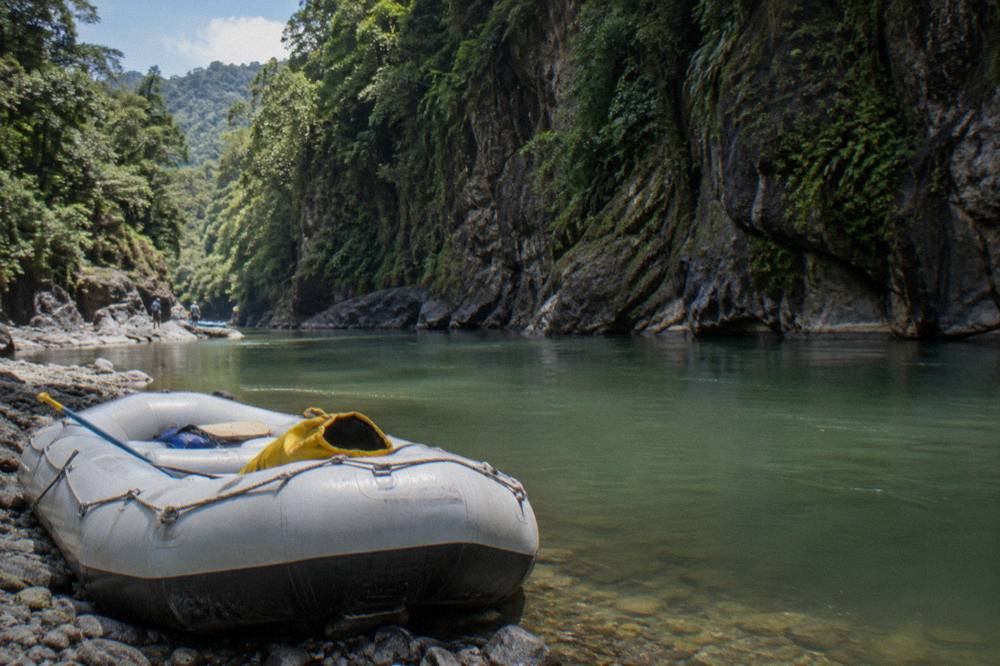
Lower water does a few things at once. Rapids that push Class IV in the wet months often ease toward Class III. The lines through them become more readable, with rocks visible rather than buried under pushing current. Swim risk feels different too: a swimmer in big warm-but-pushy October water travels farther before a raft or safety kayaker collects them. Water temperature is not the issue, the river typically runs around 21 C or warmer with no wetsuit needed, it is purely the volume and speed of the flow.
The February to April window also lines up neatly with the age rules. The national rafting norm, INTE G60-1:2019, sets 12 as the minimum age for Class I to IV water, so a 12-year-old can legally raft the Pacuare's standard run. In the drier months, listings that state a minimum age hold it at 12, and the families who want teenagers on the water face the fewest surprises. If you are planning around school-age rafters, the dry-side months are when the widest range of listings is realistically open to you.
For booking, this window is also the safest bet against the schedule risk that comes with Caribbean-slope weather. Operators cancel or reroute in high water or flooding, plainly and without drama, and that risk concentrates in the wettest months. Every listing on this site that flags free cancellation on its day trips gives you a way out if a storm system lands on your date, but the quiet truth is that in March you are much less likely to need it.
Is your date still open on Explornatura's Turrialba day trip, 5.0 from 196 reviews? Check availability, and remember the listing shows free cancellation, so a dry-season booking holds its flexibility.
What The Wet Months Do To The Pacuare
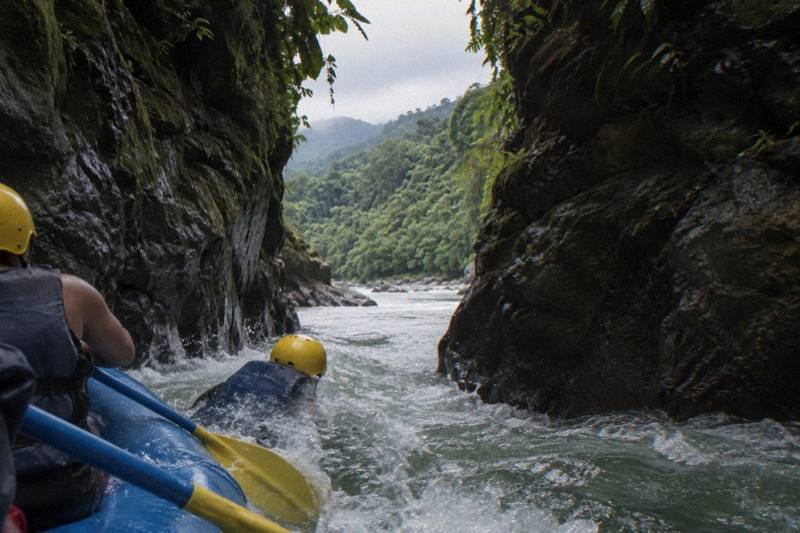
From roughly May through November, and peaking October to December, rain raises the Pacuare: operators report bigger, faster water, rapids can step up about half a class, and some operators raise their minimum age from 12 to 14 between June and November. One operator grades its Pacuare run as Class 4 at high water and Class 3+ at low water, which is about as clean a summary of the seasonal swing as exists. In rainy months, many Class III rapids become Class IV; in dry months, Class IV rapids often drop back to Class III.
That half-a-class shift sounds small and is not. The difference between a Class III rapid and a Class IV rapid is the difference between a splashy, forgiving drop where mistakes are recoverable and a steeper, pushier feature where a missed line carries consequences. For experienced rafters, that is the appeal. Some veteran paddlers actively prefer September and October for the bigger water, accepting a higher chance of afternoon thunderstorms as part of the deal. For a nervous first timer, the same water can flip a fun day into an overwhelming one, which is why the honest answer to "when is it too much" is personal, not calendar-based.
The other wet-month trade-off is operational. High water can close the river commercially: there is no automated flow gauge on the Pacuare, and one operator describes a painted rock marker downstream of a riverside lodge, red and higher meaning too high. When the river is genuinely in flood, operators cancel or reroute rather than run, and nobody can promise your specific date will go. That is not a reason to avoid the season, it is a reason to hold your plans loosely, keep the free cancellation that the day-trip listings carry, and give yourself a spare day in the region if the rafting is the centerpiece of the trip.
Wildlife and scenery do not switch off in the rain. The gorge is as green and as loud in November as in March, guests commonly report wildlife along the forested canyon, and the Huacas waterfall, which one operator describes dropping about 150 feet directly into the river channel, runs hardest in the wet months. If your priority is the canyon at its most dramatic rather than the rapids at their most forgiving, the wet side of the year delivers a different, equally real version of the same river.
Month By Month On The Pacuare
March and April are the easiest months for first timers, February to April is the broad recommended window, May through November brings higher and faster water, and October to December is the high-water peak where trips are biggest but most exposed to cancellation. The matrix below folds the season reporting, the rainfall averages and the age rules into one view so you can place your own dates against the river.
| Month | Water level | Character | Who it suits | Watch for |
|---|---|---|---|---|
| January | Moderate, easing from the December peak | Big water cooling off | Confident paddlers | Residual high flows early in the month |
| February | Lower, predictable | Classic Class III-IV running | First timers, families | Nothing major |
| March | Lowest of the year | Readable, technical, stable classes | First timers, families, photographers | Rocks show; sun exposure |
| April | Low, near the annual minimum | Stable, warm, scenic | Families, mixed-ability groups | Late-month thunderstorms building |
| May | Rising as rains return | Stepping up, a traveler in May described it as very beginner friendly at lower levels | Most rafters still fine | First pushes of higher water |
| June | Higher | Bigger drops, some operators raise minimum age to 14 | Experienced paddlers | Age limits change on some listings |
| July | High | Pushy, powerful | Experienced paddlers | Weather delays |
| August | High | Powerful, faster swims | Experienced paddlers | Weather delays |
| September | High, thunderstorms common | Big-water season favored by some veterans | Experienced paddlers | Afternoon storms, cancellation risk |
| October | Highest water begins | Peak volume | Experienced paddlers only, realistically | Cancellations and reroutes most likely |
| November | Wettest month by modelled rainfall, about 477 mm in Turrialba | Biggest, fastest water | Hardened rafters | Highest chance the river closes commercially |
| December | High, tapering | Big water into the holidays | Confident paddlers | Early-month floods, holiday demand |
The rainfall column behind this calendar comes from ERA5 modelled averages for the Turrialba grid point, 2005 to 2024, published here as modelled figures rather than station records, with a station cross-check agreeing on the broad shape: February to April driest, October to December wettest. No month-by-month river-level figures exist in any verifiable operator or official source, and this site will not invent them.
Two practical readings of the table are worth pulling out. First, the shoulder edges are underrated: January can still carry December's push, so if you want the recommended conditions, slide toward February rather than the New Year. Second, May is underrated. The rains have returned but the traveler report above describes the river as very beginner friendly in May at lower levels.
Does The Month Change Who Can Raft?
Yes: the legal minimum age for a Class III-IV run is 12 under the national norm, but some operators raise their own minimum to 14 from June to November because the water runs higher, so the same teenager may qualify in March and not in August. The national rafting norm INTE G60-1:2019 sets minimum ages by rapid class: 12 to 17 years may raft Class I to IV, 18 and over Class I to V, and under 12s are capped below Class IV. Operators are free to set higher minimums, and some do, seasonally.
This is one way a month choice silently breaks a family plan. Parents check a listing in January, see minimum age 12, book flights for August, and then find the operator's wet-season floor is 14. The fix is mechanical: check the listing for the month you are actually traveling, not the month you are researching. On this site's roster, the listings that state a minimum age say 12, and others leave it to the listing, so read your specific trip's page before promising a 12-year-old the river.
Weight and height limits follow the same rule of checking rather than assuming. One operator's listing outside this roster requires participants to weigh 45 to 90 kg and stand at least 1.35 m tall, while others list chest-size limits for life jackets. None of that is seasonal, but it stacks with the age question in families, so it belongs in the same pre-booking read of the listing. If you want the fuller breakdown of ages, classes and fitness, the age limits and fitness guide walks through the norm line by line.
What About Costa Rica's Two Coasts?
Costa Rica's two coasts don't share one rain schedule, so the best month depends partly on which coast your river is on. The Caribbean slope, where the Pacuare runs, is wettest from October to December and rains on its own schedule, while the Pacific side follows a different pattern. The Pacuare drains the Talamanca range toward the Caribbean, and that slope receives rain through much of the year rather than in a single clean wet season. Modelled rainfall for the Siquirres grid point near the take-out area shows July at about 496 mm and November at about 556 mm, but even the "dry" months stay near 165 to 192 mm. The river never dries out; it only ever runs lower or higher.
That matters because generic Costa Rica season advice is usually written about the Pacific side, where a dry season from December to April is sharply defined. Apply that advice to the Caribbean slope and you get the direction right, February to April is indeed the gentler window, but the magnitude wrong, the Pacuare keeps meaningful rain all year and its wettest stretch lands October to December. For a deeper treatment of how the rains shape travel and rafting across the country, the rainy season rafting and travel guide covers the two-coast split in full.
For month choice on the Pacuare specifically, the practical takeaway is confidence: you are not gambling on a narrow window. The river is described by operators as runnable all year, trips run in every month on the calendar, and the seasonal choice is between calmer and bigger rather than between possible and impossible.
Which Trips Fit Which Month
Match the listing to the month, not just the price: the standard Class III-IV day trips fit the February to April window for almost anyone, the wet months push the same trips toward experienced paddlers, and the multi-day lodge trips reward the drier months because two consecutive days on the water double your weather exposure. The comparison below pairs each major trip type on this site's roster with the months where it makes the most sense.
| Trip type | Best months | Why | Price anchor |
|---|---|---|---|
| Turrialba day trip, most reviewed | February to April | Lowest water, stable classes, 6-hour day from $99 per person | From $99 per person |
| San Jose day trip with hotel pickup | February to April | Long 9 to 12-hour day is easier in dry, predictable weather | From $125 per person |
| Private Pacuare day trip | Any month | Private format lets the pace flex to the water and the group | From $125 per person |
| Class IV-specific day trip | February to April for most; wet months for veterans | Targets the hardest commercial water; wet months step it up further | From $125 per person |
| Caribbean departure from Puerto Viejo | February to April | 7.5-hour day including coastal transfers, best in settled weather | From $147 per person |
| Two-day lodge trips | February to April | Two river days in a row doubles weather exposure; drier months protect the itinerary | From $269 per person |
| Three-day expedition | February to April | Three river days need the most predictable water of all | From $505 per person |
The lodge trips deserve their own word because the calendar hits them hardest. A one-day trip that gets rerouted is a lost afternoon; a two-day trip with a night at Pacuare River Lodge or Avesol Lodge that loses its second river day to high water loses the heart of what you paid for. Three of the five multi-day listings on this roster set longer cancellation windows, 3 to 6 days before departure, which is tighter than the day trips' free cancellation, so the drier months protect both the itinerary and your flexibility.
The two-day trip from San Jose, Puerto Viejo or La Fortuna with a night at Pacuare River Lodge is from $269 per person and includes hotel pickup, two breakfasts, two lunches, one dinner and insurance. For travelers whose dates fall outside the golden window but who still want the overnight, it remains bookable year-round, just with the wet-month caveats above.
For the deepest version of the river, the 3 Day Tour of the Pacuare River is from $505 per person with all meals across three days. It is the roster's longest commitment to the water, and it is the trip where the month choice matters most: three consecutive river days in March is a very different proposition from three in November.
One more pairing worth naming: if you are starting from the capital, the Class 3 and 4 day trip from San Jose, from $125 per person with hotel pickup and a 4.7 rating from 291 reviews, is the most reviewed San Jose listing, and it shines in the February to April window for exactly the reasons this article keeps returning to. Pacuare Costa Rica Rafting exists to make these pairings obvious, and the best time to raft guide extends the calendar with more depth if you are weighing shoulder months.
How To Book Around Weather Risk
Book the month that fits your group, keep the free cancellation the day-trip listings carry, and if the trip is the centerpiece of your visit, leave a spare day in the region so a storm day does not erase the rafting entirely. That is the whole strategy, and it works in every season. All but one day trip on this roster list free cancellation; three of the five lodge trips set windows of 3 to 6 days before departure, so read the specific listing before committing to dates in the wettest months.
A few habits finish the picture. One operator's itinerary shows a 9:30 to 10:15 a.m. safety talk and paddle practice before the descent. Wet-season afternoons carry the thunderstorm risk, so an early slot protects the run. Pack for the month you are in: quick-dry clothes, secure water shoes rather than flip-flops, sunscreen and a change of clothes, with helmet, life jacket and paddle provided by operators.
Rainfall on the Caribbean slope is real in every month, about 181 to 198 mm even across the February to April stretch in the Turrialba averages, so a "dry season" Pacuare trip is still a rainforest trip. Bring the dry bag mentality regardless of the calendar, and treat rain on the drive out as scenery rather than omen; it is rising river levels, not falling rain, that change a trip.
Finally, recheck your listing close to travel, not for a date stamp but for conditions. Operators must, under the national norm, check weather and river conditions and scout when flow rises, so the operator's own page is the live source on whether your date runs. Between the free cancellation, the spare-day habit and a February to April target for most groups, the weather risk on this river is manageable in any month you can travel.
Common Questions About The Best Rafting Month
What Month Is Best For White Water Rafting?
February to April is the best window for most rafters: the Pacuare runs its lowest, most predictable water, March and April mark the annual minimum, and operators point first timers and families at these months. Experienced paddlers chasing the biggest water prefer the October to December peak instead.
Is White Water Rafting In Costa Rica Good Year-Round?
Yes, the Pacuare is described by operators as runnable all year. What changes is the water: highest flows October to December, lowest March to April, with rapid classes shifting roughly half a grade between the extremes.
Does The Minimum Age Change By Month?
It can. The national norm sets 12 as the minimum for Class I to IV water, but some operators raise their own minimum to 14 from June to November when the water runs higher. Check the listing for your travel month.
Which Months Have The Most Cancellations?
October to December, the high-water peak, carry the most risk of operators canceling or rerouting. There is no automated flow gauge on the river, and operators read conditions directly before each trip.
Is Rafting Better In Dry Season Or Rainy Season?
Dry season, February to April, gives calmer, more predictable rapids and suits first timers. Rainy season, May to November, gives bigger, faster water that experienced rafters enjoy, at the cost of more weather exposure.
Do Prices Change With The Season?
Not on this site's roster: listed prices hold year-round, for example from $99 per person on the most reviewed Turrialba day trip.