Are Class 4 Rapids Ok For Kids?
The honest answer on Class 4 rapids and children: Costa Rica's national age rules by rapid class, the Pacuare operator minimums, and which trips fit younger paddlers.
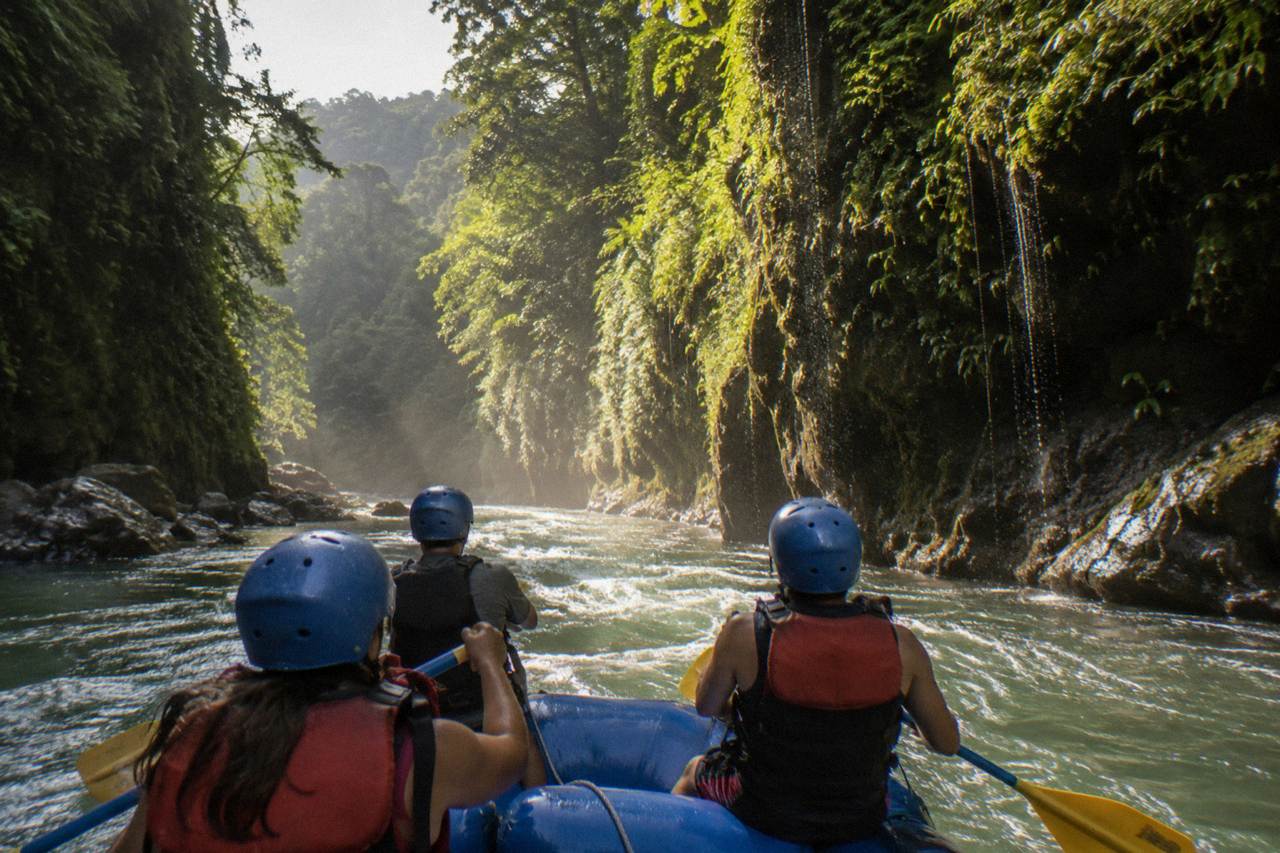
In Costa Rica, yes, from age 12: the national rafting norm INTE G60-1:2019 opens Class I to IV runs to paddlers aged 12 to 17, with an adult framework above that. But the law is a floor, not a promise. Operators on the Pacuare set their own minimums, some raise the age to 14 between June and November when water runs higher, and some listings simply say to check. To see how the whole country compares run by run, this guide to rapid classes across Costa Rica's rivers covers everything from mellow float sections to the Pacuare gorge itself.
That legal floor surprises a lot of parents. The instinct is that Class 4 water must be an adults-only proposition, and on many rivers in many countries it is. Costa Rica took a different route. The national technical norm for rafting, INTE G60-1:2019, sets minimum ages by rapid class rather than by river, so a 12 year old may legally paddle a Class III-IV run like the Pacuare's Lower section, provided the operator running the trip accepts children of that age and conditions on the day allow it.
The roster on this site reflects that split honestly. The White Water Rafting Pacuare River From San José listing states a minimum age of 12, carries a 4.7 rating from 250 reviews, and includes hotel pickup from selected San Jose hotels plus breakfast and lunch. The White Water Rafting Pacuare River with Lunch From Puerto Viejo listing also states 12, from $147 per person, rated 4.8 from 62 reviews. Most of the other day trips, including the most reviewed trip of all, Rafting Pacuare River One Day from Turrialba at 5.0 from 385 reviews, leave the minimum age to the listing itself.
So the short answer for a parent planning a family trip is: a child of 12 or 13 can paddle Class 4 water in Costa Rica on the listings that state that minimum, and the decision that matters is not the law but the operator, the season, and your own child. The rest of this article walks through each of those, with the age matrix from the national norm, the operator-by-operator picture, and the calmer options if your crew includes younger kids.
What Does Class 4 Actually Mean On The River?
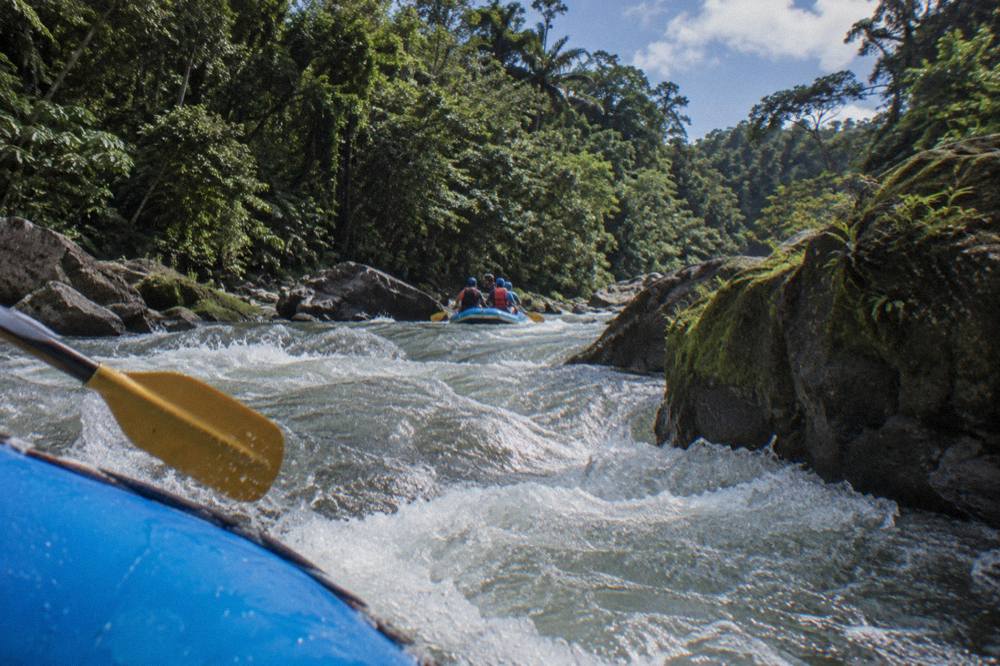
Class 4 means powerful, irregular water with constricted passages, steep drops and demanding maneuvers, where a guide needs precise paddle commands and a crew that responds instantly. On the Pacuare's Lower section, the commercial standard, operators describe roughly Class III water punctuated by Class IV drops such as the Huacas rapids inside the gorge.
The international scale runs from Class I, which is moving flat water, to Class VI, which is considered unrunnable commercially. Class 3 is moderate whitewater: waves, holes and currents that a competent crew can read and punch through, with room for error. Class 4 steps up in every dimension. The drops are steeper, the passages narrower, the consequences of a swim more serious, and self-rescue harder. Guides on Pacuare trips are trained in swift water rescue and carry safety kits for the full length of the trip, and life jackets and helmets are mandatory throughout, including the calm stretches between rapids.
The Pacuare's character matters here. Exploradores Outdoors grades its Pacuare run Class 4 at high water and Class 3+ at low water, which captures the essential truth of a rain-fed river: the class you get depends on the week you go. A traveler writing about a May trip described the river as very beginner friendly with lower water levels, while the same run in October or November can push many Class III rapids toward Class IV. There is no automated flow gauge on the river; a painted rock marker downstream of one lodge is the informal reference operators use, and "red and higher" means too high to run commercially.
For a parent, the practical translation is this: a Class III-IV Pacuare day trip in March is a different experience from the same listed trip in late October. The gorge section, with waterfalls dropping directly from the canyon walls and no road access along most of the run, is the draw, and it is also where the biggest water lives. Our guide to the Class III and IV Pacuare rapids breaks the named drops down rapid by rapid.
What Are The Costa Rica Age Rules By Rapid Class?
The national norm INTE G60-1:2019 sets the legal minimum ages: no rafting under 5; ages 5 to 7 may paddle Class I and II; ages 8 to 11 may paddle up to Class III; ages 12 to 17 may paddle up to Class IV; ages 18 and over have no class limit below VI, which is never run commercially. Under 12, Class 4 is not legal in Costa Rica, full stop.
That matrix is worth reading in full, because it governs every commercial rafting operation in the country, not just the Pacuare. The norm also requires operators to state the minimum age by rapid class for each trip, to check weather and river conditions, and to scout when flow rises. The full text is available from INAVirtual.
| Age of child | Maximum rapid class allowed | What that means on the Pacuare |
|---|---|---|
| Under 5 | None | No commercial rafting at all |
| 5 to 7 | Class I and II | The Pacuare's commercial Lower run is too big; no roster listing fits |
| 8 to 11 | Class I to III | Still below the Pacuare's Class IV drops; operators will decline |
| 12 to 17 | Class I to IV | Legal for the standard Pacuare day trip, operator minimums permitting |
| 18 and over | Class I to V | All commercial runs open; Class VI is never run |
Two honest caveats belong beside that table. First, the norm is a floor, and it says nothing about whether a particular child should paddle a particular river on a particular day; that judgment sits with the operator and the parents. Second, the roster's own stated minimums sometimes differ from the legal floor, and where they do, the stricter one wins. The listings that state a minimum age on this site all say 12, which lines up with the norm for Class IV water, and the rest defer to the operator's own policy on the booking page.
Is Your Child Ready For The Pacuare's Standard Day Trip?
Readiness is a size, swimming and temperament question more than an age question. A confident 13 year old who swims well, listens to instructions and weighs enough for a properly fitted adult life jacket is a better Class 4 candidate than a nervous 16 year old.
The gear is the hidden gatekeeper. Every commercial trip provides helmet, life jacket and paddle, but life jackets only work if they fit, and chest-size limits exist on some operations. One operator's listing, outside this roster, requires participants to weigh 45 to 90 kg and stand at least 1.35 m tall, which would rule out many 12 year olds and some 13 year olds. Apart from one San Jose listing that caps weight at 125 kg, the roster listings here do not publish weight or height limits, so the honest instruction is to check the listing and ask the operator directly if your child is small for their age.
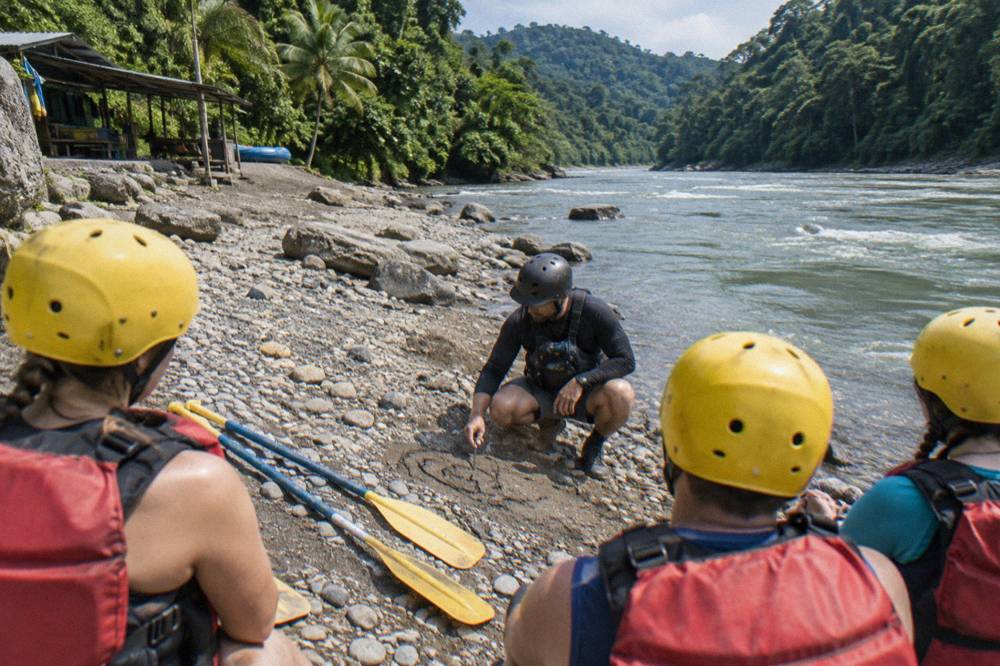
Swimming ability matters differently than parents expect. Nobody plans to swim, but on Class 4 water, swimmers happen, and the self-rescue position, floating on your back with feet up and downstream, is drilled in the safety talk before every launch. A child who panics in deep water is a risk to themselves and to the crew trying to retrieve them.
Footwear and clothing are the parent's responsibility, and they are non-trivial: secure sandals or river shoes that can get wet and muddy, no flip-flops, quick-dry clothes rather than cotton, sunscreen, a towel and a full change of clothes for after. Our what to wear rafting in Costa Rica guide covers the full kit list. Valuables such as phones and cameras brought on the raft remain the participant's responsibility; professional photo services are sold separately on several listings.
What Minimum Ages Do Pacuare Operators Actually Set?
Four of this roster's day-trip listings state a minimum age of 12, matching the legal floor for Class IV; the rest defer to the operator's own policy on the listing. Across Pacuare operators, 12 is the usual minimum, and at least one operator raises it to 14 from June to November when the water runs higher.
The seasonal raise is the detail most parents miss. Rios Adventure Travel, a Turrialba operator cited in the current season reporting, sets 12 from December through May and 14 from June through November. Other operators keep 12 year-round. The reason is water volume: the same rapid that reads as a punchy Class III in March can be a pushy Class IV in October, and an age policy calibrated for one is prudent to adjust for the other. More of these guides are collected on Pacuare Costa Rica Rafting.
| Listing (departure town) | Stated minimum age | Price | Rating and reviews | Duration |
|---|---|---|---|---|
| White Water Rafting Pacuare River From San José (San Jose) | 12 | from $125 per person | 4.7 from 250 reviews | 10 hours |
| White Water Rafting Pacuare River with Lunch From Puerto Viejo (Puerto Viejo) | 12 | from $147 per person | 4.8 from 62 reviews | 7 hours 30 minutes |
| Rafting Pacuare River One Day from Turrialba (Turrialba) | check the listing | from $99 per person | 5.0 from 385 reviews | 6 hours |
| From San José: Pacuare River Class 3 & 4 Rafting Day Trip (San Jose) | check the listing | from $125 per person | 4.7 from 291 reviews | 9 hours |
| Pacuare River Rafting Class IV from Turrialba (Turrialba) | check the listing | from $125 per person | too few reviews for a rating | 8 hours |
Note what the table does not say: no listing on this roster promises a specific rapid class on the day, and none should. The river is rain-fed and conditions change the run. Group sizes vary too, from up to 20 guests on the San Jose Destination Services trip to up to 40 on the most reviewed Turrialba departure, and the roster states each maximum plainly. Neither figure is a supervision ratio for children; the ratio that matters is trained guide to paddle crew, and one non-roster listing in the current reporting specifies a maximum of six participants per guide on San Jose day trips.
Which Pacuare Trips Fit Families With Younger Kids?
For a 12 year old, the standard Class III-IV day trips are the fit: the San Jose departure with hotel pickup, the most reviewed Turrialba departure from $99 per person, or the Caribbean coast departure from Puerto Viejo. For children under 12, no Pacuare listing on this roster qualifies, and the honest answer is a calmer river or a different activity, not a smaller Pacuare trip.
That second sentence deserves emphasis, because it is the one parents most want to route around. There is no gentle section of the Pacuare sold commercially to under-12s on this roster. The Class I and II water that the law allows for ages 5 to 7 exists on the river, but no operator here sells it as a family product. When a family has an 8 year old and a 14 year old, the realistic options are splitting the group, or choosing a different river for a shared day, with the Pacuare saved for a return trip when the younger one is old enough.
Among rivers outside this site's catalogue, the current comparison reporting describes the Balsa River near La Fortuna as typically Class II to III with minimum ages of 6 to 8, and the Reventazón's El Carmen section as Class II to III with a minimum age of 6. This site covers Pacuare trips only, but for under-12s, those other rivers, booked directly, are the right call.
For the 12-and-over family, the choice among Pacuare listings comes down to logistics. Departing from San Jose, the White Water Rafting Pacuare River From San José trip includes round-trip transport from selected hotels with breakfast and lunch included, rated 4.7 from 250 reviews. Departing from Turrialba, where the river is close enough that the total day shortens to about six hours, Rafting Pacuare River One Day from Turrialba is the roster's most reviewed trip at 5.0 from 385 reviews, from $99 per person, with a typical Costa Rican lunch at the end. Our rafting with kids and teens guide goes deeper on the family logistics.
What Should A Parent Check On The Listing Before Booking?
Check five things in order: the stated minimum age, the departure town and whether hotel pickup is included, the group maximum, the cancellation window, and what the listing says about conditions and reruns. Every one of these differs between listings that otherwise look identical, and the roster states each one only where the listing itself states it.
Pickup is the one that bites most often. On this roster, the Destination Services and Costa Rica Groups Travel San Jose listings both include hotel pickup and drop-off from San Jose hotels. From Puerto Viejo and on the La Fortuna shuttle trip, hotel pickup is listed. For several others, pickup is simply not stated, so confirm transport on the booking page before assuming anything.
Free cancellation is listed on all but one day trip, but three of the five multi-day lodge trips set longer windows, 3 to 6 days before departure per listing, which matters enormously for a family plan that hinges on school holidays and flights. Meals vary from lunch only on the Turrialba departures to breakfast and lunch on the San Jose and Caribbean departures. Group maximums run from 10 guests on the small-group Authentic Pacuare tour to 200 on the Full Day listing, a range that changes the feel of a family day completely.
Conditions language is the last check. Operators cancel or reroute in high water or flooding, and a listing that acknowledges this is being honest with you, not hedging. Ask the operator directly about the child's size for the life jacket, about whether the age minimum moves with the season, and about what happens if the trip is cancelled: the answers you get, in writing, before payment, are the real terms.
How Does The Season Change The Answer?
Water is highest and fastest from October to December and lowest from March to April, and the river is runnable all year. Operators prefer February to April for first timers and families, so a family's first Class 4 trip belongs in that window, while September to November is the bigger-water period some experienced paddlers seek out.
The rainfall record supports the operator preference. ERA5 modelled averages for the Turrialba area put March and April around 181 to 187 mm per month, against 412 to 477 mm in October and November, and station records cross-check the same shape: February to April driest, October to December wettest. In the wetter months, many Class III rapids become Class IV and the whole run tightens by roughly half a class, per the current season reporting. For a 12 or 13 year old on their first big-water trip, that difference is the whole ballgame.
For a family with flexible dates, green-season trips bring a higher chance of afternoon thunderstorms and bigger, colder, faster water. The Caribbean slope gets rain through much of the year, unlike the Pacific side, so there is no true dry-dry season here; there is only drier and wetter. Our best time to raft the Pacuare guide lays out the full calendar.
One seasonal detail matters to parents booking ahead: because some operators raise the minimum age to 14 from June to November, a family with a 12 year old booking an October trip may find the child declined at the meeting point even though the listing said 12 when booked. Confirm the age policy for your travel month on the booking page, in writing. For Caribbean coast families, the Puerto Viejo departure, rated 4.8 from 62 reviews and from $147 per person with hotel pickup, breakfast, lunch, lockers and changing facilities listed, states its minimum age as 12.
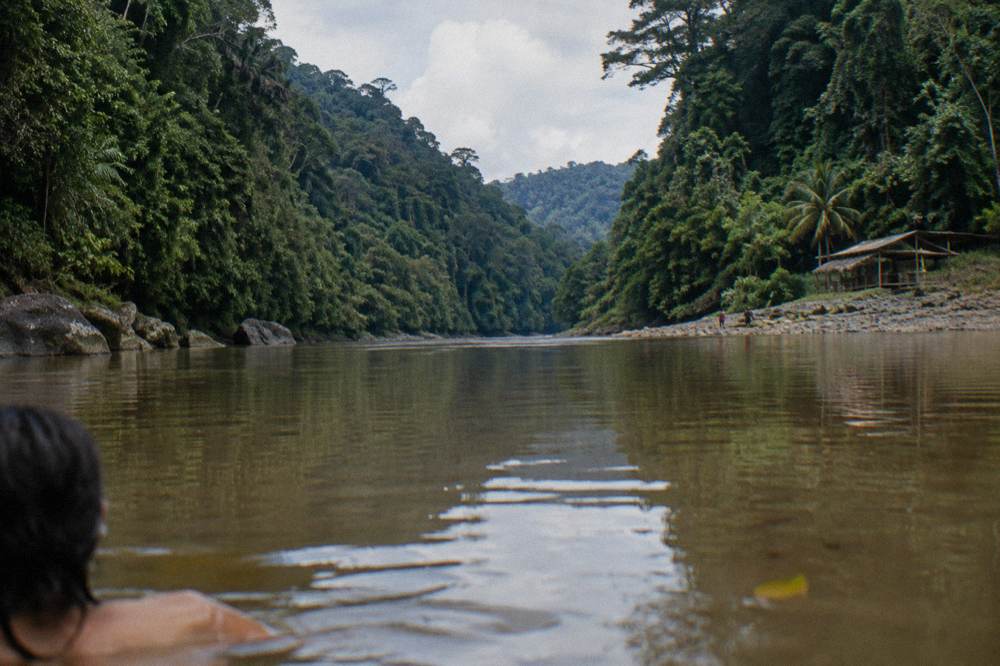
So Should You Take Your Kid Down Class 4 Water?
If your child is 12 or over, a confident swimmer, keen rather than conscripted, and you are traveling in the drier months, the standard Pacuare day trip is a reasonable and legal family adventure on the listings that state that minimum. If any one of those four conditions fails, wait a year or pick calmer water; the river is not going anywhere.
Framing the decision that way keeps it honest. Nothing in the national norm, and nothing in any listing on this roster, promises that Class 4 rapids are ok for every kid above the minimum age. What the rules and listings actually provide is a framework: a legal floor of 12 for Class IV water, operator policies that sometimes rise above it, seasons that reshape the river, and gear, guide training and safety protocols that make the trip survivable when things go sideways, not impossible for things to go sideways.
Families who weigh the whole picture tend to land well. The most reviewed departure on this roster, the Turrialba one-day trip, carries a 5.0 from 385 reviews. The San Jose departure with hotel pickup is the practical choice for families sleeping in the capital, and the Caribbean departure serves the coast. Each is a real, bookable product with free cancellation listed and meals included as stated.
The alternative, waiting, costs nothing. A river that has been rafted since Polish kayakers first descended it in the winter of 1980/81, and that runs all year, will still be there when your 11 year old turns 12. Costa Rica's age matrix is not a dare; it is a boundary, and treating it as one is the difference between a family story told for years and a day nobody wants to repeat.
Common Questions About Class 4 Rapids And Kids
Are Class 4 Rapids Ok For Kids?
In Costa Rica, children aged 12 to 17 may legally paddle Class I to IV water under the national rafting norm, so the standard Pacuare day trip is open to them on listings that state a minimum age of 12. Operators set their own, sometimes higher minimums, and some raise the age to 14 in the wetter months, so check the listing for your travel dates and your child's size and swimming ability.
What Is The Minimum Age For Class 4 Rapids In Costa Rica?
The national technical norm INTE G60-1:2019 sets the minimum age for Class IV water at 12. Ages 8 to 11 may paddle up to Class III, ages 5 to 7 up to Class II, and children under 5 may not raft at all. Individual operators may set higher minimums, and some do during the higher-water months of June to November.
Can A 12 Year Old Do The Pacuare River?
Yes, on the listings that state a minimum age of 12, such as the White Water Rafting Pacuare River From San José trip at 4.7 from 250 reviews. Many other Pacuare listings leave the minimum to the operator's policy on the booking page, so confirm before booking, and ask about life jacket fit if your child is small for their age.
Is The Pacuare Harder At Some Times Of Year?
Yes. Water is highest and fastest from October to December and lowest from March to April, and the river is runnable all year. Operators prefer February to April for first timers and families. In the wettest months, many Class III rapids become Class IV, and at least one operator raises its minimum age to 14 from June to November.
What If My Child Is Under 12?
No Pacuare listing on this roster takes children under 12, and the law does not allow under-12s on Class IV water regardless. The realistic options are a calmer river, such as the Class II to III runs described on other rivers near La Fortuna and San Jose, or saving the Pacuare for a later trip. There is no gentle commercial Pacuare section sold to young children.
Do The Day Trips Cancel In High Water?
Operators can cancel or reroute in high water or flooding, and listings that acknowledge this are being straightforward about a rain-fed river. Free cancellation is listed on all but one day trip, while three of the five multi-day lodge trips set windows of 3 to 6 days before departure. Confirm the policy on the booking page before you pay.