Where Is The Best White Water Rafting In Costa Rica?
A region by region comparison of Costa Rica's rafting rivers, from the Pacuare gorge to the Balsa and Sarapiqui, with prices and trip data from real listings.
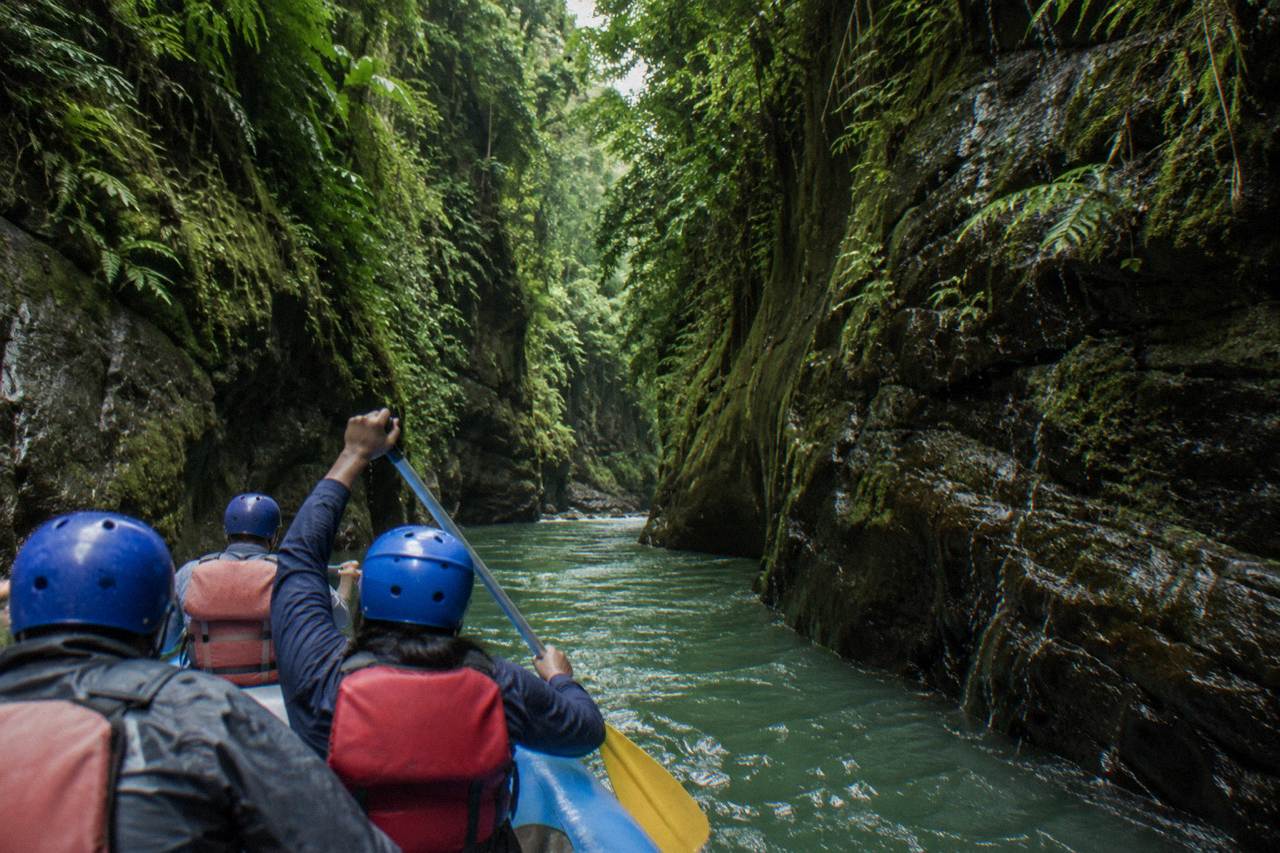
Costa Rica's rafting splits into three slopes: the Caribbean slope, home of the Pacuare and the Reventazon, the northern lowlands around Arenal, where the Balsa and the Sarapiqui run, and the Pacific side near Quepos, with the Savegre and the Naranjo. The Caribbean slope holds the country's flagship long jungle-canyon run, the Pacuare, a river commercial trips descend through a gorge with waterfalls dropping from the walls and no road access along most of the run. The roster this site lists is all Pacuare, twenty one listings from San Jose, Turrialba, the Caribbean coast, La Fortuna and Siquirres, so the comparison below ends, honestly, where the bookable trips are. If you're weighing the flagship gorge run against the northern lowlands option, our Pacuare vs Sarapiqui guide covers rapid classes, scenery, drive times, and which river suits your style.
For a full day of Class III to IV whitewater inside a roadless jungle gorge, the Pacuare is the river the country's rafting industry is built around, and it is the only river with bookable trips on this site. The most reviewed listing is Rafting Pacuare River One Day from Turrialba, 5.0 from 385 reviews, from $99 per person. If your priority is gentler water or a shorter drive, other rivers and regions fit better.
The honest version of the "best" question is a criteria question. Nobody hands out an official trophy, and the ranking language you see on travel sites traces back to operator marketing rather than a measured contest. What the verifiable record shows is that Costa Rica's rafting regions differ by rapid class, season, minimum age and trip length, and the Pacuare sits at the top of that stack on the two measures that matter most to traveling rafters: length of continuous gorge whitewater and scenery you cannot reach by road.
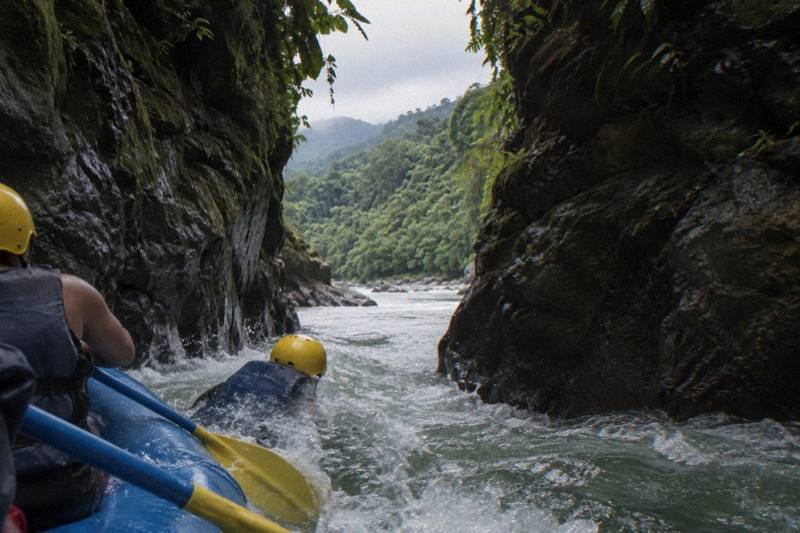
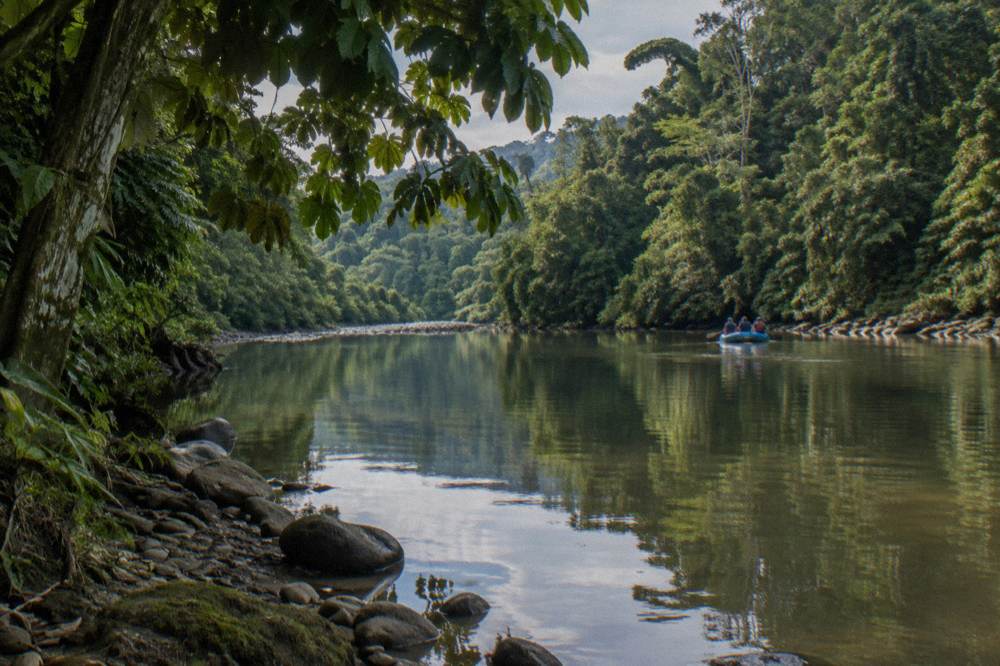
The Pacuare rises in the Cordillera de Talamanca and runs to the Caribbean. Its length is contested, about 108 to 133 km depending on the source, and its rafted stretches include an Upper Upper section of roughly 26 km at Class II to IV, an Upper section at Class IV and V mostly run by creek kayakers, and the Lower section, Class III and IV, which the commercial day trips and lodge trips use. The name means "baby macaw" in the Cabecar language, and the run passes through Cabecar indigenous territory inside a protected forest reserve.
That Lower gorge is what people mean when they call the Pacuare the country's flagship run. Operators report day trips covering roughly 26 to 30 km with dozens of rapids, and one operator's listing describes a two day split of 13 km with 14 rapids on the first day and 23 km with about 30 rapids on the second, ending near Siquirres. Water temperature is typically 21 C and higher, so no wetsuit is needed. Guests commonly report wildlife along the banks, though nothing on a river is promised.
For readers who want the short answer in booking terms: the Turrialba day trip from $99, the San Jose Class 3 and 4 day trip at $125 with hotel pickup, and the Ticos River Adventures Pacuare River listing, 4.9 from 204 reviews from $125, are three Pacuare products worth comparing first.
How Does The Pacuare Compare With Sarapiqui And Balsa?
The Pacuare offers a long continuous Class III to IV gorge run with lodge based multi day options; the Balsa near La Fortuna is a shorter, gentler Class II to III family run; the Sarapiqui in the northern lowlands gives punchy Class III to IV rapids plus calmer wildlife stretches. None of the three is a substitute for the others, they serve different paddlers.
The Balsa River, in the Arenal and La Fortuna area, is the region's family workhorse. Commercial runs are typically Class II to III, with upper sections reaching Class III to IV, minimum ages often 6 to 8, and roughly two hours and 10 km on the water. If your group includes an eight year old, the Balsa's profile fits in a way the Pacuare's Class III to IV gorge does not. This site carries no Balsa listings, so we cannot quote you a price on one; what we can point to is the La Fortuna departure that gets you onto the Pacuare instead, the La Fortuna: Pacuare Rafting with SJO or Puerto Viejo Shuttle, rated 5.0 from 20 reviews, from $150 per person, a 10 hour day on Class III-IV water with breakfast and lunch included.
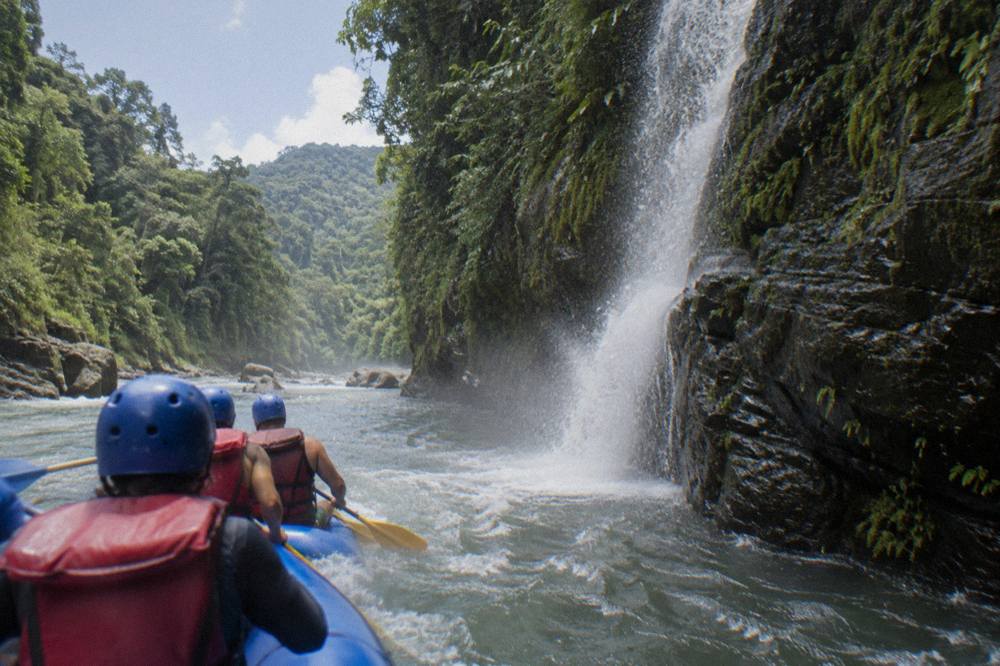
The Sarapiqui, in the northern lowlands and reachable from La Fortuna or San Jose, runs Class III to IV sections with shorter, punchier rapids followed by calmer wildlife watching stretches, and minimum ages there are often 12 to 15. It is a strong second river for paddlers who have already done the Pacuare and want variety, but again, this site's roster sells no Sarapiqui trip, so we route you to the Pacuare listings rather than quote a price we cannot stand behind.
On the Pacific side, the pattern changes completely. The Savegre near Manuel Antonio and Quepos is Class II to III and scenic, the Naranjo is Class III to IV and runs only roughly June to November. The Caribbean slope, by contrast, gets rain through much of the year, which is why the Pacuare is runnable all year while Pacific rivers have tighter windows. The official Costa Rica tourism rafting page is the reference to check when a source disagrees with this one.
Here is the comparison in one view, built from sourced river data and this site's listings.
| River | Region | Typical class | Best fit | On this site's roster |
|---|---|---|---|---|
| Pacuare | Caribbean slope | III to IV (V on the Upper, kayakers) | Full day gorge trips, lodge overnights | Yes, 21 listings |
| Sarapiqui | Northern lowlands | III to IV, punchy, plus calm stretches | Second river, wildlife paddling | No |
| Balsa | Arenal / La Fortuna | II to III | Families with kids 6 to 8 | No |
| Reventazon | Caribbean slope | II to III lower, IV to V Pascua | Beginners from San Jose | No |
| Savegre | Pacific, Quepos area | II to III | Scenic family runs | No |
| Naranjo | Pacific, Quepos area | III to IV | Short window, roughly June to November | No |
The one caution in that table: the Reventazon's Pascua section is Class IV to V and for experienced rafters only. Neither it nor any Pacific run is sold here, so treat those rows as context, not a booking menu.
Which Rivers Suit Beginners And Which Suit Experts?
Beginners are commonly placed on Class II to III water, which in practice means the Balsa or the Reventazon's lower sections; the Pacuare's Class III to IV gorge takes first timers too, and operators prefer the drier February to April window for them. Genuine expert water in Costa Rica is the Reventazon's Pascua section and the Pacuare's Upper, mostly run by kayakers.
The national norm sets the age floors. Under Costa Rica's rafting technical standard, children under 5 run no class, ages 5 to 7 may run Class I and II, ages 8 to 11 Class I to III, ages 12 to 17 Class I to IV, and adults 18 and over Class I to V. That makes 12 the legal floor for a Class III-IV Pacuare trip, and the listings that state a minimum age on this roster say 12. Operators can and do go higher: some raise the Pacuare minimum from 12 to 14 between June and November when the water runs higher, so check the listing for the month you are traveling.
A traveler on one operator's trip described the Pacuare in May, with lower water, as very beginner friendly, and dry season paddling from December to April offers lower, more predictable water that suits first timers, families and photographers. In the rainy season, many Class III rapids step up to Class IV, and in the dry season some Class IV rapids drop toward Class III. One operator grades its Pacuare run Class 4 at high water and Class 3+ at low. Green season increases rapid intensity by about half a class, per one rental company's rafting writeup.
So the honest beginner answer is two paths. If your group wants maximum scenery with forgiving water and has children under 12, a Class II to III river elsewhere fits better, and you should book it directly with operators there. If everyone is 12 or older and reasonably game, the Pacuare in the February to April window is the beginner trip this site can actually sell you, and the most reviewed way onto it is the Turrialba day trip from $99 with a typical Costa Rican lunch at the end.
What Does Each Region Cost And How Long Do Trips Run?
On this site's roster, Pacuare day trips run from $99 to $195 per person and multi day lodge trips from $269 to $505 per person, with durations from 4 hours to 3 days depending on the departure town. There are no Balsa, Sarapiqui or Pacific river listings here, so no honest price comparison across rivers is possible from this catalogue.
What follows is the price spread of the bookable Pacuare products, using only the figures on each listing. This is the table to screenshot if you are budgeting.
| Listing | Departure | Price | Rating | Duration |
|---|---|---|---|---|
| Rafting Pacuare River One Day from Turrialba | Turrialba | from $99 | 5.0 from 385 reviews | 6 hours |
| San José Caribe Arenal Pacuare River 1-Day Rafting Adventure | San Jose, Puerto Viejo or La Fortuna | from $112 | too few reviews for a star claim | 1 day |
| Pacuare River Whitewater Rafting from San Jose | San Jose | from $119 | 4.6 from 70 reviews | 12 hours |
| Pacuare River Rafting (Ticos River Adventures) | Turrialba | from $119 | 4.9 from 27 reviews | 4 hours |
| Rafting Pacuare River from Turrialba | Turrialba | from $120 | 5.0 from 196 reviews | 6 hours |
| White Water Rafting Pacuare River From San José | San Jose | from $125 | 4.7 from 250 reviews | 10 hours |
| From San José: Pacuare River Class 3 & 4 Rafting Day Trip | San Jose | from $125 | 4.7 from 291 reviews | 9 hours |
| Pacuare River (private, Ticos) | Turrialba | from $125 | 4.9 from 204 reviews | 4 hours |
| Pacuare River Rafting Class IV from Turrialba | Turrialba | from $125 | too few reviews for a star claim | 8 hours |
| Full Day Pacuare River Rafting Experience | San Jose | from $124 | 4.8 from 17 reviews | 1 day |
| 1 day Pacuare River Rafting with Transportation and Lunch | San Jose | from $128 | too few reviews for a star claim | 4 hours 30 minutes |
| Rafting Pacuare Costa Rica | Turrialba | from $140 | 4.9 from 46 reviews | check the listing |
| White Water Rafting Pacuare River with Lunch From Puerto Viejo | Puerto Viejo | from $147 | 4.8 from 62 reviews | 7 hours 30 minutes |
| La Fortuna: Pacuare Rafting with SJO or Puerto Viejo Shuttle | La Fortuna | from $150 | 5.0 from 20 reviews | 10 hours |
| The Authentic Pacuare River Costa Rica Rafting Tour | San Jose | from $195 | too few reviews for a star claim | 9 hours |
| San José Caribe Arenal Pacuare Hiking and Rafting 2-Day Trip | San Jose, Puerto Viejo or La Fortuna | from $269 | too few reviews for a star claim | 2 days |
| 2 Day Pacuare River Rafting and Hiking Tour | San Jose | from $375 | too few reviews for a star claim | 2 days |
| Two-Day Rafting Tour on the Pacuare River Transportation included | San Jose | from $370 | too few reviews for a star claim | 2 days |
| 2-Day Tour of the Pacuare River | Siquirres | from $397 | too few reviews for a star claim | 2 days |
| 3 Day Tour of the Pacuare River | Siquirres | from $505 | too few reviews for a star claim | 3 days |
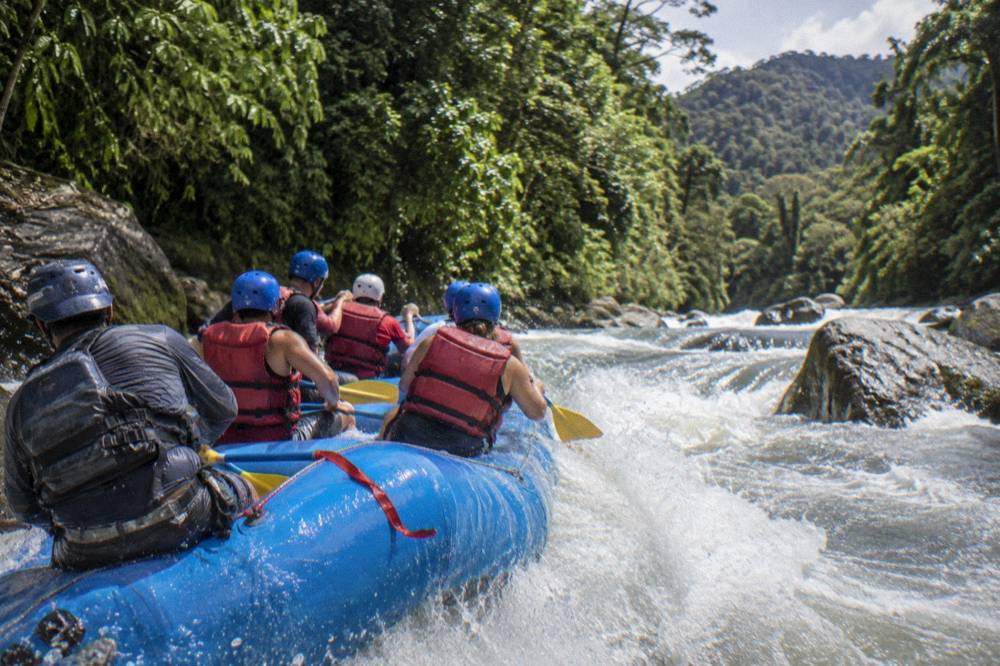
Read the durations carefully, because the listing duration is total trip length, not time on the water. The San Jose trips run 9 to 12 hours because of the drive, while the Turrialba departures compress to 4 to 8 hours since the put in is close. Drive times commonly reported: San Jose to Turrialba about 1 hour 20 to 1 hour 40, San Jose to Puerto Viejo de Talamanca about 3 hours 30 to 4 hours 25, La Fortuna to Turrialba about 3 hours 30. The full index of guides sits on Pacuare Costa Rica Rafting.
One Caribbean-coast trip deserves a mention for travelers combining coasts: the White Water Rafting Pacuare River with Lunch From Puerto Viejo, from $147, rated 4.8 from 62 reviews, includes hotel pickup in Puerto Viejo, a traditional breakfast, a riverside lunch, lockers and changing facilities. It is a Caribbean departure, but it pairs naturally with a Puerto Viejo beach stay.
When Should You Plan Your Rafting Trip In Costa Rica?
Water on the Pacuare is highest and fastest from October to December and lowest from March to April, and the river is runnable all year. Operators prefer February to April for first timers and families, while some experienced rafters seek the bigger September and October water, accepting a higher chance of afternoon thunderstorms.
The rainfall pattern backs that up. ERA5 modelled averages for the Turrialba area show the driest months as February to April, at roughly 180 to 200 mm each, and the wettest second half of the year, with November near 477 mm. Station records cross-check the same shape: February to April driest, October to December wettest. The two datasets disagree on the single wettest month, so treat the season, not the month, as the planning unit.
Age rules shift with the water. One operator sets the Pacuare minimum at 12 from December to May and 14 from June to November, while another keeps 12 year round. Operators also cancel or reroute in high water or flooding, so a wet season booking always carries that small asterisk. If your dates are fixed to the green season and your party includes a 12 or 13 year old, confirm the age rule on the listing for that exact month before you book.
For a deeper run through the calendar, including the minimum age shifts month by month, see the best time to raft guide and the rainy season rafting page.
How Do You Choose A Departure Town For Your Trip?
Departure town is the biggest practical lever on price and day length: Turrialba departures are the shortest and cheapest days from $99, San Jose trips add the drive and run 9 to 12 hours, and Puerto Viejo or La Fortuna departures suit travelers already on those coasts, from $147 and $150 respectively.
If you are sleeping in San Jose, the comparison is between the From San José: Pacuare River Class 3 & 4 Rafting Day Trip, from $125 with hotel pickup and a 9 hour day, and the White Water Rafting Pacuare River From San José, 4.7 from 250 reviews, from $125, also with hotel pickup from selected hotels and a 10 hour day. The second one runs bigger groups, up to 20 guests, while the first does not state a group size. Both include breakfast and lunch and list free cancellation.
If you can base yourself in Turrialba even one night, the calculus changes. The town sits about 1 hour 20 to 1 hour 40 from San Jose by road, and its departures put you on the river sooner and back in town earlier. Adrenalina Rafting's Turrialba day trip, the most reviewed listing on the whole roster at 5.0 from 385 reviews, is also the cheapest at from $99, up to 40 guests, helmets, vests and paddles provided, with a typical Costa Rican lunch at the end of the trip. For a smaller, private format, the Ticos River Adventures Pacuare River listing is a private tour, 4.9 from 204 reviews, from $125, and their shared Turrialba departure includes a deli style lunch, a safety kayak and an insurance policy.
For paddlers chasing the hardest water sold here, there is exactly one listing named for it: Pacuare River Rafting Class IV from Turrialba, from $125, up to 18 guests, lunch included. And for the full gorge experience with a night inside the canyon, the San José Caribe Arenal Pacuare Hiking and Rafting 2-Day Trip, from $269, includes 2 breakfasts, 2 lunches, 1 dinner, one night at Pacuare River Lodge, two days of rafting with hikes, insurance, and transport from San Jose, Puerto Viejo or La Fortuna. Three of the five lodge trips carry longer cancellation windows, 3 to 6 days before departure, not the day before.
So Which River Should You Actually Book?
If the question is where the best white water rafting in Costa Rica is, the criteria answer is the Pacuare: the flagship long roadless Class III to IV gorge, the only river with multi day lodge trips on this roster, and the deepest review pool, 5.0 from 385 reviews on its most reviewed day trip from $99. Book Sarapiqui or Balsa only if gentler water or young children rule the Pacuare out. To see how the Pacuare stacks up against the Sarapiqui, Balsa and Pacific rivers across difficulty, season, price and trip length, read the full river comparison for Costa Rica rafting.
That is a verdict by data, not by slogan. No other river in the sourced comparison matches the Pacuare's combination of continuous gorge whitewater, year round runnable status and lodge based overnights, and no other river in this catalogue has a single bookable listing. The Balsa wins on minimum age, the Sarapiqui on compact punchy rapids plus wildlife floats, the Savegre on Pacific convenience, and the Reventazon on gentle access from the capital. The Pacuare wins on the thing most people asking this question actually mean.
For most readers the booking decision collapses to three products, and the trio below covers them: the Turrialba day trip if you can base near the river, the San Jose Class 3 and 4 trip with hotel pickup if you cannot, and the Ticos private or shared Turrialba options if you want a small group or a private raft. Two of the three list free cancellation; the Ticos private listing does not, so read its terms.
The last thing to check before you book is fit, in both senses. Confirm the minimum age for your travel month on the listing itself, since operators raise it in the wetter months, and check the listing for any weight or gear sizing limits. Bring secure water shoes, not flip flops, a change of clothes, sunscreen and a towel; operators provide the helmet, vest and paddle. Outside this roster, one operator's listing specifies a maximum of six participants per guide, and another lists 45 to 90 kg with 1.35 m minimum height, which tells you these limits are real and vary. What to wear and what to bring each have a full packing guide elsewhere on this site, alongside the one day trip walkthrough if you want the hour by hour shape of the day.
The river itself, for what it is worth, has been defended as fiercely as it is run. A state hydroelectric plan was rejected in 2005 after years of opposition on pollution, tourism and ecology grounds, and the main channel now sits inside a protected forest reserve under a decree that bars large new hydro projects, though the exact legal text is contested between sources. The upshot for a rafter is simple: the gorge you paddle through tomorrow is substantially the gorge the first rafting expedition met in February 1981, waterfalls, Cabecar territory and all, minus a dam that never got built. That, more than any ranking, is the reason the answer to this question keeps being the same river.
Common Questions About White Water Rafting In Costa Rica
Where Is The Best White Water Rafting In Costa Rica?
By the criteria that matter, length of continuous gorge whitewater, year round runnable status and multi day options, the Pacuare on the Caribbean slope. Its most reviewed listing, Rafting Pacuare River One Day from Turrialba, is rated 5.0 from 385 reviews and starts from $99 per person. The Balsa and Savegre suit families wanting gentler Class II to III water.
Can Beginners Raft The Pacuare?
Yes, operators regularly take first timers on the Class III-IV Lower Pacuare, and they prefer the February to April window for beginners and families because the water is lower and more predictable. In the rainy season many Class III rapids step up to Class IV, and some operators raise the minimum age from 12 to 14 between June and November.
What Is The Minimum Age For Rafting In Costa Rica?
The national technical norm sets age floors by rapid class: under 5 runs nothing, 5 to 7 runs Class I and II, 8 to 11 runs Class I to III, 12 to 17 runs Class I to IV, and adults 18 and over run Class I to V. A Class III-IV Pacuare trip is therefore legally open from age 12, and operators may set higher minimums, so check the listing for your month.
How Much Does A Pacuare Rafting Trip Cost?
On this site's roster, day trips run from $99 to $195 per person depending on the departure town and operator, and multi day lodge trips run from $269 to $505 per person. The cheapest firm priced listing is the Turrialba day trip at from $99, which includes lunch. Prices are in US dollars as shown on each listing.
Is Costa Rica Rafting Available All Year?
The Pacuare is runnable all year, with the highest and fastest water from October to December and the lowest from March to April. Pacific side rivers have tighter windows, with the Naranjo operating only roughly June to November. Operators can cancel or reroute in high water or flooding, so wet season bookings carry that caveat.