White Water Rafting In Costa Rica: Which River And Which Trip
Most first-time rafters in Costa Rica end up choosing between the Pacuare, the Sarapiqui, the Balsa and a Pacific-side run. Here is how the rivers compare, what trips actually cost, and why the Pacuare gorge is the run most operators point to.
Short answer
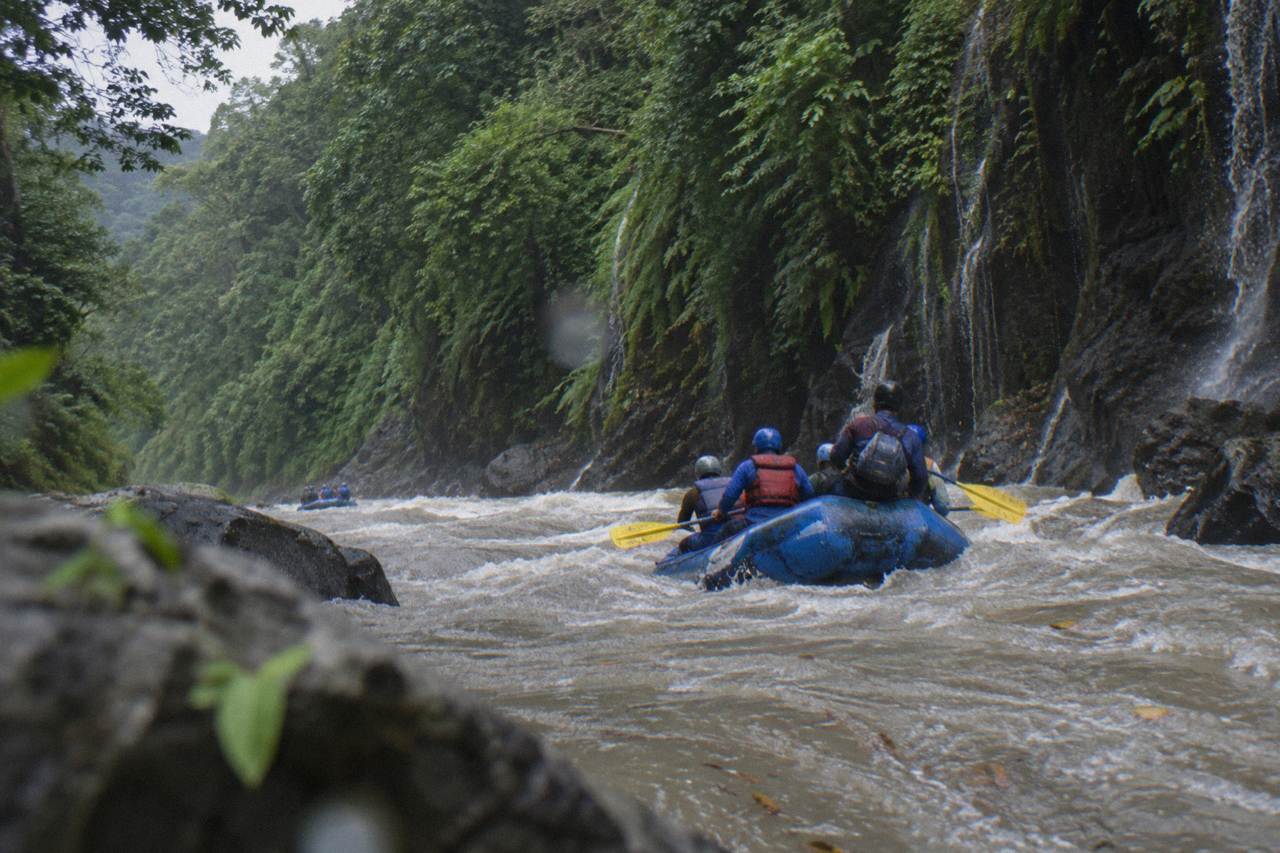
White water rafting in Costa Rica runs year-round on Caribbean-slope and Pacific-slope rivers. The Pacuare is the flagship Class III-IV jungle gorge run, from $99 per person for a day trip from Turrialba and $269 per person for a 2-day lodge trip. The Balsa suits families; the Pacuare suits first timers who want the big scenery.
Where Can You Go White Water Rafting In Costa Rica?
Costa Rica's rafting splits into three regions: the Caribbean slope, home to the Pacuare and Reventazon; the northern lowlands around Arenal, home to the Balsa and the Sarapiqui; and the Pacific side near Manuel Antonio, home to the Savegre and the Naranjo. The Pacuare is the long jungle-canyon run that anchors the Caribbean slope, and it is runnable all year.
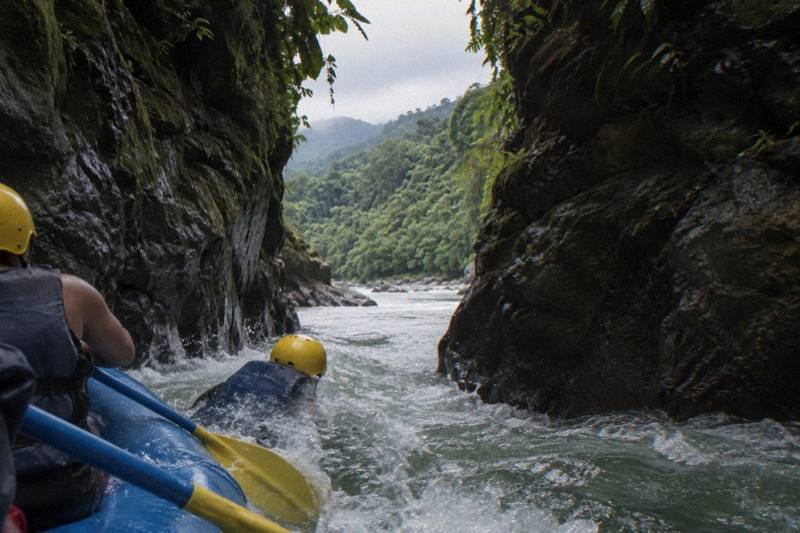
The Caribbean slope is where the country's rafting reputation was built. The Pacuare rises in the Cordillera de Talamanca and drops through a protected forest reserve toward the Caribbean near Siquirres, cutting a gorge with waterfalls on the walls and almost no road access for much of the run. Operators commonly describe standard day trips as roughly 26 to 30 km of mostly Class III-IV water, though exact figures vary by operator and water level. The river's length itself is contested, about 108 to 133 km depending on the source, which tells you how much of it remains wild country. The Reventazon next door is the gentler sibling: its El Carmen section is Class II-III with a minimum age of 6, and its Pascua section is Class IV-V for experienced rafters only, as the national tourism board's rafting overview notes.
The northern lowlands serve the La Fortuna and Arenal crowd. The Balsa River runs Class II-III commercial trips with minimum ages of 6 to 8, roughly two hours and 10 km on the water, which makes it the classic family choice. The Sarapiqui offers Class III-IV sections with shorter, punchier rapids plus calmer wildlife stretches, and minimum ages there often sit at 12 to 15. On the Pacific side, the Savegre is a scenic Class II-III run and the Naranjo is a Class III-IV run that operates only in the June to November window when that watershed has enough water.
One thing matters before anything else on this site: the catalogue of bookable trips is entirely Pacuare. Twenty-one listings, from eight San Jose day trips to a three-day expedition. So this guide orients you across the country's rivers honestly, then routes you to the Pacuare trips you can actually book here, including the most reviewed of them, Rafting Pacuare River One Day from Turrialba, 5.0 from 385 reviews, from $99 per person.
| Region | River | Typical commercial class | Character |
|---|---|---|---|
| Caribbean slope | Pacuare | III-IV | Long jungle gorge, flagship run, bookable on this site |
| Caribbean slope | Reventazon | II-III (El Carmen) to IV-V (Pascua) | Gentler family option, or expert-only Pascua section |
| Northern lowlands | Balsa | II-III | Short family run from La Fortuna and Arenal |
| Northern lowlands | Sarapiqui | III-IV | Punchy rapids with calm wildlife stretches |
| Pacific side | Savegre | II-III | Scenic run near Manuel Antonio, family friendly |
| Pacific side | Naranjo | III-IV | Operates roughly June to November only |
Which River Should A First Timer Choose?
For a first rafting trip in Costa Rica, the Pacuare is the river most operators point to, and they prefer running it February to April for first timers and families, when water is lower and more predictable. Beginners with young children should instead look at the Class II-III runs on the Balsa or the Reventazon, since Pacuare trips are Class III-IV. Once you've picked your river, the guide to fitting a Pacuare rafting day into a first Costa Rica trip shows how to build the rest of your week around it.
The counterintuitive part is that Class III-IV is not reserved for athletes. A commonly reported pattern is that in the rainy season many Class III rapids step up to Class IV, and in the dry season Class IV rapids often mellow to Class III, so the same trip feels meaningfully different by month. One traveler described the river as very beginner friendly in May with lower water. If you want the famous gorge and you have never paddled before, February to April is the window operators themselves recommend.
Families with children under 12 face a hard constraint, not a preference. The national rafting norm, INTE G60-1:2019, sets minimum ages by rapid class: ages 5 to 7 may only run Class I and II, ages 8 to 11 Class I to III, and ages 12 to 17 Class I to IV. A Class III-IV Pacuare run is legally open from age 12, and several roster listings state a minimum age of 12. Some operators raise their own minimum to 14 from June to November when water runs higher. For a 9-year-old, the Balsa or the Reventazon's El Carmen section is the honest answer, not the Pacuare. Our Pacuare age limits and fitness guide breaks the rules down family by family.
If your base is San Jose or Turrialba, the Pacuare decision is easy. If your base is La Fortuna, you are weighing the Balsa against the Pacuare with a transfer: La Fortuna to Turrialba is about 3h30, commonly reported, and there is a Pacuare listing that departs La Fortuna with a shuttle onward to San Jose airport or Puerto Viejo, rated 5 from 20 reviews, from $150 per person. That trip turns the long drive into the transport leg itself. The picks below cover a Turrialba day run and two lodge overnights.
How Much Does A White Water Rafting Trip Cost?
On this site's roster, Pacuare day trips run from $99 to $195 per person depending on departure town and inclusions, and multi-day lodge trips run from $269 to $505 per person. The cheapest firm-priced listing is Rafting Pacuare River One Day from Turrialba at from $99 per person; the most reviewed San Jose departure is from $125.
The price ladder is mostly about transport, not the river. Turrialba sits close to the put-in, so Turrialba departures are the value tier: from $99 per person for the Adrenalina Rafting day trip, from $119 for Ticos River Adventures' Pacuare River Rafting, 4.9 from 27 reviews, and from $120 for Explornatura's Rafting Pacuare River from Turrialba, 5.0 from 196 reviews. San Jose departures carry the cost of a roughly 1h20 to 1h40 drive each way and land between $112 and $195. The Caribbean departure from Puerto Viejo, White Water Rafting Pacuare River with Lunch, is from $147 per person, rated 4.8 from 62 reviews. If you want the full picture of what these trips cost across every operator and trip length, our guide to white water rafting trip prices spells out what each package covers and where the extras add up.
| Departure | Listing | Rating | Price from | Duration |
|---|---|---|---|---|
| Turrialba | Rafting Pacuare River One Day from Turrialba | 5.0 from 385 reviews | $99 per person | 6 hours |
| Turrialba | Pacuare River Rafting | 4.9 from 27 reviews | $119 per person | 4 hours |
| San Jose | From San Jose: Pacuare River Class 3 & 4 Rafting Day Trip | 4.7 from 291 reviews | $125 per person | 9 hours |
| San Jose | White Water Rafting Pacuare River From San Jose | 4.7 from 250 reviews | $125 per person | 10 hours |
| Puerto Viejo | White Water Rafting Pacuare River with Lunch From Puerto Viejo | 4.8 from 62 reviews | $147 per person | 7 hours 30 minutes |
| Multi-day | San Jose Caribe Arenal Pacuare Hiking and Rafting 2-Day Trip | 5 from 3 reviews | $269 per person | 2 days |
| Multi-day | 3 Day Tour of the Pacuare River | 4.6 from 14 reviews | $505 per person | 3 days |
Watch what the price includes. Every one-day listing on the roster includes a meal: the Turrialba trips include lunch, and the San Jose and Caribbean departures typically include breakfast and lunch. Several San Jose listings include hotel pickup, including From San Jose: Pacuare River Class 3 & 4 Rafting Day Trip, 4.7 from 291 reviews, from $125. Photo packages and gratuities are sold separately on most listings; one operator prices its photo package at $32 per person as an exclusion, not an inclusion. In Turrialba, Travesias Naturales' day trip is 4.9 from 46 reviews, from $140 per person.
A note on prices you will see elsewhere: operator websites and market pages quote figures like $95, $99 plus tax, or $145 for a one-day Pacuare trip, and those are market snapshots, not this roster's catalogue prices. Treat the numbers above as the listings' own prices, and check the live listing for the date you want.
When Is The Best Season For Rafting In Costa Rica?
The Pacuare is runnable all year, with the highest and fastest water from October to December and the lowest water from March to April. Operators prefer February to April for first timers and families; September to October brings bigger water that some experienced rafters choose on purpose. On the Pacific side, the Naranjo runs only around June to November.
This is the one point where the country's two slopes genuinely diverge. The Caribbean slope, where the Pacuare flows, gets rain through much of the year, so the river never closes for lack of water; it just gets bigger and faster. ERA5 modelled rainfall averages for the Turrialba area show the driest stretch from February to April (March around 181 mm) and the wettest from October to December (November around 477 mm), and station records agree on the pattern even where they disagree on the single wettest month. Green-season rafting commonly bumps rapid intensity by about half a class, and one operator, Rios Adventure Travel, raises its Pacuare minimum age from 12 to 14 between June and November for exactly that reason, as one age-rule explainer notes.

For trip planning, the practical reading is simple. Book February to April if you want exciting-but-manageable water, drier days and the best photography conditions. Book September to early December if you are an experienced rafter who wants the river at its most powerful, accepting that afternoon thunderstorms are likelier and that operators can cancel or reroute in genuinely high water; the Pacuare is rain-fed and operators make those calls on the day, with no promise of conditions. Our best time to raft guide works through each month in detail.
One seasonal quirk worth knowing: there is no automated flow gauge on the Pacuare. Operators read the river the old way, including a painted rock marker downstream of one lodge that locals use as a rough high-water signal. If a listing says the operator monitors conditions, that is what it means in practice.
What Do The Rapid Classes Actually Mean In Costa Rica?
Costa Rica uses the international I to VI scale, and the national norm INTE G60-1:2019 ties ages to it: under 5 may not raft at all, 12 to 17 may run Class I to IV, and 18 and over Class I to V, with Class VI never run commercially. The Pacuare's commercial stretch is Class III-IV; the Balsa is mostly II-III; the Naranjo is III-IV.
Class III is moderate whitewater: waves, holes and drops with clear channels, requiring guide commands and real paddling. Class IV adds consequences: steeper drops, tighter lines and must-make moves, which is why the same stretch of the Pacuare gets described as Class 3+ at low water and Class 4 at high water depending on the month. Class V, like the Reventazon's Pascua section, is expert territory with serious hazards. Class VI is not run commercially, and the Costa Rican norm says so explicitly.
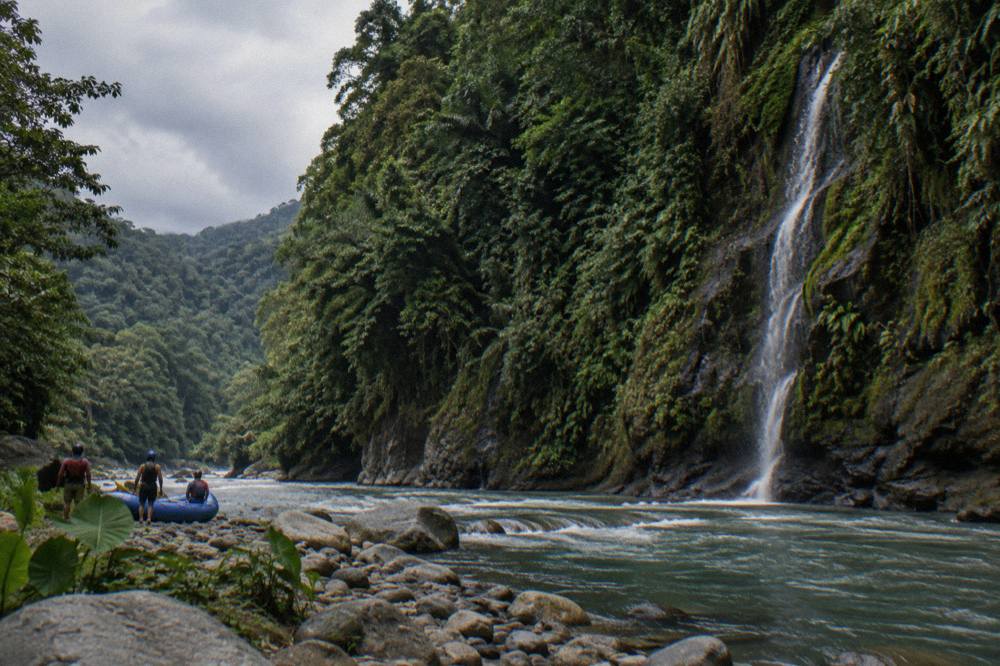
The Pacuare's named Lower-section rapids give the classes a face. Upper and Lower Huacas are Class IV, Doble Drop is Class III, and Cimarrones is Class IV, all inside the Huacas River Gorge, where the Huacas waterfall drops about 150 feet directly into the river channel. Can a beginner do Class IV? Genuinely yes, with a guide, on a river the operators know daily, in the right month. Our Class III-IV Pacuare rapids guide names the rapids and what each one asks of you.
| Class | What it looks like | Who it suits | Costa Rica example |
|---|---|---|---|
| I to II | Flat water and small waves | Ages 5 to 7 by national norm | Reventazon El Carmen |
| III | Moderate waves, clear lines, guide commands | Ages 8 and up by national norm | Balsa, Savegre |
| III-IV | Steeper drops, must-make moves | Ages 12 and up by national norm | Pacuare commercial run, Sarapiqui, Naranjo |
| IV-V | Serious hazards, expert only | Adults with experience | Reventazon Pascua, Pacuare Upper section |
What Should You Wear And Bring On A Costa Rica Rafting Trip?
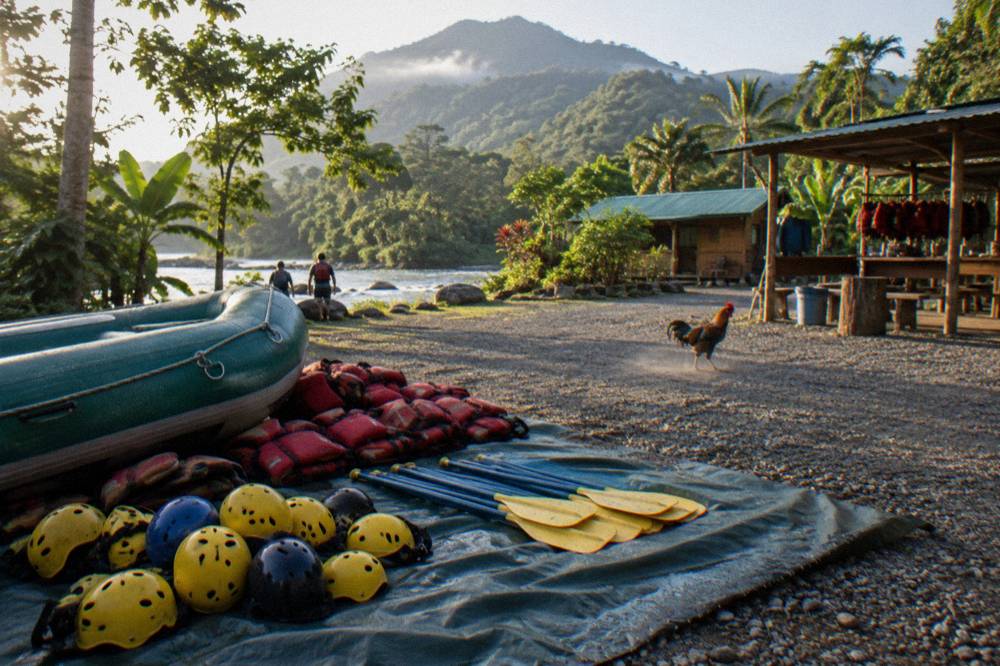
Wear swimwear or quick-dry clothes, secure water shoes or tennis shoes that can get wet, and bring sunscreen, a towel and a change of clothes; operators rule out flip-flops. Operators provide the helmet, life jacket and paddle, and life jackets and helmets stay on for the entire trip, including calm sections.
The packing list is shorter than most people expect. The water on the Pacuare is typically 21 C (70 F) and higher, so no wetsuit is needed; a rash guard or quick-dry shirt handles sun and scrapes. Secure footwear is the one rule operators repeat: tennis shoes or strapped river sandals, because loose shoes disappear into the river on the first big wave. Valuables you bring on the raft, cameras and phones included, are your own responsibility, and several listings sell professional photo packages separately for exactly that reason.
| Item | Bring or provided | Note |
|---|---|---|
| Helmet, life jacket, paddle | Provided | Mandatory for the whole trip |
| Quick-dry clothes or swimwear | Bring | Water sits around 21 C or warmer |
| Tennis shoes or secure sandals | Bring | No flip-flops |
| Sunscreen, towel, dry change of clothes | Bring | Showers and changing facilities are common at take-out centers |
| Waterproof phone case | Bring, or buy | One roster listing names it as an exclusion |
| Breakfast and lunch | Depends | Lunch on every one-day listing, breakfast on most San Jose ones; check the listing |
Our what to bring guide has the full checklist, and the what to wear guide covers footwear and clothing mistakes in more depth.
How Old Do You Have To Be To Raft In Costa Rica?
The national norm sets the legal floor: age 12 is the minimum for a Class III-IV run like the Pacuare, and several roster listings state exactly that. Operators may set higher minimums, and some raise the Pacuare floor to 14 from June to November in higher water, so the listing's own minimum always wins over the national norm.
The norm, INTE G60-1:2019, is the reason a Class III-IV Pacuare trip can never legally carry an 11-year-old, however confident the swimmer. It is also why the Balsa and Reventazon exist in the national conversation at all: they are the rivers where 8 to 11-year-olds legally can paddle. On the roster, three San Jose listings, including White Water Rafting Pacuare River From San Jose, and the Puerto Viejo departure state a minimum age of 12; other listings say to check the listing. Weight and height limits are an operator matter, not a law: one operator outside this roster requires participants to weigh 45 to 90 kg and stand at least 1.35 m tall, which tells you these checks exist and vary. Once the age rules have narrowed your shortlist, the region by region comparison of every major Costa Rican rafting river helps you weigh scenery, difficulty, and price before you book.
If you are planning around teenagers, the good news is the ceiling is generous. Ages 12 to 17 may run Class I to IV, which covers the entire commercial Pacuare, and 18 and over may run Class I to V. Our rafting with kids and teens guide maps each roster listing to the ages it serves.
Pacuare Day Trip Or Multi-Day Lodge Trip?
A Pacuare day trip costs from $99 to $195 per person and fits in a single long day; the 2-day lodge trips run from $269 to $397 per person and the 3-day from $505, adding a night inside the gorge at a river lodge with all meals. Day trips suit first timers and tight itineraries; lodge trips suit travelers who want the gorge at dawn and dusk.
The day-trip version is the one most visitors take, and the roster's Turrialba departures make it a four- to eight-hour day by listing. The most reviewed is Rafting Pacuare River One Day from Turrialba, 5.0 from 385 reviews, from $99 per person, including a typical Costa Rican lunch at the end of the trip and all gear. From San Jose, the same river costs a longer day, roughly 9 to 12 hours by listing, and adds breakfast to lunch on most listings.
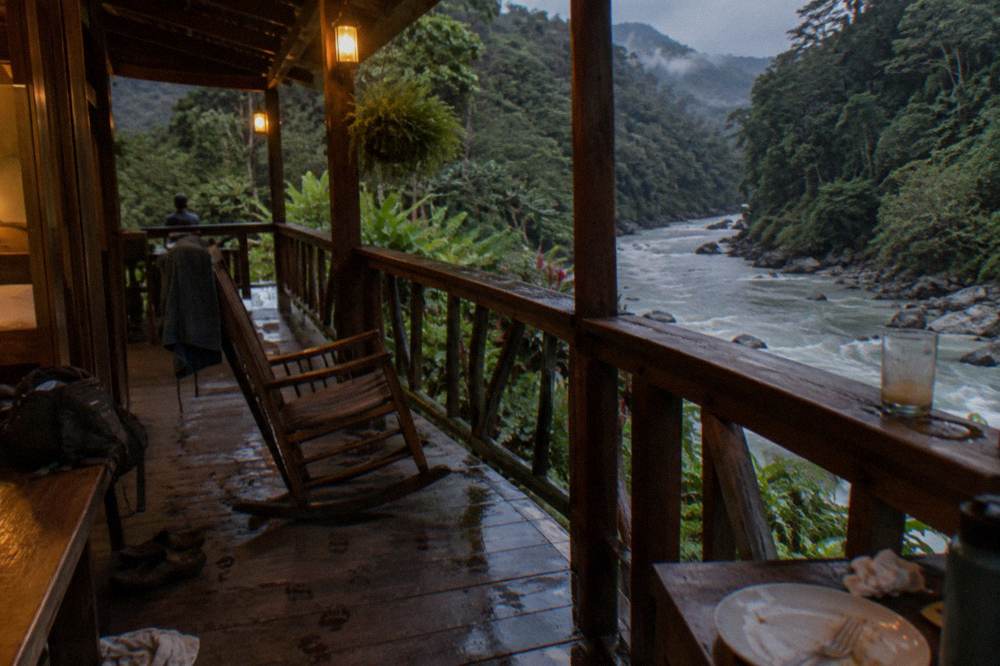
The lodge trips are a different product. The San Jose Caribe Arenal Pacuare Hiking and Rafting 2-Day Trip, from $269 per person, includes one night at Pacuare River Lodge, two days of rafting with hikes, insurance, and transfers from San Jose, Puerto Viejo or La Fortuna, with 2 breakfasts, 2 lunches and 1 dinner. The 2-Day Tour of the Pacuare River from Tropical Rivers runs from $397, and its 3-day sibling from $505, covering three days of meals and a private itinerary. The Exploradores listing describes its 2-day format as about 13 km and 14 Class III rapids to the lodge on day one, then 23 km and roughly 30 rapids on day two, ending at Siquirres; that is the operator's claim, and it gives you a sense of how the mileage splits.
One practical difference matters at booking time, cancellation windows: most one-day listings show free cancellation up to 24 hours before, while three of the five lodge trips need 3 to 6 full days of notice for a full refund, so a late change costs more on a lodge booking. Our 2-day Pacuare overnight guide compares the lodge options listing by listing.
Which Pacuare Listing Should You Actually Book?
Book the Turrialba day trip if you want the lowest firm price and the shortest day, the San Jose Class 3 & 4 day trip if you want hotel pickup and 291 reviews behind it, and a 2-day lodge trip if you want the overnight gorge experience. The roster's 21 listings split by departure town first, then by group size and inclusions, and that split does the deciding for you.
Start with where you wake up. From Turrialba, the choice is between Adrenalina's most reviewed trip (5.0 from 385, from $99), Explornatura's hotel-pickup option (5.0 from 196, from $120), Ticos River Adventures' gear-and-safety-kayak-inclusive trip (4.9 from 27, from $119) and the Travesias Naturales run (4.9 from 46, from $140). From San Jose, eight listings range from $112 to $195, and the meaningful differences are hotel pickup versus a meeting point, and total day length from 4 hours 30 minutes to 12 hours by listing. From Puerto Viejo, the dedicated departure has 4.8 from 62 reviews. From La Fortuna, one listing doubles as your onward shuttle.
| If you want | Book | Why |
|---|---|---|
| Lowest firm price, shortest transfer | Rafting Pacuare River One Day from Turrialba | From $99, 5.0 from 385 reviews, 6-hour day |
| Hotel pickup from San Jose | From San Jose: Pacuare River Class 3 & 4 Rafting Day Trip | Pickup listed, 4.7 from 291 reviews, from $125 |
| A night inside the gorge | San Jose Caribe Arenal Pacuare Hiking and Rafting 2-Day Trip | From $269, lodge night, meals, three departure towns |
| Another Turrialba option | Rafting Pacuare Costa Rica | Up to 40 guests, 4.9 from 46 reviews, from $140 |
| Class IV focus | Pacuare River Rafting Class IV from Turrialba | Up to 18 guests, from $125, minimum age on the listing |
The trip picker and the homepage comparison on Pacuare Costa Rica Rafting exist for exactly this decision, and the one-day Pacuare trip guide walks the day hour by hour.
What Does A Pacuare Day Look Like Hour By Hour?
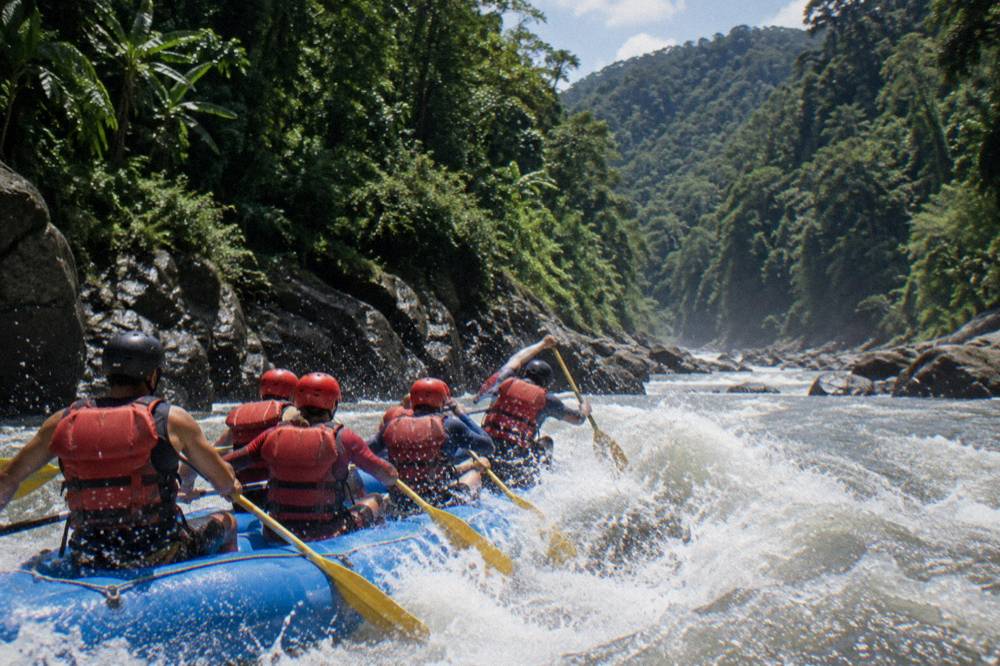
A typical San Jose day runs a 6:00 to 6:30 a.m. hotel pickup, breakfast at an operator center mid-morning, a 45-minute safety talk and paddle practice, roughly three hours of descent, then showers, lunch and a return around 5:30 p.m.; Turrialba departures compress the whole day to about six hours. Operators commonly report this rhythm, and listing durations on the roster match it.
The published rhythm from one major operator's itinerary goes like this: drive to the Siquirres Exploration Center between 6:30 and 8:15 a.m., breakfast from 8:15 to 9:00, safety talk and paddle practice from 9:30 to 10:15, and the descent from 10:15 to around 1:15, followed by showers, changing and lunch before a 2:30 departure. Post-rafting facilities at the take-out centers commonly include showers and changing rooms, which is why the dry change of clothes matters. Turrialba departures skip the capital transfer entirely: the Adrenalina-style day starts around 8:00 a.m. from the Turrialba area and runs about six hours total, ending with lunch.
Group sizes are capped on most listings, from 10 guests on the Ivantours San Jose trip up to 200 on another San Jose listing, so the number on the listing is worth reading if crowds matter to you. One operator outside the roster specifies a maximum of six participants per guide, which is a useful benchmark when you compare. Guides on Pacuare trips are trained in swift water rescue and carry safety kits for the full length of the trip, and some operators add a dedicated safety kayaker; the Ticos River Adventures listing on this roster includes both safety kayak and insurance in its inclusions.
Is White Water Rafting In Costa Rica Safe?
Commercial rafting in Costa Rica is regulated by the INTE G60-1:2019 national technical norm, which mandates minimum ages by rapid class, weather and river-condition checks, and scouting when flow rises. What you can verify is on the listing.
What the norm requires of operators is concrete: stated minimum ages, condition checks before launch, and scouting when the river rises. What operators add on the Pacuare is equally concrete: mandatory helmets and life jackets for the entire trip, safety kayakers on several roster listings, insurance included on some, and a pre-trip safety talk with paddle practice before anyone touches a rapid. The rest is honest uncertainty: the river is rain-fed, conditions vary, and operators cancel or reroute in high water. Anyone promising otherwise is selling you something. Our guide to whether Pacuare rafting is safe covers what the norm requires and what to check on a listing before booking, and the Costa Rica rainy season rafting guide addresses the months when condition calls happen most.
With the river compared, the season chosen and the listing shortlisted, the final step is dates: February to April for calmer water and first-timer confidence, October to December for the big-water version of the same gorge. Every trip below is bookable now.
Common Questions About White Water Rafting In Costa Rica
Where Is The Best White Water Rafting In Costa Rica?
By the criteria most travelers use, scenery, class variety and trip options, the Pacuare is the country's flagship run: a Class III-IV jungle gorge with roughly 26 to 30 km of commercial water and multi-day lodge trips. Families with children under 12 should look at the Class II-III Balsa or Reventazon instead.
Can Beginners Do White Water Rafting In Costa Rica?
Yes. The standard Pacuare commercial run is Class III-IV and takes beginners year-round, with guides, safety talks and all gear included. Operators prefer February to April for first timers because the water is lower and more predictable then.
How Much Does A White Water Rafting Trip Cost In Costa Rica?
On this site's roster, Pacuare day trips run from $99 to $195 per person by departure town, and lodge trips from $269 to $505 per person. The cheapest firm-priced listing is Rafting Pacuare River One Day from Turrialba at from $99.
What Is The Minimum Age For Rafting In Costa Rica?
The national norm sets 12 as the minimum for a Class III-IV run like the Pacuare, 8 for Class I to III, and 5 for Class I and II. Some operators raise the Pacuare floor to 14 from June to November, so always check the listing.
When Is Rafting Season In Costa Rica?
The Pacuare runs all year. Water is highest October to December and lowest March to April, with February to April the window operators prefer for families and first timers. The Pacific-side Naranjo runs only around June to November.
Do You Need A Wetsuit To Raft The Pacuare?
No. Water temperature typically sits at 21 C (70 F) or warmer year-round, so swimwear or quick-dry clothes plus sunscreen are enough; operators provide the helmet, life jacket and paddle.