Pacuare Vs Sarapiqui Rafting: Which River Fits Your Trip
Two rivers carry most of Costa Rica's whitewater reputation on the Caribbean and northern slopes: the Pacuare, a long jungle-canyon run out of Turrialba, and the Sarapiqui, a shorter, punchier northern lowlands river. Here is how they actually differ, and which Pacuare trip fits each kind of paddler.
Short answer
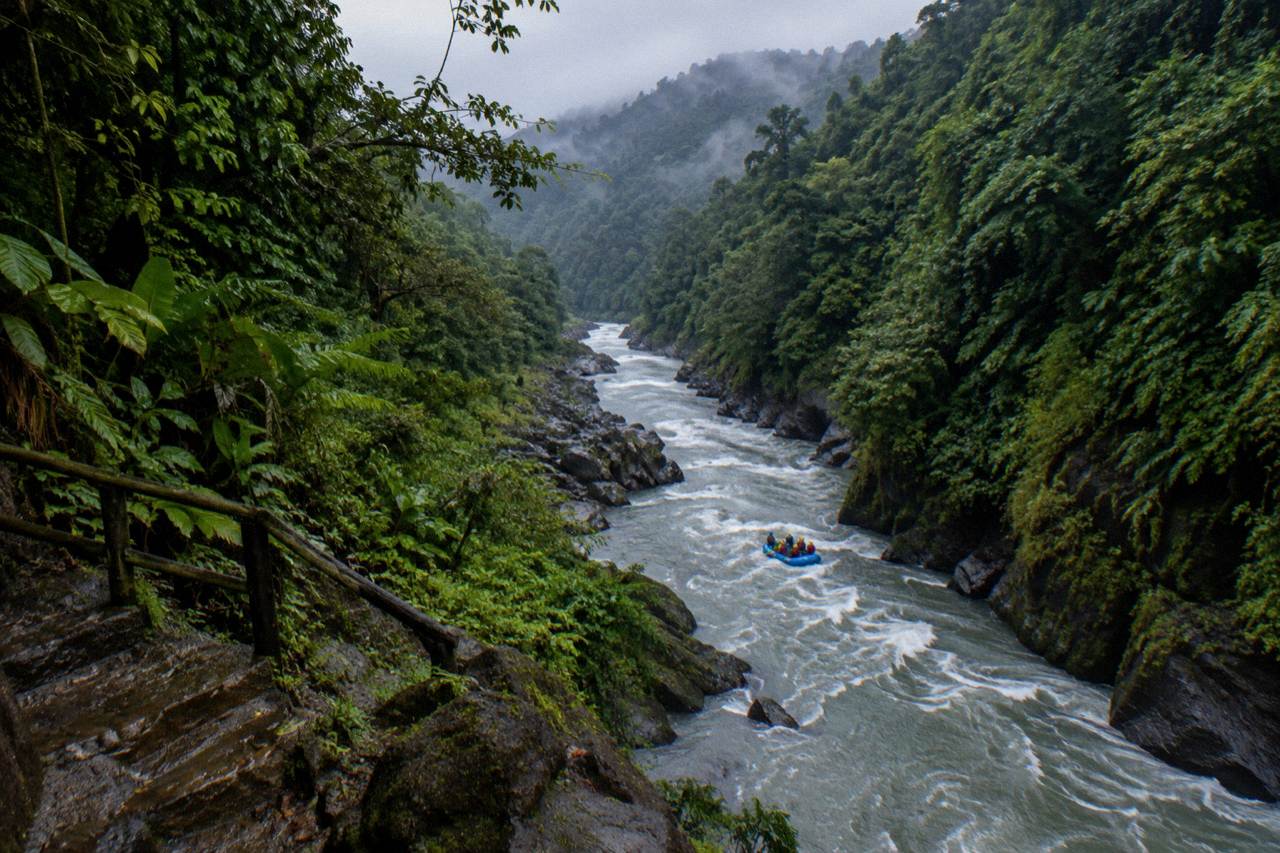
The Pacuare is the longer, more committing run: Class III to IV rapids through a roadless rainforest gorge, most day trips from $99 to $150 per person. The Sarapiqui, in the northern lowlands, offers shorter Class III to IV rapids plus calmer wildlife stretches with minimum ages often 12 to 15. This site sells the Pacuare trips.
The Pacuare and the Sarapiqui are the two rivers travelers most often weigh against each other when they want real whitewater in Costa Rica without heading to the Pacific slope. They sit on different sides of the country, they behave differently at the same time of year, and they suit different travelers. One honest point up front: this site's roster sells Pacuare trips only, from the 5.0-rated, 385-review Rafting Pacuare River One Day from Turrialba at from $99 per person down through the multi-day lodge tours, so the comparison below ends, wherever you land, by matching you to the Pacuare listing that fits. The Sarapiqui facts here come from published rafting guides; no Sarapiqui product is bookable on this roster. If the Balsa River near La Fortuna is also on your shortlist, the Pacuare vs Balsa rafting comparison walks through how that run differs in difficulty, remoteness, and time commitment.
How Do The Pacuare And Sarapiqui Rivers Compare?
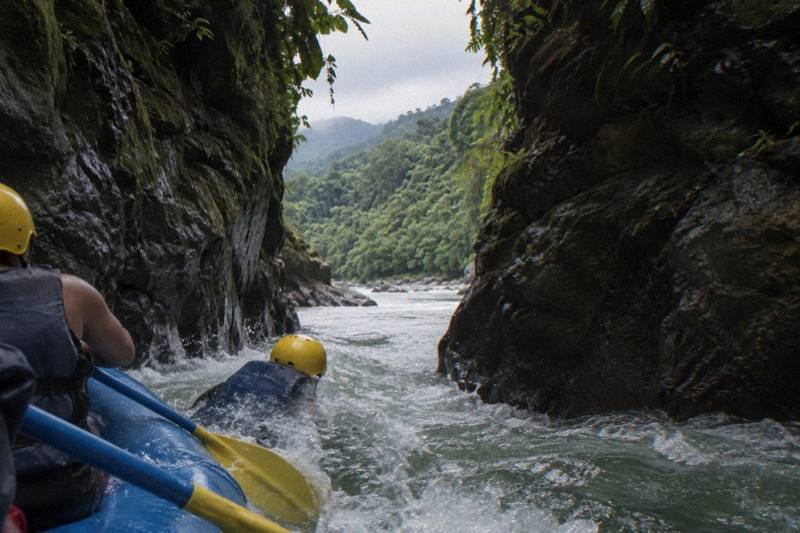
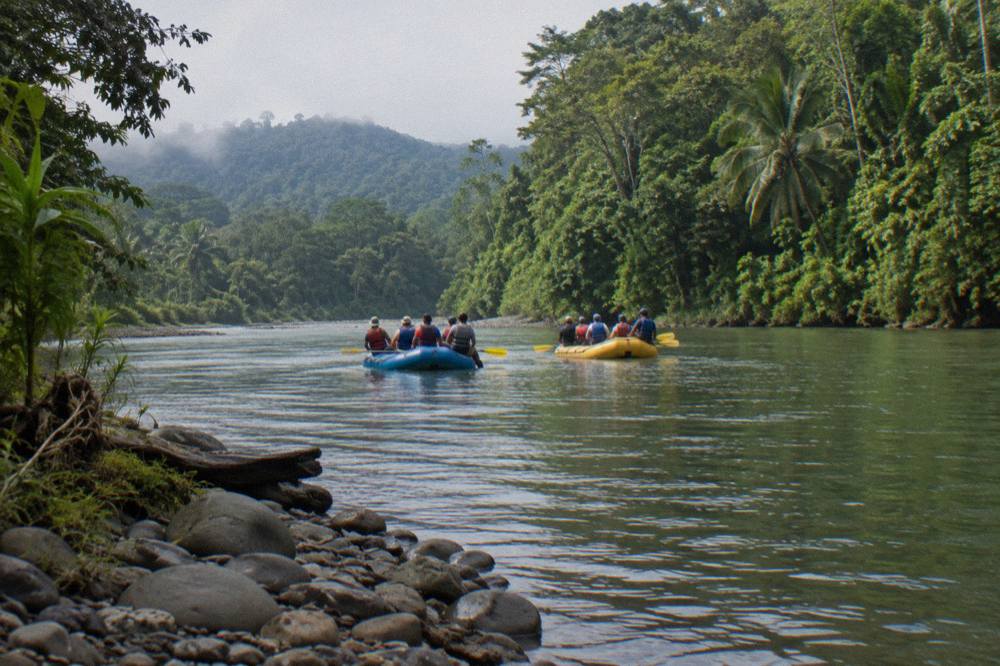
They are different animals. The Pacuare is the flagship long jungle-canyon run of Costa Rica's Caribbean slope, Class III to IV for most of its commercial length, dropping through a gorge with waterfalls on the walls and no road access along most of the run. The Sarapiqui, in the northern lowlands reachable from La Fortuna or San Jose, delivers shorter, punchier Class III to IV rapids broken up by calmer wildlife-watching stretches.
Costa Rica's rafting map splits neatly into regions: the Caribbean slope holds the Pacuare, the Reventazon and the Sarapiqui, while the Pacific side carries the Savegre and Naranjo, and the Arenal area runs the Balsa. Within that map, the Pacuare is the one multi-hour gorge commitment, the trip where the canyon itself is the headline. The Sarapiqui trades the committing canyon for variety, shorter rapids broken by calmer wildlife stretches, which means less continuous whitewater per hour on the water. If you want to see how the rest of the country's rivers stack up, our region by region guide to Costa Rica's best white water rafting covers the Savegre, Naranjo and Balsa with the same level of detail.
The table below is the short version of the whole article:
| Factor | Pacuare River | Sarapiqui River |
|---|---|---|
| Region | Caribbean slope, Turrialba and Siquirres area | Northern lowlands, near Puerto Viejo de Sarapiqui |
| Typical commercial class | Class III-IV, described as Class 4 at high water | Class III-IV sections plus calmer wildlife stretches |
| Character | Continuous gorge run, waterfalls off the walls, minimal road access | Shorter punchier rapids broken by flat wildlife floats |
| Usual access towns | San Jose, Turrialba, Puerto Viejo, La Fortuna, Siquirres | La Fortuna or San Jose |
| Bookable on this site | Yes, 21 listings | No listings on this roster |
Which River Has The Bigger Rapids?
On paper they tie, on the water they do not. Both rivers carry Class III to IV ratings on their main commercial sections, but the Pacuare's rapids come in longer, steeper sequences inside a gorge, and operators describe the run as Class 4 at high water and Class 3+ at low. Sarapiqui rapids are shorter and punchier, with calmer stretches between them, which caps the sustained difficulty.
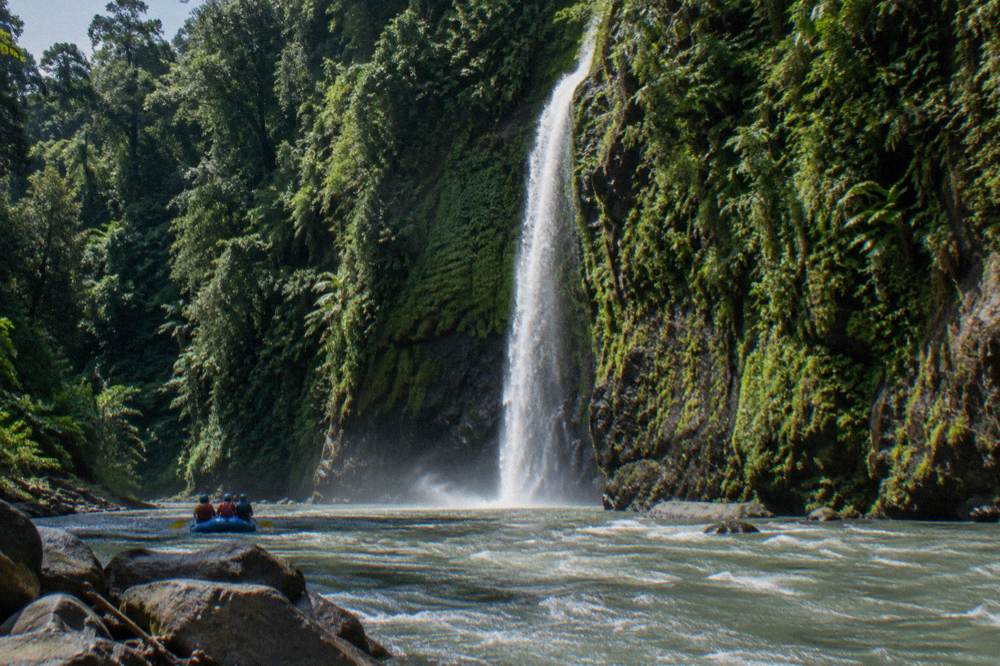
The Pacuare's Lower section, the stretch most day trips run, holds named rapids like Upper and Lower Huacas, Doble Drop and Cimarrones inside the Huacas River Gorge, with the Huacas waterfall described as dropping 150 feet directly into the river channel. The whole river is roughly 108 to 133 km long depending on the source, and the Lower run alone drops about 370 m from the Finca La Cruz area to Siquirres. Rapids of that scale stacked back to back are what makes the Pacuare the country's flagship run, a description travel guides repeat without much disagreement.
The Sarapiqui answers with variety rather than volume. Published guides describe Class III to IV sections with quick, technical drops, then calm stretches where the wildlife watching is genuinely good. If your group's real goal is "some rapids, then look at animals," that river earns its spot. If the goal is the biggest sustained whitewater day available from San Jose or Turrialba, the Pacuare wins on every published description, and it is the only one of the two you can book here. For readers in that camp, the Pacuare River rapids explained for first timers breaks down what a Class III-IV day actually feels like paddle stroke by paddle stroke.
Which River Is Better For First-Time Rafters?
The Pacuare, in most seasons, if the first-timer wants one memorable day. Operators themselves prefer February to April for first timers and families, when water is lower and more predictable, and a traveler account from May describes the river as very beginner friendly at lower levels. The Sarapiqui's calmer interludes also suit nervous paddlers, but its minimum ages, often 12 to 15, can lock out younger teens.
Both rivers take beginners routinely; that is the honest answer, and neither should be sold as scary. The difference is the shape of the day. A first-timer on the Pacuare gets a full gorge expedition: roughly three hours on the water on typical San Jose departures per operator itineraries, a riverside lunch, and a canyon you cannot see any other way. A first-timer on the Sarapiqui gets a friendlier rhythm but a smaller story. Costa Rica's national rafting norm, INTE G60-1:2019, allows ages 12 to 17 on Class I to IV water, so both rivers are legally open from 12, and operators set their own floors, sometimes higher in wet months. Always check the listing for the age and any body-size limits before booking either river.
For the Pacuare side of that decision, the beginner's one-day Pacuare trip guide walks through the full day from pickup to lunch. One listing worth naming for beginners specifically: the Pacuare River Rafting trip from Turrialba by Ticos River Adventures, 4.9 from 27 reviews, from $119 per person, includes a safety kayak and a certified guide plus transport from Turrialba, deli-style lunch and insurance, a package built around reassurance. For paddlers who want harder water instead, Turrialtours' 8-hour Class IV run from Turrialba is from $125 per person.
How Do Drive Times And Access Differ?
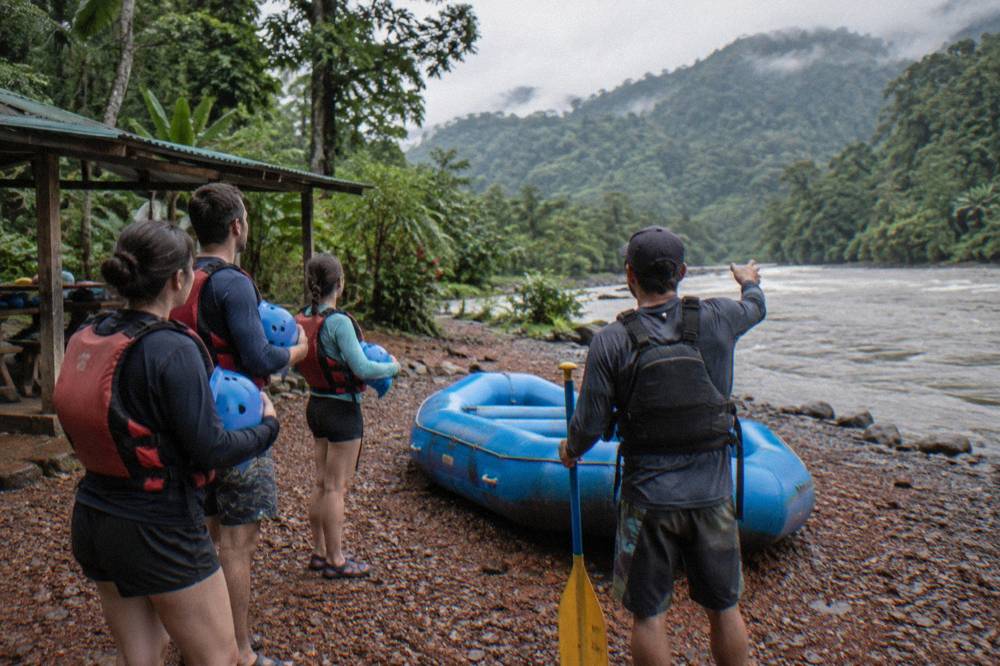
The Sarapiqui is reached from La Fortuna or San Jose in the northern lowlands; the Pacuare is reached from San Jose, Turrialba, Puerto Viejo or La Fortuna. Commonly reported drive times: San Jose to Turrialba about 1 hour 20 to 1 hour 40, San Jose to Puerto Viejo de Talamanca about 3 hours 30 to 4 hours 25, and La Fortuna to Turrialba about 3 hours 30.
That access map matters more than most people expect, because the Pacuare's network of departure towns is what makes it workable from nearly any Costa Rica itinerary. You can raft it as a day trip out of a San Jose hotel, with operators commonly picking up between 6:00 and 6:30 a.m. and returning around 5:30 p.m. You can raft it from the Caribbean coast at Puerto Viejo, on the White Water Rafting Pacuare River with Lunch From Puerto Viejo listing, 4.8 from 62 reviews, from $147 per person. You can even raft it as a one-way travel day from La Fortuna: the La Fortuna: Pacuare Rafting with SJO or Puerto Viejo Shuttle trip, 5.0 from 20 reviews, from $150 per person, ends with a shuttle to San Jose airport or Puerto Viejo rather than back where you started. The Sarapiqui offers nothing equivalent on this roster; it is simply a different catchment. That flexibility is exactly why the Pacuare anchors so many first visits, and our first-time Costa Rica adventure planning guide shows how to slot a rafting day into a full week.
| Departure town | Pacuare listings on this roster | Sample drive time to the river area |
|---|---|---|
| San Jose | 8 day trips plus lodge trips | Pickup commonly 6:00 to 6:30 a.m., return around 5:30 p.m. |
| Turrialba | 6 day trips | San Jose to Turrialba about 1h20 to 1h40, commonly reported |
| Puerto Viejo | 2 day trips plus multi-day departures | San Jose to Puerto Viejo about 3h30 to 4h25, commonly reported |
| La Fortuna | 2 day trips, one with an onward shuttle, plus multi-day departures | La Fortuna to Turrialba about 3h30, commonly reported |
The From San Jose: Pacuare River Class 3 & 4 Rafting Day Trip, 4.7 from 291 reviews, from $125 per person, includes transportation from San Jose hotels, breakfast, lunch, equipment and a tour guide, which is the cleanest single-ticket answer for a capital-city stay.
What Does Each Trip Cost?
On this roster, Pacuare day trips run from $99 to $195 per person, and multi-day lodge trips from $269 to $505 per person, all firm listing prices. No Sarapiqui price appears on this roster.
That price floor is worth underlining: the cheapest firm-priced listing on the roster is the most reviewed one, Rafting Pacuare River One Day from Turrialba by Adrenalina Rafting Turrialba, 5.0 from 385 reviews, from $99 per person, including helmet, life vest, paddle, private transportation and a typical Costa Rican lunch at the end of the trip. Six hours total, up to 40 guests, free cancellation listed. For a full cost breakdown including what is and is not included, see how much Pacuare River rafting costs.
| Pacuare listing | Departure | Rating | Price from |
|---|---|---|---|
| Rafting Pacuare River One Day from Turrialba | Turrialba | 5.0 from 385 reviews | $99 per person |
| Pacuare River Rafting | Turrialba | 4.9 from 27 reviews | $119 per person |
| Rafting Pacuare River from Turrialba | Turrialba | 5.0 from 196 reviews | $120 per person |
| From San Jose: Pacuare River Class 3 & 4 Rafting Day Trip | San Jose | 4.7 from 291 reviews | $125 per person |
| White Water Rafting Pacuare River From San Jose | San Jose | 4.7 from 250 reviews | $125 per person |
| White Water Rafting Pacuare River with Lunch From Puerto Viejo | Puerto Viejo | 4.8 from 62 reviews | $147 per person |
| La Fortuna: Pacuare Rafting with SJO or Puerto Viejo Shuttle | La Fortuna | 5.0 from 20 reviews | $150 per person |
| San Jose Caribe Arenal Pacuare Hiking and Rafting 2-Day Trip | San Jose, Puerto Viejo or La Fortuna | too few reviews for a star claim | $269 per person |
| 3 Day Tour of the Pacuare River in Costa Rica. | Siquirres | too few reviews for a star claim | $505 per person |

A note on what the numbers mean: "from $99 per person" is the listing's own starting price, and several listings carry optional extras on top, such as souvenir photos at an additional cost or, on one San Jose listing, photography priced at $32.00 per person as an exclusion. Read the inclusions and exclusions lines on whichever card you open; they differ listing to listing even on the same river.
Which River Has Better Scenery?
Published descriptions give this one to the Pacuare without much contest: a roadless rainforest gorge with waterfalls, including the 150-foot Huacas fall, dropping directly into the river, and runs through Cabecar indigenous territory. The Sarapiqui's scenery is genuine lowland rainforest with strong wildlife viewing on its calm stretches, but it lacks the canyon walls and the isolation.
The phrase "no road access along most of the run" is the practical heart of it. Once a Pacuare raft enters the gorge, there is no pulling over, no road shadow, no town noise. If scenery is your tiebreaker, the Pacuare River wildlife and rainforest gorge guide covers what guests and operators commonly report seeing, without promising a single sighting, because wildlife is wildlife.
Wildlife deserves an honesty note: no operator can promise a sighting and none should. The Sarapiqui's slow stretches are arguably better for watching; the Pacuare's gorge is better for the feeling of being somewhere unreachable.
That Turrialba departure by Ticos River Adventures, 4.9 from 27 reviews and from $119 per person, includes gear, certified guides, a safety kayak, insurance and transport from Turrialba or nearby areas, one of the more complete packages on the roster for a scenery-first day.
Which River Should A Family With Teens Choose?
Check the listing ages first, then the season. Pacuare listings that state a minimum age say 12, and the national norm allows 12 to 17 year olds on Class I to IV water, but some operators raise their floor to 14 from June to November. Sarapiqui minimum ages are often 12 to 15 per published guides. February to April is the window operators themselves prefer for families on the Pacuare.
The family math usually comes down to dates. Traveling in Costa Rica's dry-season shoulder, February to April, water on the Pacuare is at its lowest and most predictable, and the Class IV rapids of the wet months often soften toward Class III, as rafting guides describe it. Traveling in the green season, the same river runs higher and faster, which is exactly when some operators lift the minimum age. The same logic applies to the Sarapiqui in outline, though its shorter rapids swing less. The full breakdown of ages, class limits and fitness expectations is in Pacuare rafting age limits and fitness.
| Age or situation | National norm INTE G60-1:2019 | What it means on the Pacuare |
|---|---|---|
| Under 5 | No commercial class | No rafting trip on this roster |
| 5 to 7 | Class I and II | No roster listing at this class |
| 8 to 11 | Class I to III | No Class III-IV Pacuare listing at this age |
| 12 to 17 | Class I to IV | Legal from 12; listings stating an age say 12, some operators use 14 June to November |
| 18 and over | Class I to V | All roster listings available |
Two roster picks fit families well. The White Water Rafting Pacuare River From San Jose listing by Destination Services Costa Rica, 4.7 from 250 reviews, from $125 per person, states a minimum age of 12, caps groups at 20 guests, and includes hotel pickup from selected San Jose hotels plus breakfast and lunch, which keeps the logistics simple with teenagers in tow. From Turrialba, the Rafting Pacuare River from Turrialba trip by Explornatura, 5.0 from 196 reviews, from $120 per person, includes transfer from Turrialba, lunch, guide and all fees, with up to 24 guests per trip.
The Pacuare River listing by Ticos River Adventures, 4.9 from 204 reviews and from $125 per person, is the roster's private-option day trip from Turrialba, up to 60 guests, which a larger family group can treat as its own boat; the listing names lunch both as included and as excluded, so check it before you plan lunch.
Does The Season Change The Choice Between Them?
Yes, and it favors the Pacuare for most of the year. The Pacuare runs all year but swings hardest: highest and fastest water October to December, lowest March to April, with operators preferring February to April for first timers. In rainy season many Class III rapids become Class IV on the Pacuare, and Caribbean-slope rain falls through much of the year unlike Pacific patterns.
The rainfall record behind that, stated honestly as modelled data: ERA5 modelled averages for the Turrialba grid point run from about 181 mm in March to 477 mm in November, roughly 3,714 mm across the year, and station cross-checks agree that February to April is driest and October to December wettest. Higher water lifts the difficulty, which experienced paddlers actively seek out in September and October even knowing afternoon thunderstorms are likelier. The full month-by-month picture, including what it means for cancellation risk, is in the best time to raft the Pacuare.
| Period | Pacuare conditions | Practical read |
|---|---|---|
| February to April | Lowest water, March and April driest | Operators prefer it for first timers and families |
| May to August | Rising water, faster current | More excitement, some operators lift minimum ages |
| September to October | Bigger water, afternoon storms likelier | Preferred by some experienced rafters |
| October to December | Highest and fastest water | Operators may cancel or reroute in high water; never guaranteed |
| December to January | Water dropping again | Good middle ground, check the listing |
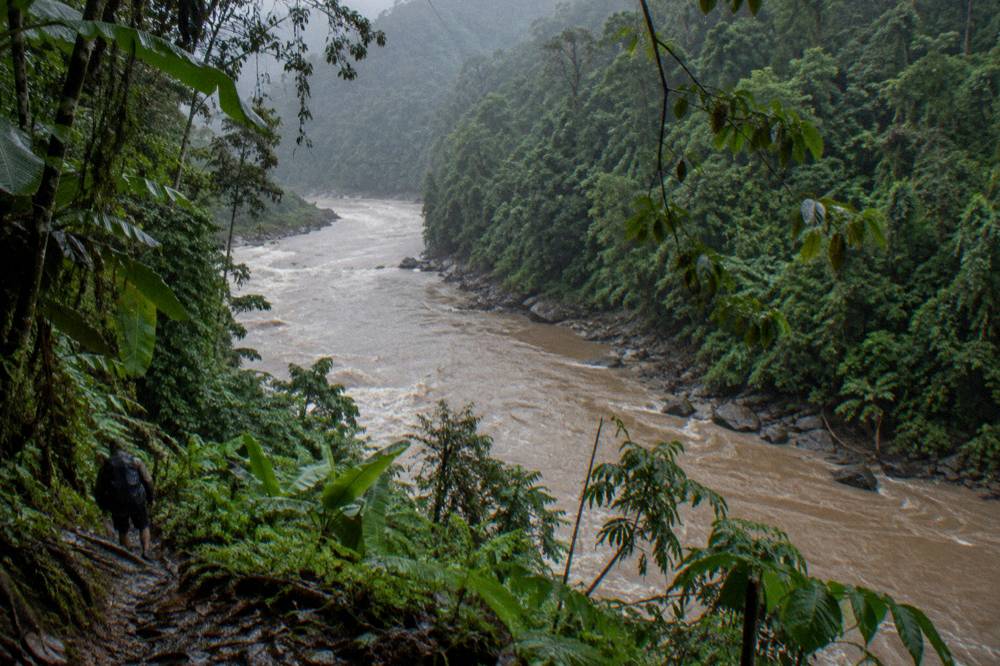
A plain-language caveat that applies to both rivers: these are rain-fed rivers, the Pacuare has no automated flow gauge, and operators cancel, reschedule or reroute when water gets too high. No trip runs every day in every condition, and any page promising otherwise is selling you something. The listing you book will state its own policy; the day-of call belongs to the operator on the water.
What About Thrill Seekers: Is Either River Enough?
For a genuine adrenaline itinerary, the Pacuare offers more ceiling: multi-day lodge trips that run two or three days of Class III to IV water back to back, and a dedicated Class IV listing from Turrialba. The Sarapiqui's shorter rapids cap the sustained intensity. The honest next level beyond both is the Pacuare's Upper section, Class IV and V, run mostly in creek kayaks, not commercial rafts.
The thrill-seeker case on this roster is the multi-day format. The 2-Day Tour of the Pacuare River in Costa Rica by Tropical Rivers, from $397 per person, Class III-IV and private, includes two breakfasts, two lunches and dinner. The 3 Day Tour of the Pacuare River, from $505 per person, stretches it further. Cheaper lodge routes exist too: the San Jose Caribe Arenal Pacuare Hiking and Rafting 2-Day Trip, from $269 per person, includes a night at Pacuare River Lodge with all meals and transport from San Jose, Puerto Viejo or La Fortuna, and the Two-Day Rafting Tour with Avesol Lodge accommodation from $370 per person adds hiking trails, waterfalls and a happy hour at the lodge.
For a single-day adrenaline hit without the overnight, the Pacuare River Rafting Class IV from Turrialba listing by Turrialtours, from $125 per person and capped at 18 guests, names its class on the tin. It carries too few reviews for a star claim, 4 reviews, so judge it on its details rather than a rating.
Lodge trips can carry a different cancellation rhythm than day trips: the Tropical Rivers and Greenway listings need 3 to 6 full days of notice for a full refund, against 24 hours on most day trips. Factor that in when you book far ahead.

So Which River Fits Your Trip?
Most travelers comparing the two should book the Pacuare. It has the bigger gorge, the longer rapids, the wider range of departure towns, the deeper roster from $99 day trips to $505 three-day expeditions, and it is the only river of the two bookable on this site. The Sarapiqui suits a La Fortuna-based traveler wanting a half-step-down day, and if that is you, plan it independently.
The decision really collapses to three questions. Where are you sleeping, San Jose, Turrialba, La Fortuna or the Caribbean coast? The Pacuare serves all four; the Sarapiqui mainly San Jose and La Fortuna. Who is paddling, first timers, teens, or a group chasing the biggest water available? February to April for the cautious, September to December for the hungry. And how long do you have? One great day, or two with a night in a canyon lodge no road reaches? Every branch of that tree lands on a Pacuare listing you can check today.
Whichever card fits, read its inclusions line before booking: pickup, meals, gear and cancellation terms vary listing to listing, and the trips compared guide puts the whole roster side by side. For a wider framing of every river in the country, the white water rafting in Costa Rica guide covers the regions the Pacuare and Sarapiqui belong to, and the official Costa Rica tourism rafting page lists the country's commercial rivers independently.
Common Questions About Pacuare Vs Sarapiqui Rafting
Is The Sarapiqui Or The Pacuare Better For Beginners?
Both take beginners. Operators prefer the Pacuare between February and April, when water is lower and more predictable, and the Sarapiqui's calm stretches between rapids also suit nervous paddlers. The Pacuare is the only river of the two with bookable listings on this site, and the most reviewed Turrialba day trip, 5.0 from 385 reviews, from $99 per person, is a common first rafting trip.
What Class Rapids Are On The Pacuare And The Sarapiqui?
Both rivers carry Class III to IV ratings on their main commercial sections. Operators describe the Pacuare as Class 4 at high water and Class 3+ at low water, with named rapids like Upper and Lower Huacas and Cimarrones in the gorge. The Sarapiqui's rapids are shorter and punchier with recovery pools between them.
Which River Is Cheaper To Raft?
No Sarapiqui price exists on this roster, so no honest figure can be printed for it. Pacuare day trips on this roster run from $99 to $195 per person and multi-day lodge trips from $269 to $505 per person, with the cheapest day trip, from $99, also the most reviewed listing at 5.0 from 385 reviews.
Can You Raft The Sarapiqui From La Fortuna?
Published guides describe Sarapiqui access from La Fortuna or San Jose, since the river sits in the northern lowlands between the two. This site sells no Sarapiqui listing, so you would plan that trip independently. From La Fortuna you can also raft the Pacuare, on a listing rated 5.0 from 20 reviews, from $150 per person, that ends with a shuttle toward San Jose airport or Puerto Viejo.
Is The Pacuare Scarier Than The Sarapiqui?
Scary is subjective, but the Pacuare is the more committing river: longer rapid sequences inside a roadless gorge, with waterfalls off the canyon walls. The Sarapiqui breaks its rapids up with calm wildlife stretches. Guides on Pacuare trips are trained in swiftwater rescue, life jackets and helmets are mandatory throughout, and no honest source calls either river safe or guaranteed.
Which River Should A Family With Teenagers Choose?
Check ages on the listing first. The national norm allows 12 to 17 year olds on Class I to IV water, Pacuare listings that state an age say 12, and some operators raise their floor to 14 from June to November when water runs higher. Sarapiqui minimum ages are often 12 to 15. February to April is the window operators prefer for families on the Pacuare.
External sources consulted for the river-region claims above include the Costa Rica rafting difficulty and seasons guide and the Pacuare season overview; every price, rating and review count in this article comes from this site's own listing roster, as published on Pacuare Costa Rica Rafting.